Q.01
Can I put fryer oil in the grease trap?
No. It overloads the device, shortens the interval and can cause a backup.
Phoenix guide · 3 min read
You have a question about a grease trap in your Phoenix kitchen. The answer is below. When you want a pump-out, ask for a call back.
A restaurant produces both streams every day, and they look similar enough that kitchens treat them as one. They are not. One is a commodity with a market price, collected through used cooking oil pickup. The other is waste with a disposal fee, handled by commercial grease trap cleaning. The split is physical, regulatory and financial.
01 / Good to know
| Feature | Used cooking oil | Trap grease |
|---|---|---|
| Source | Fryer, flat top, grill | Sink, dishwasher, floor drains |
| Condition | Oil, low water, few solids | Oil, water, food solids, detergent |
| Container | Sealed drum or bin | The grease device and the vacuum truck |
| Who takes it | Rendering company | Permitted liquid waste hauler |
| Payment | Sometimes paid by weight or volume | Always a fee |
| Destination | Rendering, biodiesel, feed | Permitted disposal site |
| Rule | Contract with the rendering company | City FOG code and county vehicle permit |
02 / Why it matters
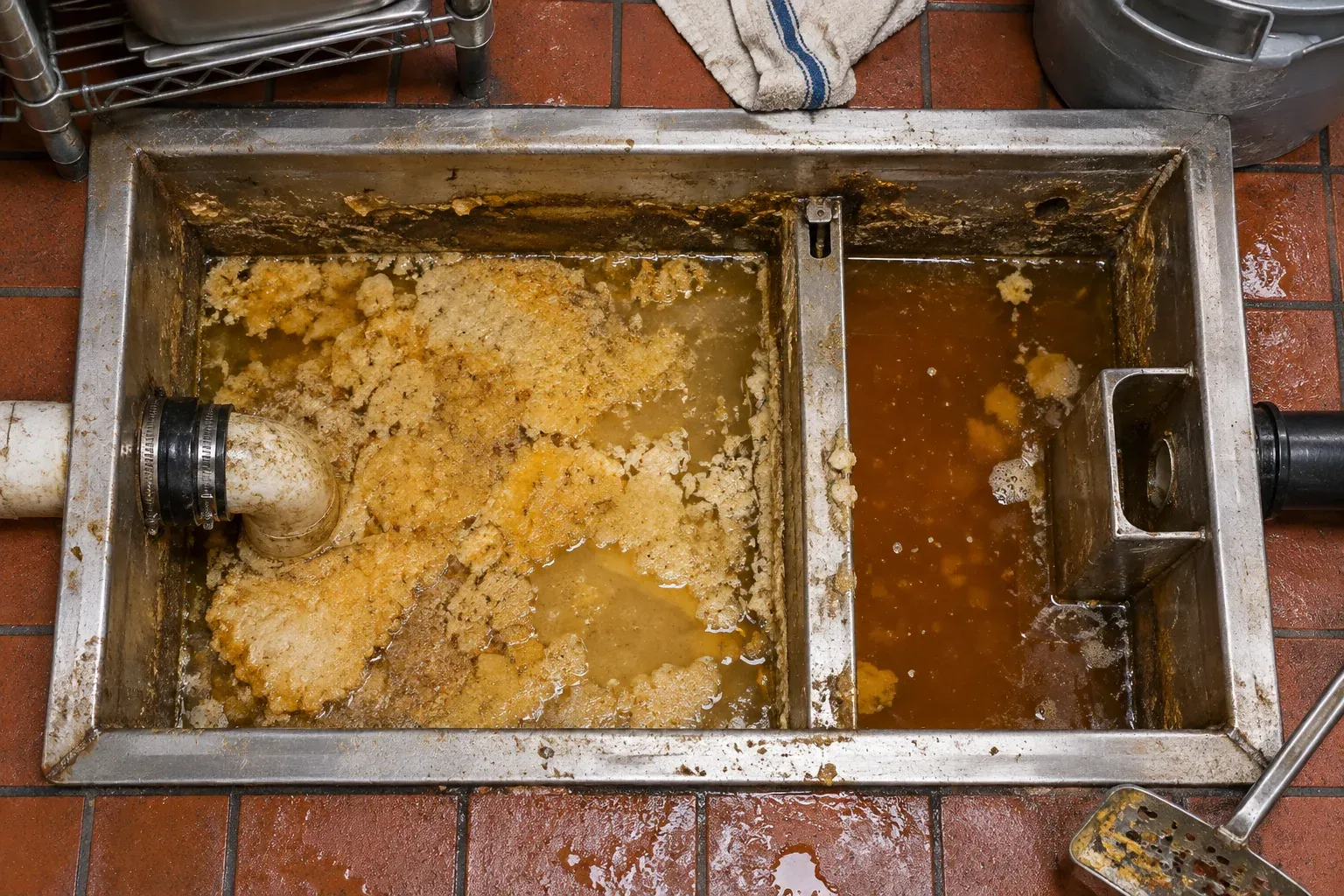
Oil that goes down the drain becomes trap grease, and it is the most expensive grease in the building. It congeals in the trap and the line, it shortens the interval, and it can shorten the interval and raise the annual cost.
Trap grease that goes into the rendering barrel contaminates the load. It has water, detergent and solids, and a rendering company that finds it can reject the load, charge for disposal or cancel the contract.
03 / Good to know
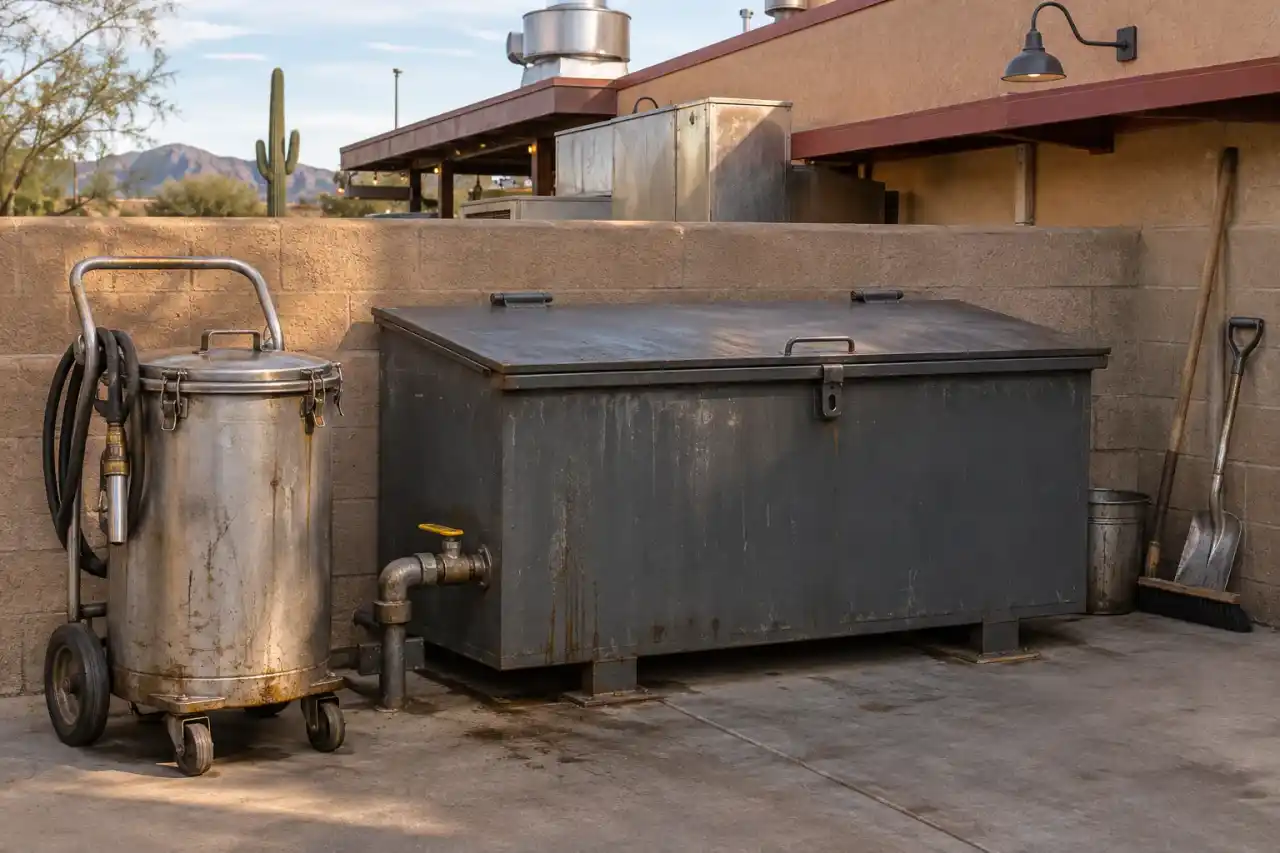
A used cooking oil container is a 55 gallon drum or a wheeled bin with a lid, placed outside near the kitchen door. It has to be sealed, level and accessible to the truck.
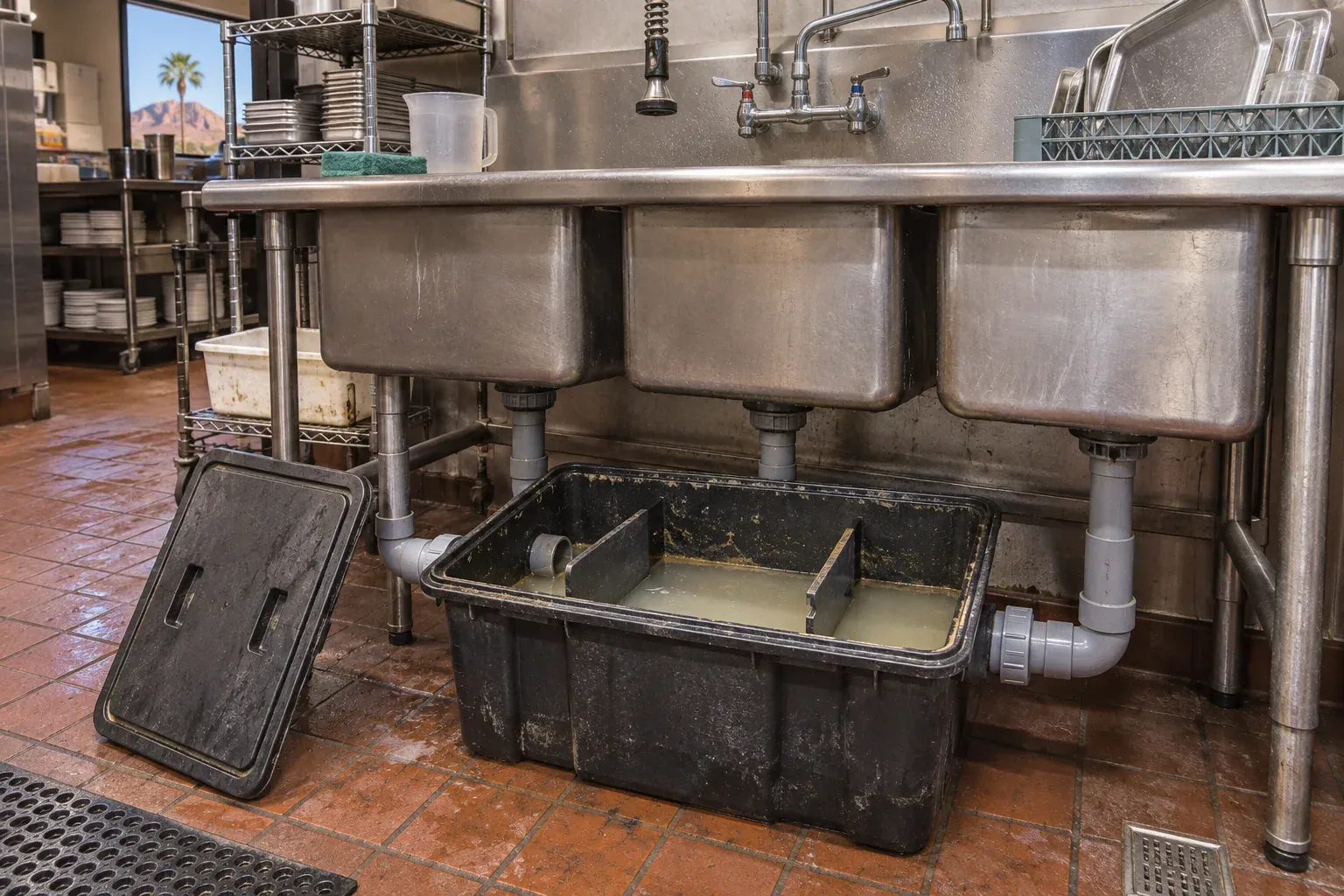
The grease device is a tank or a trap, and it is not a container in the same sense. It stays in place, it is pumped by a truck, and it is never opened by kitchen staff except to check the lid.
04 / Good to know
Rendering pickups often run weekly or every 2 weeks for a full-service kitchen, and monthly for a small cafe. The schedule should match the oil volume so the container does not overflow between visits.
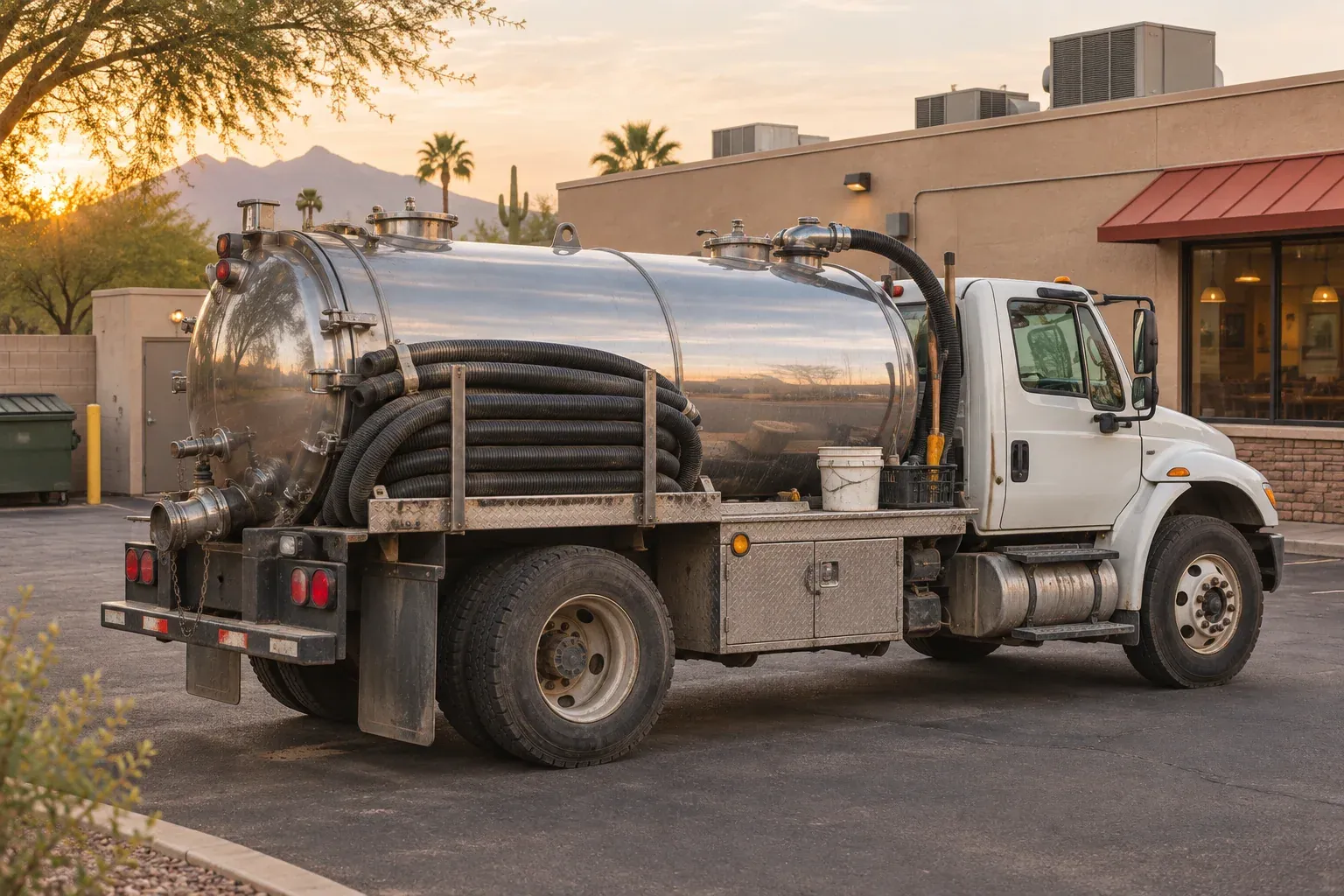
Trap pump-outs run on the city interval in the grease trap pumping schedule, which in Phoenix is 30 days for a trap and 90 for an interceptor. The 2 schedules are independent, and a restaurant should have both on the same calendar.
05 / Good to know
Used cooking oil is sometimes collected for a payment or at no charge. Trap grease always costs money: $125 to $200 for a trap visit and $225 to $400 for a 1,000 gallon interceptor. A kitchen that keeps oil out of the drain pays the lower end of both.
The arithmetic is simple. A trap on a 30 day schedule costs $1,500 to $2,400 a year, so a kitchen that has to pump a trap twice as often adds the same amount again.
06 / Good to know
Five minutes at close covers it. Fryer oil goes in the rendering container. Pan grease goes in the container or the trash. The dish pit scrapes into the trash before rinsing. The floor drain gets a strainer, and the strainer gets emptied.
That routine is the cheapest maintenance a restaurant can do, and it protects the line, the trap and the drainfield if there is one.
07 / Used oil
A rendering contract typically names the container, the pickup frequency, the payment terms, the contamination clause and the notice period. A contract that does not mention contamination leaves open what happens when a load is rejected.
09 / 4 questions
Still have a question?
Send the form with a short note. Someone from our team will call you back soon.
Get a call backQ.01
No. It overloads the device, shortens the interval and can cause a backup.
Q.02
No. Trap grease is liquid waste, and it goes to a permitted disposal site with a hauler.
Q.03
Rendering companies commonly use one, covering the term, the container and contamination.
Q.04
The rendering side is a separate waste stream. The city regulates what goes into the sewer, which is why the oil has to stay out of the drain.
Form open 24/7
Ask for a call back about your grease trap
Tell us which device and which kitchen. We will call you back shortly.
Thank you. You will be called back soon.