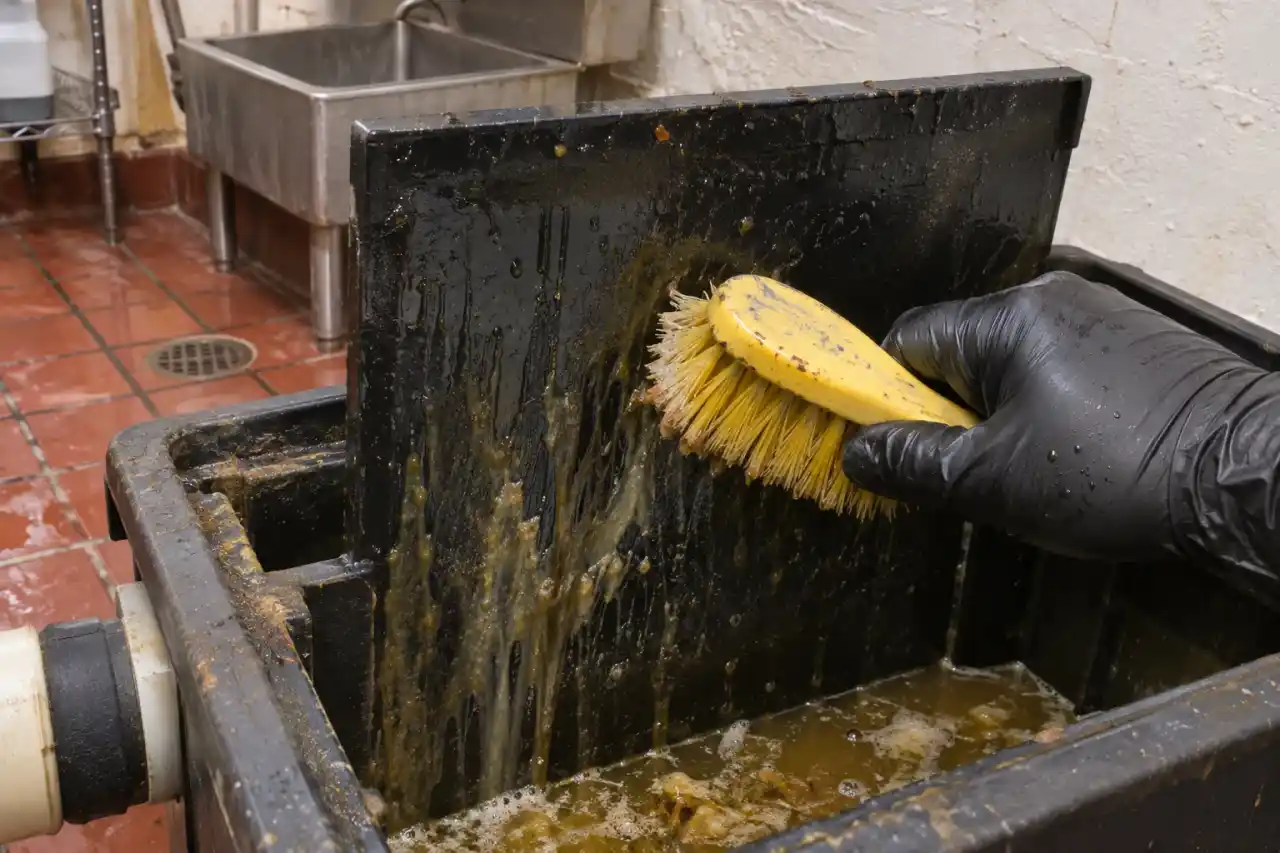
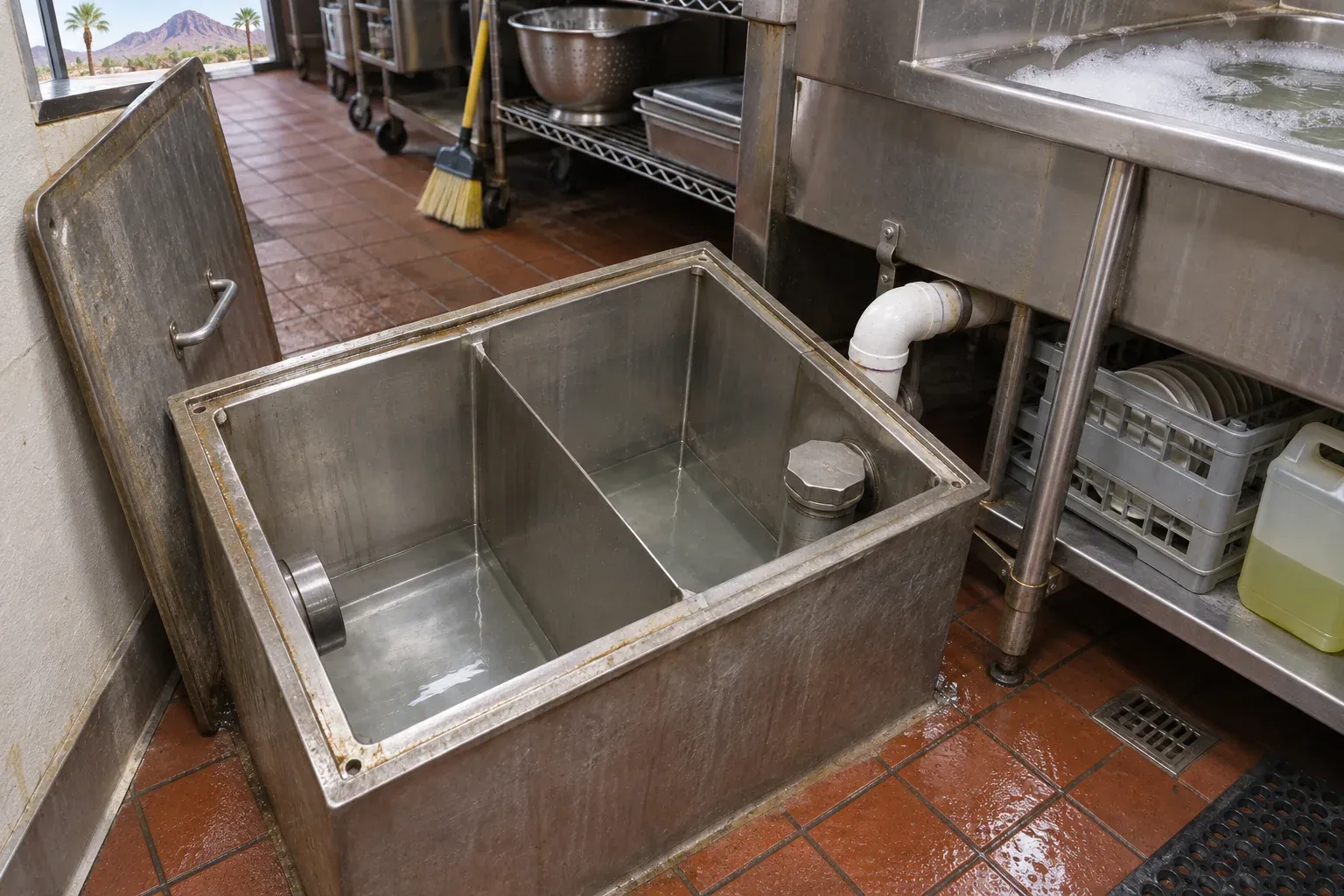
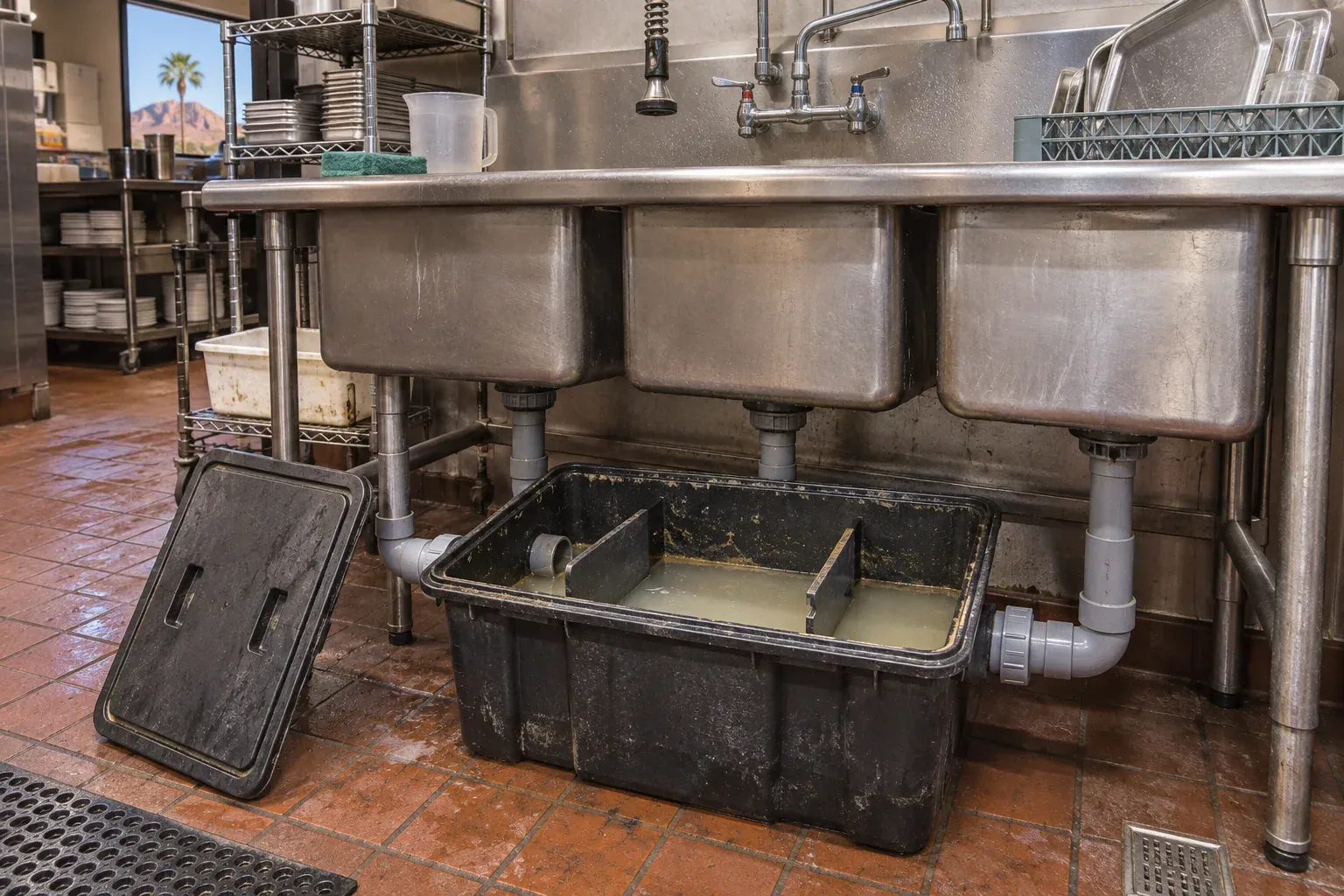
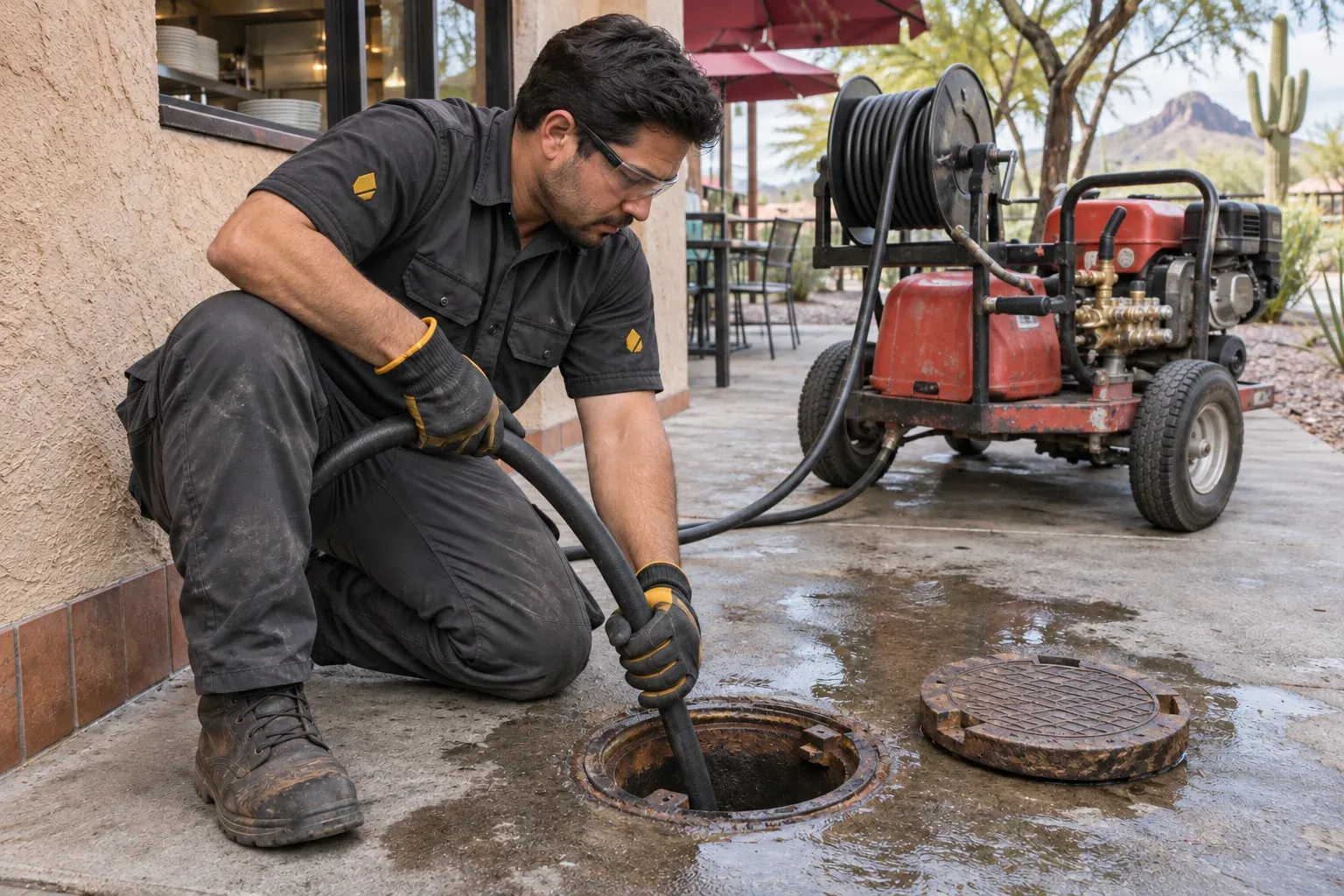
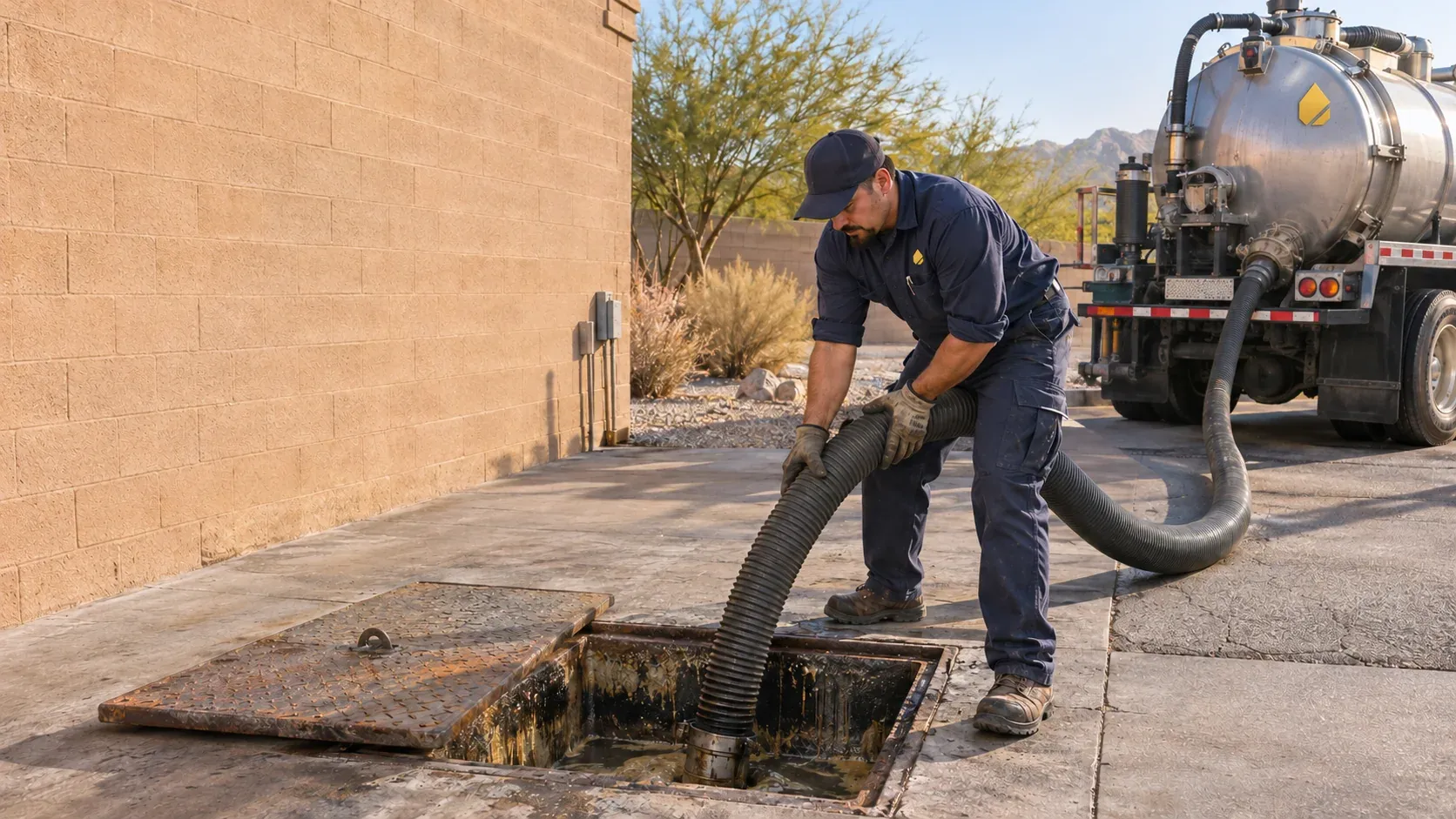
Phoenix City Code 28-15 D says hydromechanical interceptors must be fully pumped out and cleaned at least once every 30 days, and that no hydromechanical interceptor may go more than 90 days without maintenance. Subsection B sets the capacity limit for gravity interceptors: combined grease, lint, oil, sand, sludge and solids may not exceed 25 percent of the total liquid volume, measured at the static water level. The city's FOG manual applies the same 25 percent line to the interceptor in general.
Read together with the city's FOG manual, the rules set a calendar and a physical test. The calendar is 30 days. The physical test is 25 percent. If the trap hits 25 percent in 18 days, the calendar is not a defense. If the trap is at 12 percent at 30 days, the pump-out is still required. Gilbert and Glendale allow 6 months, which is why a kitchen that moved between cities should check the grease trap pumping schedule before reusing an old habit.
Two more code sections matter for a trap. Subsection F requires FOG compliance records of cleaning, volume removed, device capacity, disposal, repair and maintenance to be kept at the facility for 3 years. Subsection G prohibits chemicals, enzymes, proteins, bacteria, solvents and emulsifiers used in place of physical cleaning. An enzyme product in the trap does not extend the 30 day interval in Phoenix, and the additive ban applies on its own.