Q.01
Does a Phoenix or Scottsdale grease rule apply on Community land?
No. The Community has its own pretreatment program and its own intervals. A restaurant on Community land follows the Community's rules.
Service area · Salt River, AZ
You run a kitchen in Salt River. Tell us the device and the last pump-out date. We will call you back shortly.
Form open 24/7
Get a call back
Phoenix + 15 Valley cities
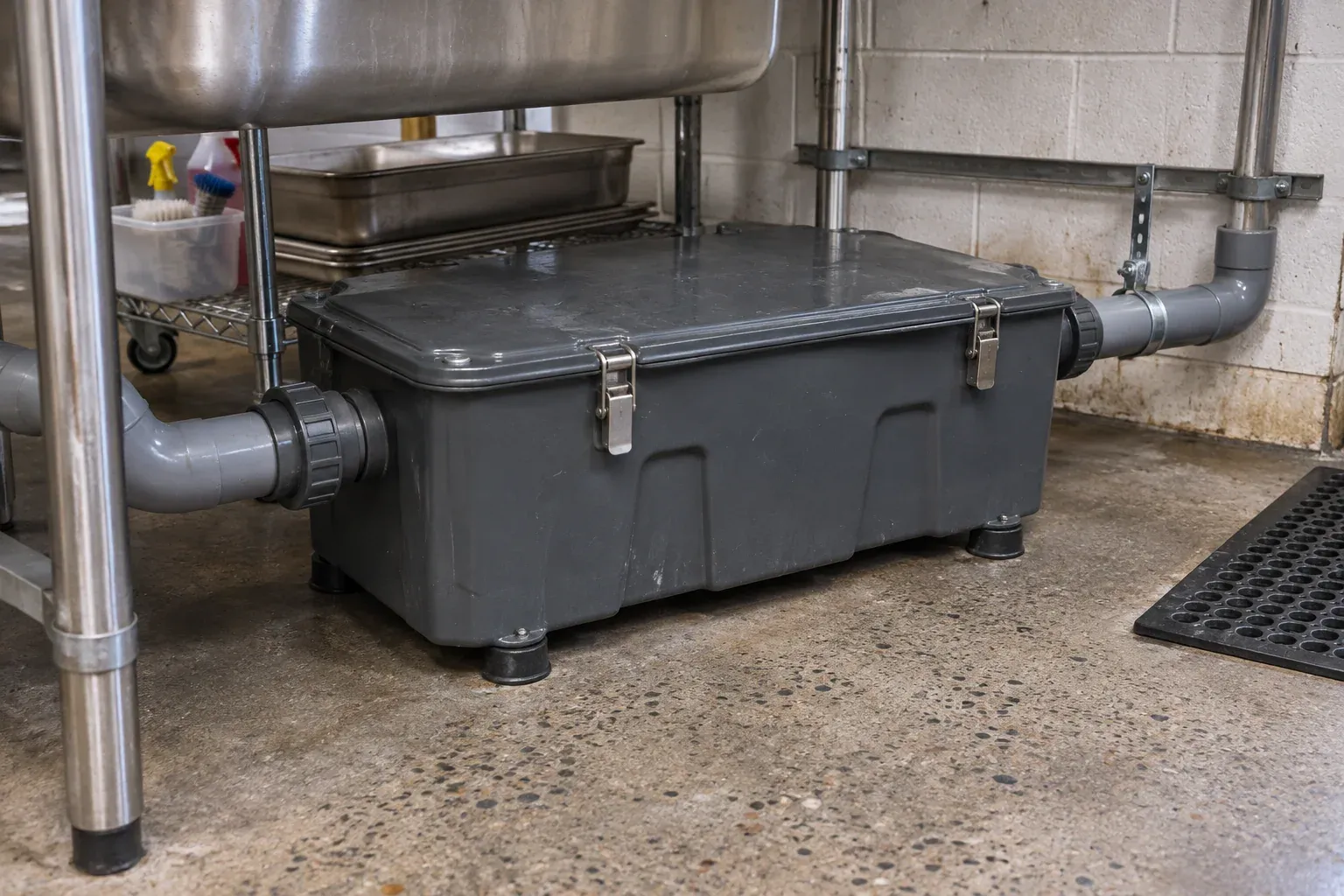
The Salt River Pima-Maricopa Indian Community is its own jurisdiction, and a restaurant on Community land follows Community grease trap rules. The pretreatment brochure requires hydromechanical interceptors to be pumped at least every 30 days and no more than 90 days without maintenance, gravity interceptors at least every 90 days and no more than 180 days without maintenance, and oil and sand interceptors at least every 180 days or sooner when a sheen appears or solids reach 25 percent. Hydromechanical interceptors cannot be self-cleaned without prior written approval.
That matters for the restaurant clusters around Talking Stick, Loop 101 and the Salt River Fields area, because a kitchen that assumes a Scottsdale or Tempe rule applies can miss a Community requirement.
01 / City rules
The Community's pretreatment program requires a permitted grease device, a maintenance schedule, and records that show the device is being serviced. The intervals above are the published floors. The 25 percent capacity standard applies, and a device that is a quarter full is out of compliance regardless of the calendar.
The brochure also says users shall not self-clean a hydromechanical interceptor without prior written approval, and that routine pumping has to use mechanical cleaning methods.
02 / Good to know
The restaurant density on Community land is concentrated around Talking Stick, the Loop 101 corridor and the Salt River Fields complex, with a mix of resort kitchens, casino food outlets, chain restaurants and event concessions.
Two features of that market matter for grease. The volumes are high and event-driven, because a casino floor or a concert does not run on a lunch-to-dinner curve. And the buildings are newer, so the devices are engineered and the lids are usually accessible, which makes service faster and measurement easier.
The event pattern is the risk. A 90 day interval on a gravity interceptor can be right for 10 months of the year and wrong for the 2 months with the biggest events. A pre-event measurement is the cheap insurance, and the manifest is the record.
03 / How it works
The service is the same physical job as anywhere in the Valley: measure, pump every compartment, scrape the walls, clean the baffles, check the lids and gaskets, and write a manifest with the volume and the disposal site. What differs is the paperwork and the jurisdiction. The manifest goes to the restaurant's file, and the record has to be available to the Community's program on request.
The brochure says the removed waste has to go to a licensed disposal facility and can never be put back into the interceptor or the sewer, so the disposal site belongs on the manifest.
04 / Records
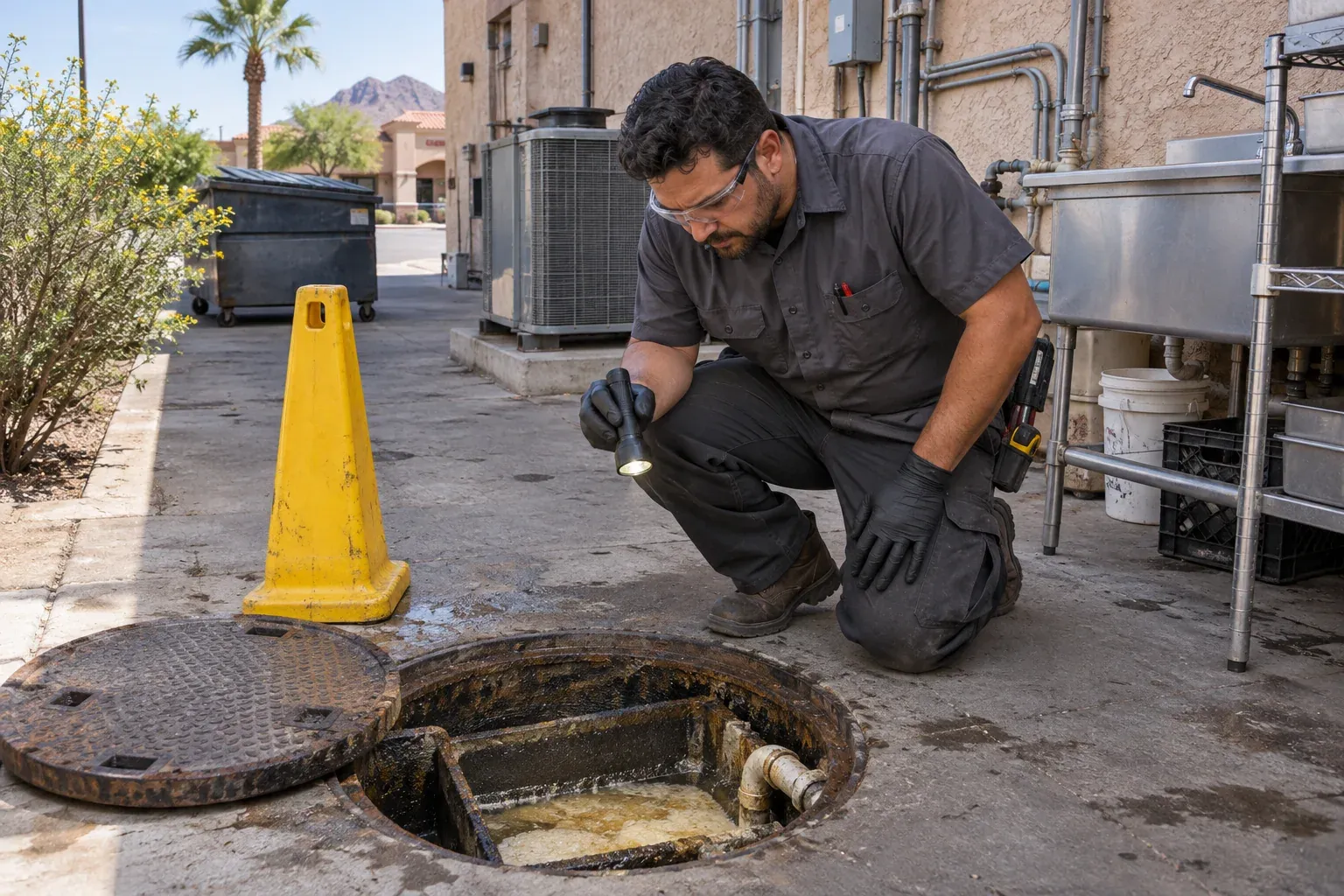
The Community requires 3 years of records. Keep the manifests, the service log, the device capacity, any written approval for self-cleaning, and any repair. The log should show the grease and solids depth at each visit, because the depth is what shows the device is under the 25 percent limit between the scheduled pump-outs.
05 / Costs
Pricing follows the national ranges on the cost page, with a premium for the larger devices and the event-driven load. A 1,000 gallon interceptor on a 90 day schedule is $225 to $400 a visit. A resort or casino kitchen with a 2,000 gallon tank and 4 visits is $1,600 to $2,800 a year, and more if the events push the interval shorter.
06 / Septic
On Salt River Pima-Maricopa Indian Community land, the Community's Public Works Department is the office to ask. A 2020 Community news report lists, among Public Works duties, "Collection of sewage by pumping septic tanks and maintaining the Community's sewer system." So both kinds of wastewater service are in the Community's hands, and a business there should ask Public Works which one its building uses.
The Community also runs its own fats, oils and grease program, revised October 22, 2025. It says that all users of the Community's wastewater collection systems may not discharge wastewater that interferes with the system. A food business on the Community sewer should read that program before any other rulebook.
A business whose building uses a tank instead needs a measured commercial septic tank pumping visit: sludge and scum depth at every visit, the gallons removed and a disposal record. Whichever system serves the building, the grease device is still the first line of defense.
Rule card · SRPMIC grease brochure
Service area map
Salt River and the areas around Phoenix
The map shows Salt River and the address in Phoenix. Use the buttons below it to open any area page.
All areasNear Salt River
07 / 4 questions
Still have a question?
Send the form with a short note. Someone from our team will call you back soon.
Get a call backQ.01
No. The Community has its own pretreatment program and its own intervals. A restaurant on Community land follows the Community's rules.
Q.02
Only with prior written approval from the Community's program.
Q.03
At least every 30 days and no more than 90 days without maintenance for hydromechanical interceptors, at least every 90 days and no more than 180 days for gravity interceptors, and at least every 180 days for oil and sand interceptors, or sooner if a sheen appears.
Q.04
3 years, at the facility, available to the program on request.
Form open 24/7
Ask for a call back about your grease trap
Tell us which device and which kitchen. We will call you back shortly.
Thank you. You will be called back soon.