Q.01
What is the 25 percent rule in one sentence?
Pump the device before the combined grease and solids layer reaches a quarter of its capacity, whatever the calendar says.
Phoenix guide · 3 min read
You have a question about a grease trap in your Phoenix kitchen. The answer is below. When you want a pump-out, ask for a call back.
Kitchen people ask practical questions, and the practical answer is usually shorter than the code. Here are the ones that come up most often, with the Phoenix-specific detail where it matters.
01 / Schedule
A trap (commercial grease trap cleaning): every 30 days in Phoenix, and never more than 90. An interceptor: every 90 days for a food service establishment. Both have a 25 percent capacity limit that can make it sooner.
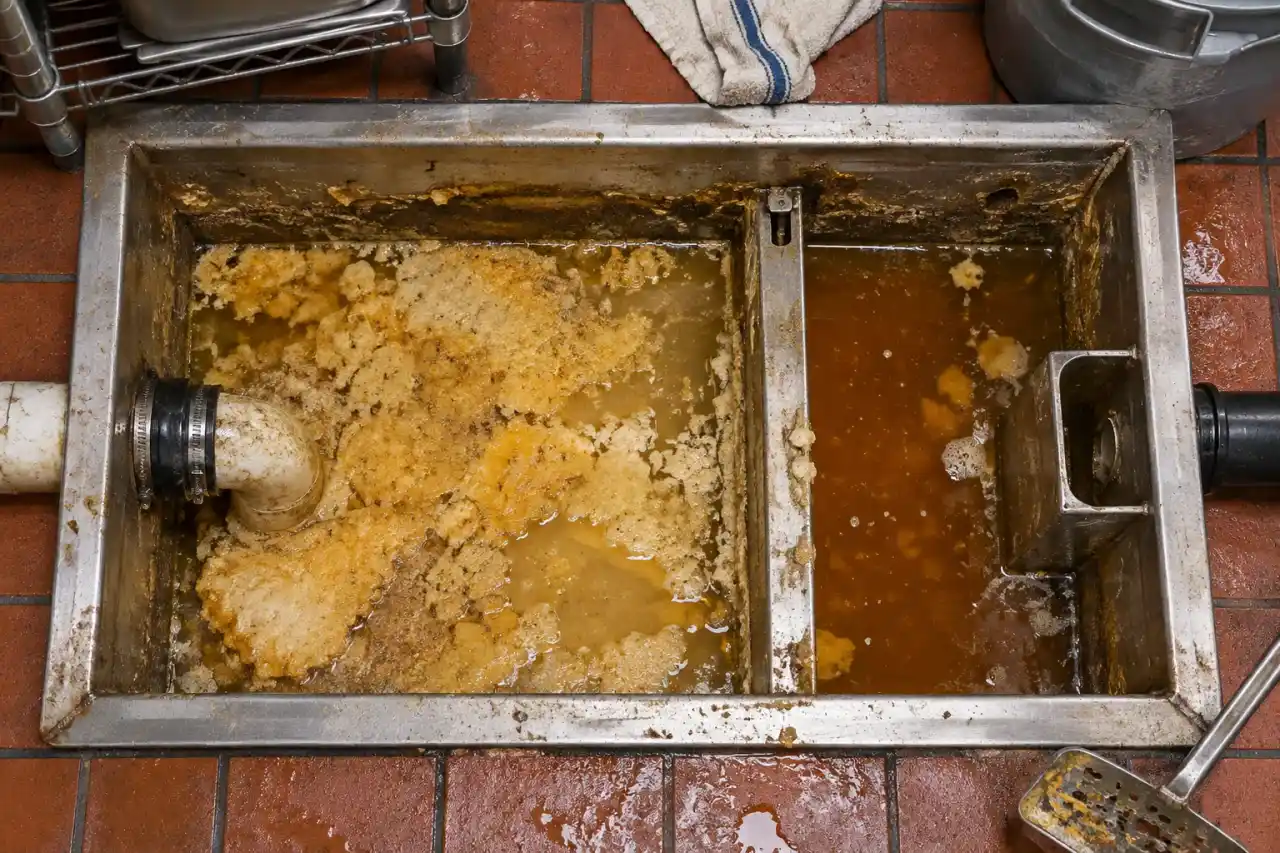
If you do not know which one you have, look at the size. A metal box under the sink is a trap. A tank under the parking lot is an interceptor.
02 / Good to know
A small indoor trap, maybe, in some jurisdictions, with lawful disposal and a record. In practice the waste cannot go in the trash, and the record still has to satisfy the city. An outdoor interceptor is not a self-service job.
03 / Warning signs
Because the blockage is between the trap and the sewer. Pumping removes what is in the tank. Kitchen line jetting removes what is on the pipe wall. If the drain is slow after a pump-out, you need jetting, not another pump-out.
04 / Warning signs
No. A sealed device with a working gasket should not be noticeable. A dry floor drain trap, a failed lid gasket and the trap itself are the usual sources. Pour a bucket of water down the floor drains first, because it costs nothing. A drain that is already overflowing is a grease backup emergency.
05 / Additives
Not in Phoenix, and not in Chandler. Phoenix prohibits chemicals, enzymes, bacteria and emulsifiers used in place of physical cleaning. Gilbert allows them as a supplement with notice and safety data sheets. The pump-out still happens.
06 / Good to know
A liquid waste hauler with a non-hazardous liquid waste vehicle permit from Maricopa County. The manifest names the disposal site.
07 / Costs
A 50 gallon trap is $125 to $200 a visit. A 1,000 gallon interceptor is $225 to $400. A 2,000 gallon tank is $630 or more. Emergency visits add $100 to $250, and a cleanup adds more. The cost page has the full table.
08 / Good to know
Not required, but useful for the first visit and for any visit where the device is over the limit. Someone should watch the pump-out and sign the manifest, because the manifest is the record.
09 / Who does the work
Whether a trap is too small comes down to the fixture count and the fill rate. If the trap hits 25 percent in 3 weeks, it is too small for the menu. If it is at 10 percent at day 30, it is not.
10 / Inspections
A notice with a correction deadline, usually a pump-out and a repair, then proof. The failed inspection page walks through the order of work.
11 / Good to know
No. Hot water moves the grease further down the line, where it cools and sets. It is the fastest way to turn a trap problem into a line problem.
12 / Good to know
Read the lease. Many commercial leases put the device on the tenant, and some put structural repairs on the landlord. If it is unclear, get it in writing before you need it.
13 / Good to know
A coffee shop with a small sink and no dishwasher can be a trap-only kitchen, and a commercial dishwasher or more than 4 fixtures calls for an interceptor. The fixture count and the dishwasher are the 2 triggers.
14 / Records
Put the manifests in one folder, write the last 4 visits into a log, and look at the lid. If the device is over the limit, pump it before the visit if you can. If you cannot, be honest about the date and show the schedule. An inspector who sees a file and a plan is in a different conversation from one who sees nothing.
15 / Who does the work
The manifest names the disposal site, and the restaurant keeps a copy in the 3 year file.
17 / 4 questions
Still have a question?
Send the form with a short note. Someone from our team will call you back soon.
Get a call backThe record. A restaurant that pumps on schedule and cannot prove it is one inspection away from a violation, and the fix costs an hour.
Q.01
Pump the device before the combined grease and solids layer reaches a quarter of its capacity, whatever the calendar says.
Q.02
Only if the device is sized for both kitchens and both are on the records. A shared tank with one tenant's manifest is a file with a gap.
Q.03
3 years at the restaurant in Phoenix and Chandler. Other cities set their own retention, so the city program for the address has the final word.
Q.04
The city program first, to confirm what proof it wants, then the pump-out and the repair, then the proof. The order matters because the deadline runs from the notice date.
Form open 24/7
Ask for a call back about your grease trap
Tell us which device and which kitchen. We will call you back shortly.
Thank you. You will be called back soon.