Q.01
How often does Goodyear require a pump-out?
The interval is set for each address. Confirm it with the city's Industrial Pretreatment Program before setting the calendar.
Service area · Goodyear, AZ
You run a kitchen in Goodyear. Tell us the device and the last pump-out date. We will call you back shortly.
Form open 24/7
Get a call back
Phoenix + 15 Valley cities
Goodyear sits on the west side, and its kitchen stock is younger than most of the Valley's. That does not make the grease rules optional. The city runs a pretreatment program, the operating standard is a device that stays well under a quarter full, and the record has to be available when the city asks.
Confirm the interval with the city's Industrial Pretreatment Program for the specific address, then build the schedule around the measurement. A restaurant that does that has a defensible file. A newer kitchen with a small trap still needs grease trap cleaning before it reaches a quarter full.
01 / The 25 percent rule
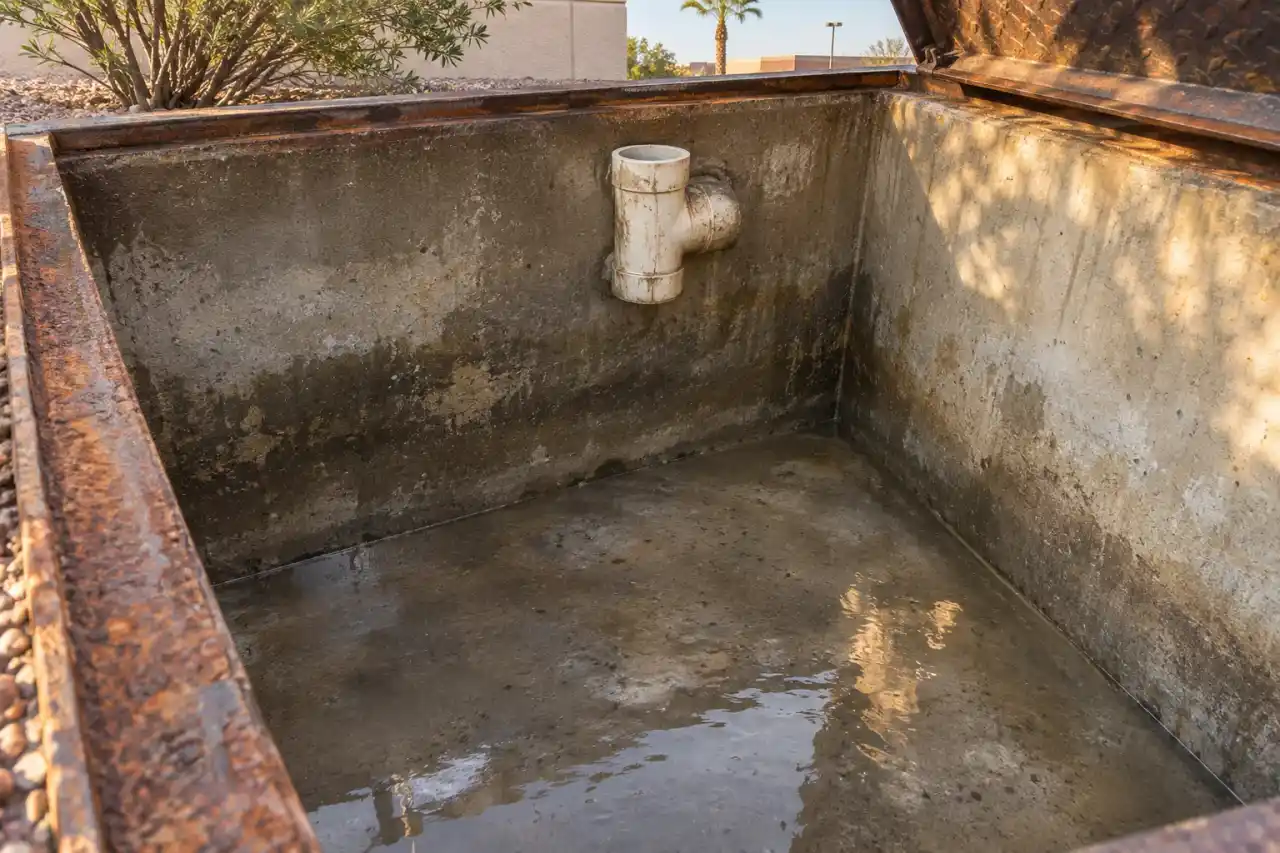
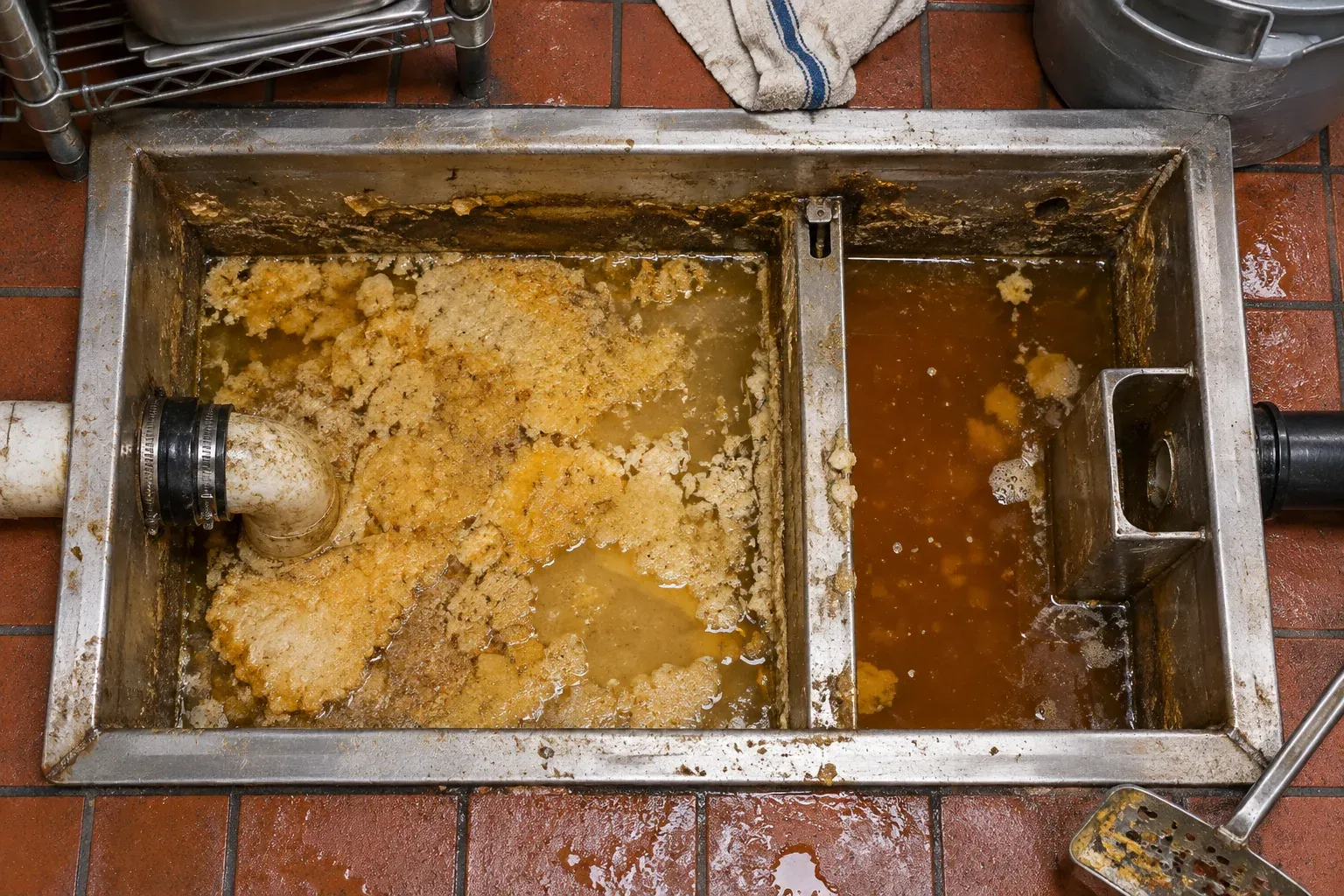
Several Valley programs, including Phoenix, Chandler and the Salt River Community, use the same physical rule: grease, oil, sand, sludge and solids may not exceed 25 percent of the device's liquid volume, measured at the static water level. That is the number a pumper reads with a sludge judge, and it is the number that decides whether a schedule is working.
For a 1,000 gallon interceptor, 25 percent is 250 gallons, which is about 11 inches of combined depth in a tank with a 6 foot by 6 foot footprint. For a 50 gallon trap, it is 12.5 gallons. A small device hits the limit fast, and a large one takes months.
02 / Good to know
The restaurant density runs along Interstate 10, Litchfield Road, Estrella Parkway and Pebble Creek Parkway, with a newer cluster around the ballpark and the Estrella Falls area. The buildings are mostly recent, which means engineered interceptors and accessible lids.
Two local patterns matter. The ballpark and spring training season produce a short, intense surge, and a device that is comfortable in July can be at 25 percent in March. And the newer centers often have shared grease lines between tenants, which makes one device serve several menus and one schedule serve several kitchens.
03 / Good to know
A shared interceptor in a strip center is governed by the lease, and the lease often names the landlord as responsible for the device and the tenant as responsible for what goes into it. When that is the arrangement, the tenant still needs the manifest, because an inspection at the restaurant door asks the restaurant for the record.
The practical fix is a written schedule with one company and one file. Each tenant gets a copy of the manifest, the landlord keeps the master, and the log records the depths. A shared device without a shared record is the most common way a new center ends up with a compliance problem in year 2.
04 / Costs
Pricing follows the national ranges on the cost page. A 1,000 gallon interceptor on a quarterly schedule is $900 to $1,600 a year. A 2,000 gallon tank is $1,600 to $2,800. A trap on a monthly habit is $1,500 to $2,400.
The west-side variable is distance to the disposal site. A per-gallon rate that excludes the haul is not comparable to one that includes it.
05 / Septic
When a Goodyear property moves from a septic tank to a sewer line, the tank does not simply stay in the ground. Maricopa County's code requires department approval for the abandonment or closure of an onsite wastewater facility, and the closure must follow Arizona Department of Environmental Quality requirements.
Until the connection happens, the tank is a working part of the kitchen. It needs the measured schedule in the septic tank pumping guide, with the sludge and scum depth written down each time, and a grease interceptor ahead of it. No one closes a tank on their own: the department's written approval comes first.
The grease side of either choice is covered on grease interceptor pumping, which applies on sewer or septic.
Rule card · Maricopa County and the local pretreatment program
Service area map
Goodyear and the areas around Phoenix
The map shows Goodyear and the address in Phoenix. Use the buttons below it to open any area page.
All areas06 / 4 questions
Still have a question?
Send the form with a short note. Someone from our team will call you back soon.
Get a call backQ.01
The interval is set for each address. Confirm it with the city's Industrial Pretreatment Program before setting the calendar.
Q.02
Keep 3 years, the period Phoenix, Scottsdale, Mesa, Chandler and the Salt River Community use.
Q.03
Often yes. A pre-season measurement is cheaper than an emergency during the season.
Q.04
Yes. A new interceptor is sized for its original menu and still fills. The interval is set by the load.
Form open 24/7
Ask for a call back about your grease trap
Tell us which device and which kitchen. We will call you back shortly.
Thank you. You will be called back soon.