Q.01
Can I pump more often than the city requires?
Yes. More frequent service is always allowed.
Phoenix guide · 4 min read
You have a question about a grease trap in your Phoenix kitchen. The answer is below. When you want a pump-out, ask for a call back.
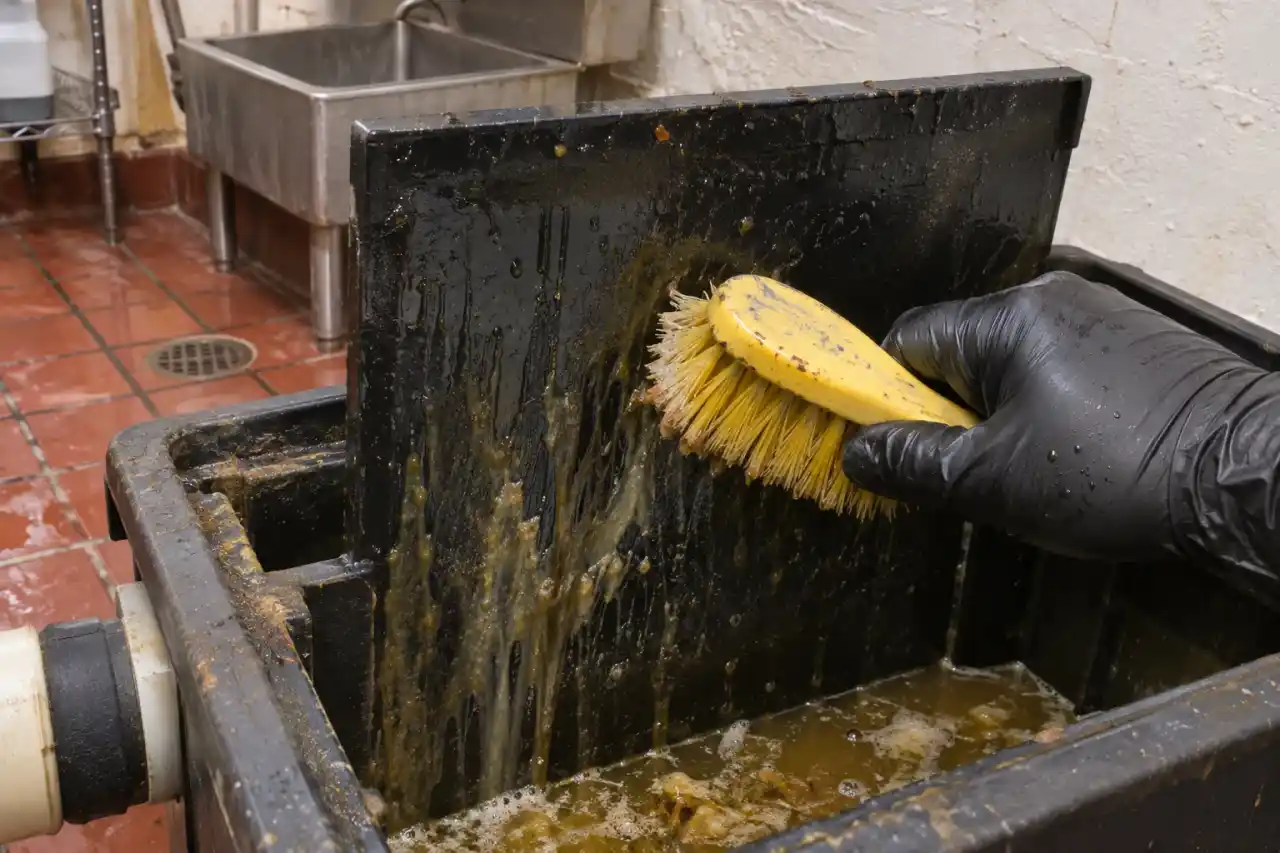
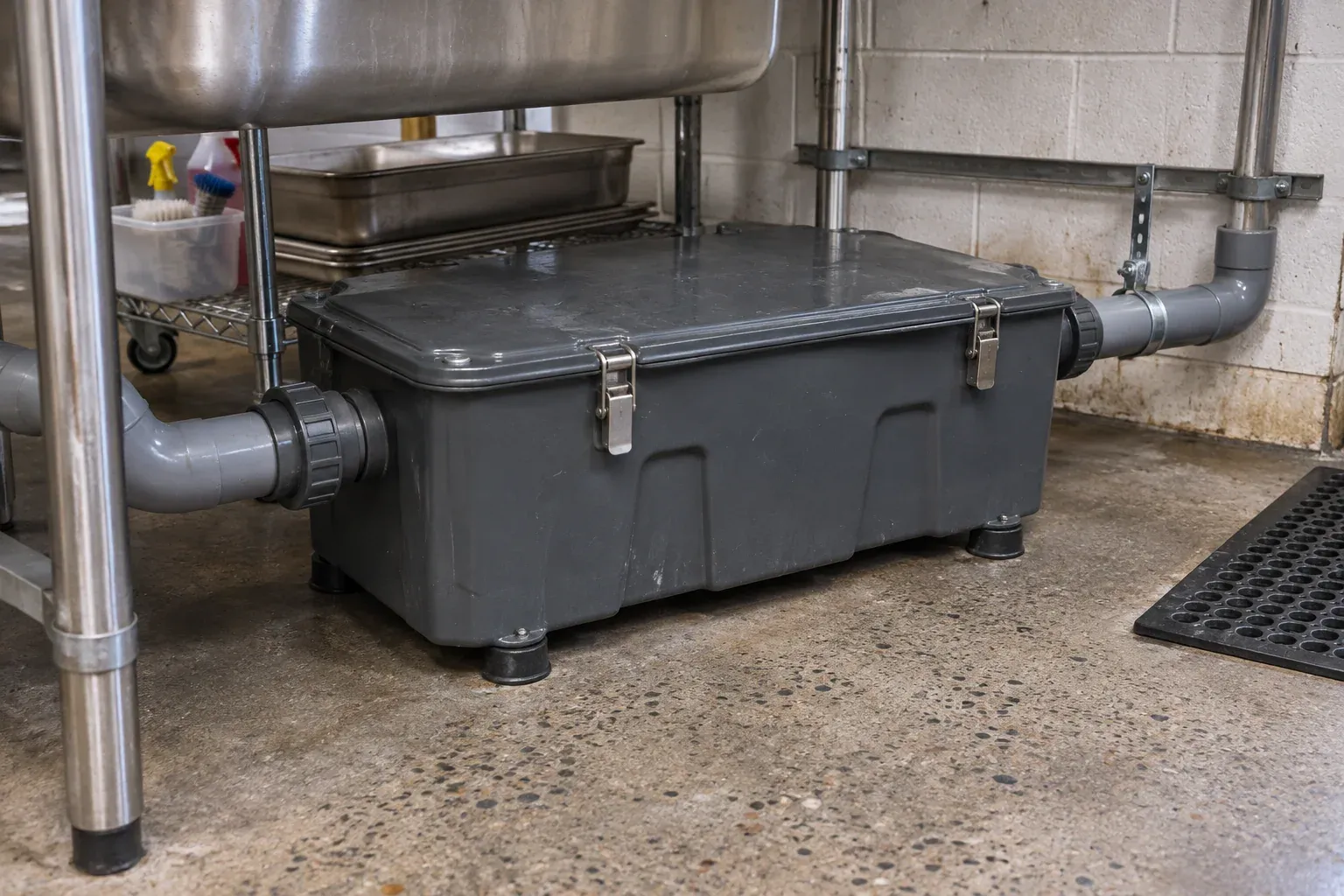
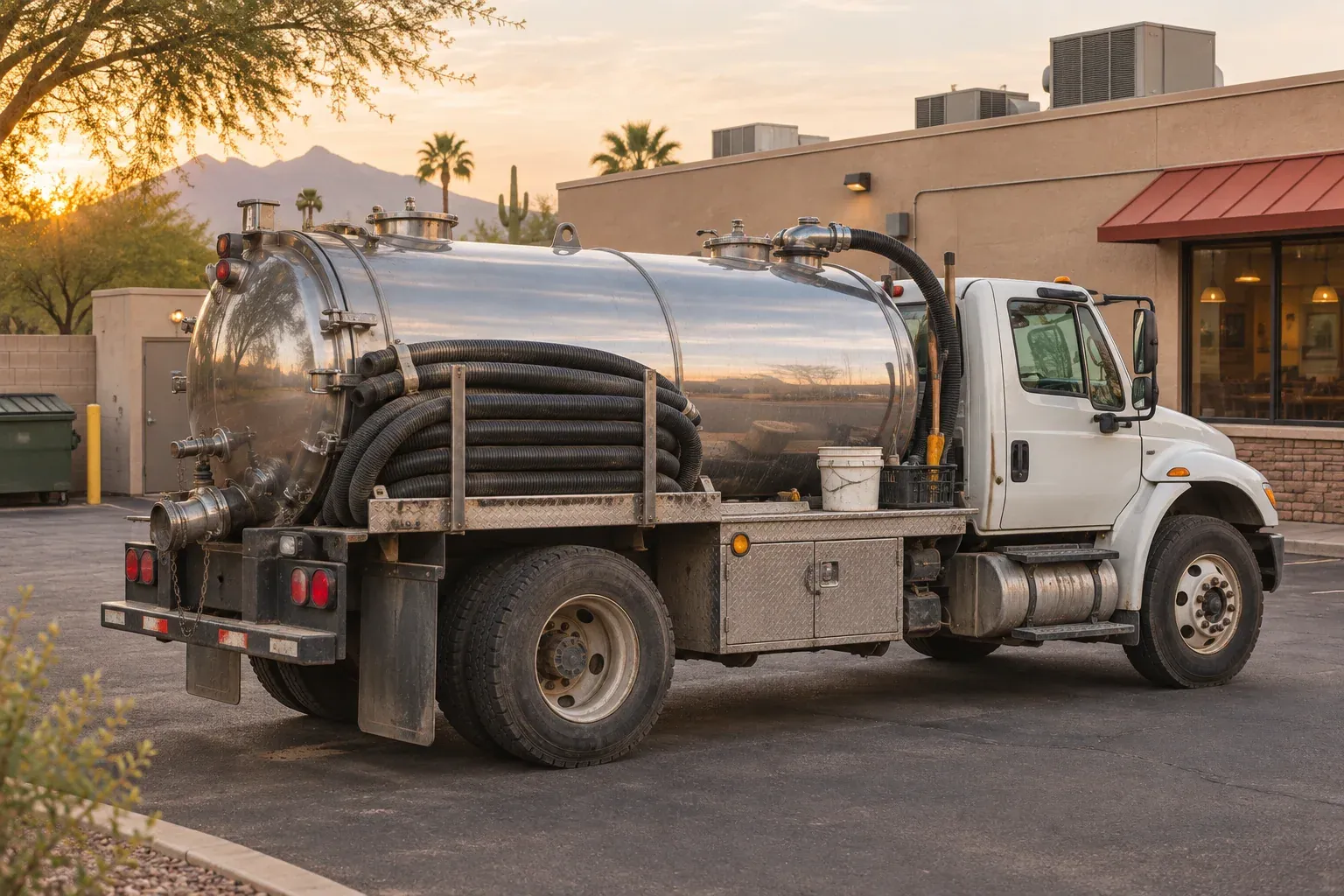
The honest answer has 2 layers. The legal answer is the city interval, which is 30 days for a Phoenix trap and 90 for an interceptor under the grease trap pumping schedule. The practical answer is the fill rate. A restaurant that only knows the first one will eventually pump a full trap at emergency prices, and a restaurant that only knows the second one will fail an inspection on a date. Either layer ends in the same visit: commercial grease trap cleaning for a trap, or grease interceptor pumping for a buried tank.
01 / Good to know
| City | Trap | Interceptor |
|---|---|---|
| Phoenix | 30 days, max 90 | 90 days |
| Tempe | Monthly | Quarterly |
| Scottsdale | No fixed interval | No fixed interval |
| Chandler | 25 percent rule | 25 percent rule |
| Mesa | Continuous operation | Continuous operation |
| Gilbert | 6 months | 6 months |
| Glendale | 180 days | 180 days |
| Peoria | 90 days | 90 days |
| Surprise | No fixed interval | No fixed interval |
| Salt River Community | 30 days, max 90 | 90 days, max 180 |
The number that applies is the one for the city the kitchen drains into. A restaurant on the Phoenix side of a street and one on the Tempe side can have different clocks.
02 / Good to know
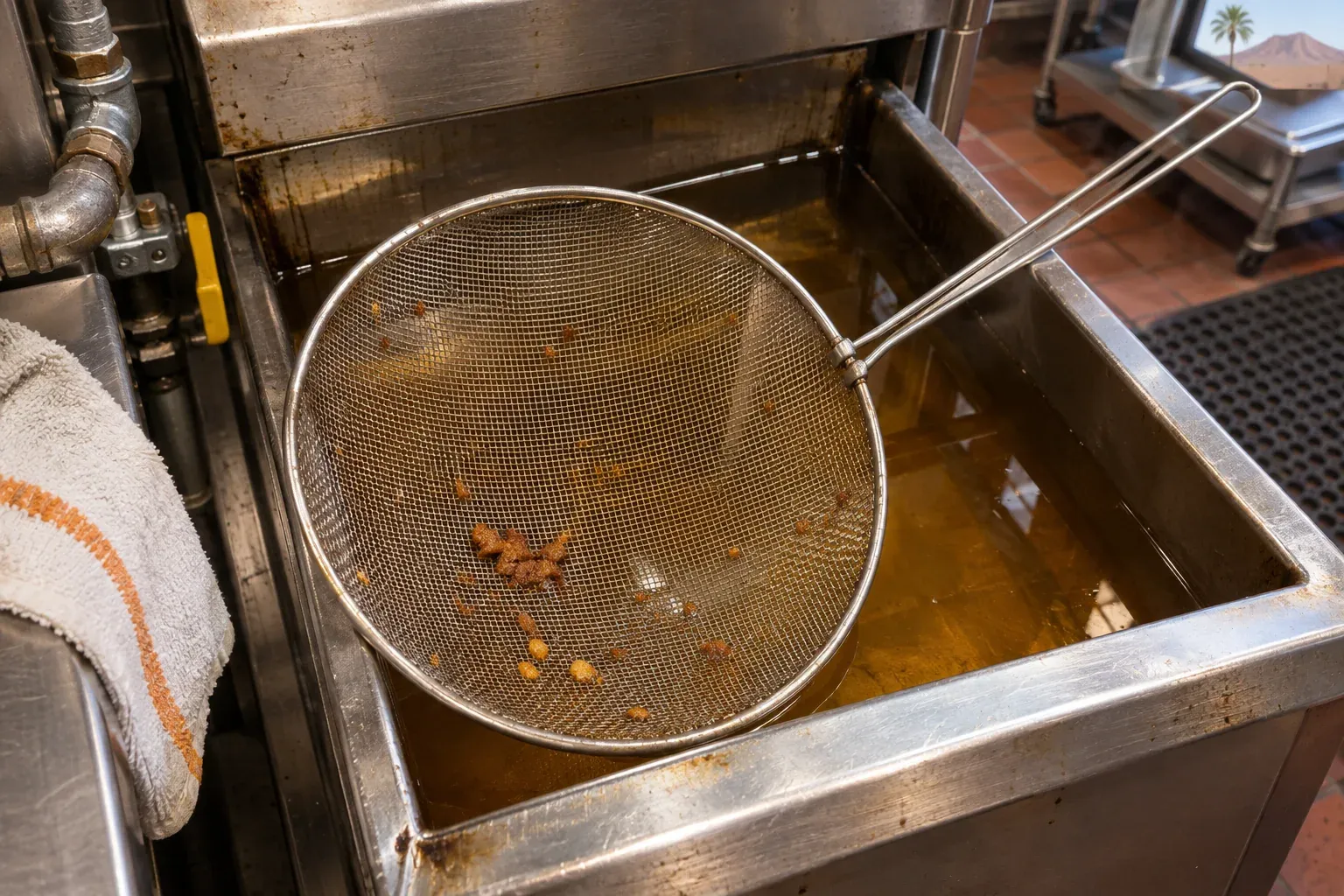
The fill rate is the percentage of capacity the device gains in a month. It is measured at each pump-out by reading the grease mat depth and the solids depth, and it is the number that tells a restaurant whether the city interval is generous or tight.
A rough method: if the combined depth is 8 inches in a 6 foot by 6 foot tank, the volume is about 8 inches times 36 square feet, which is 3 cubic feet per inch, so 24 cubic feet, which is about 180 gallons. In a 1,000 gallon tank, that is 18 percent. Two visits 60 days apart give the monthly rate.
If the device gains 8 percent a month, a 90 day interval puts it at 24 percent, which is inside the limit with almost no margin. If it gains 12 percent a month, 90 days puts it at 36 percent, which is a violation. The schedule that keeps a device under 15 percent at every visit is the one that never surprises anyone.
03 / Good to know
04 / Schedule
Start at the city floor for the first 2 cycles. Measure at each visit. If the device is under 10 percent at both visits, the interval can stay at the floor or be extended with a variance. If it is above 20 percent at either visit, shorten the interval by 2 weeks and measure again.
Put the next 4 dates on a calendar with a reminder 5 days before each. A pump-out that lands on the due date is on time. One that lands 2 days late is a risk, and one that lands 2 weeks late is an emergency waiting to happen.
05 / Schedule
A trap can look fine from the outside and be at 30 percent. The grease mat is under the lid, the solids are at the bottom, and the liquid on top looks like water. The only way to know is to measure.
That is the argument for a service log with depths. It converts a subjective impression into a number, and the number is what an inspector and a hauler can both work with.
07 / 4 questions
Still have a question?
Send the form with a short note. Someone from our team will call you back soon.
Get a call backQ.01
Yes. More frequent service is always allowed.
Q.02
In Phoenix, only with a variance, and only with measurement records that support it. The 25 percent limit still applies.
Q.03
Rarely. A 20 to 30 gallon trap at a very busy bar can need service every 2 weeks, and the measurement is what decides it.
Q.04
The device keeps filling. If it reaches 25 percent, the restaurant is out of compliance, and if it overflows the visit becomes an emergency at a higher price than a scheduled one.
Form open 24/7
Ask for a call back about your grease trap
Tell us which device and which kitchen. We will call you back shortly.
Thank you. You will be called back soon.