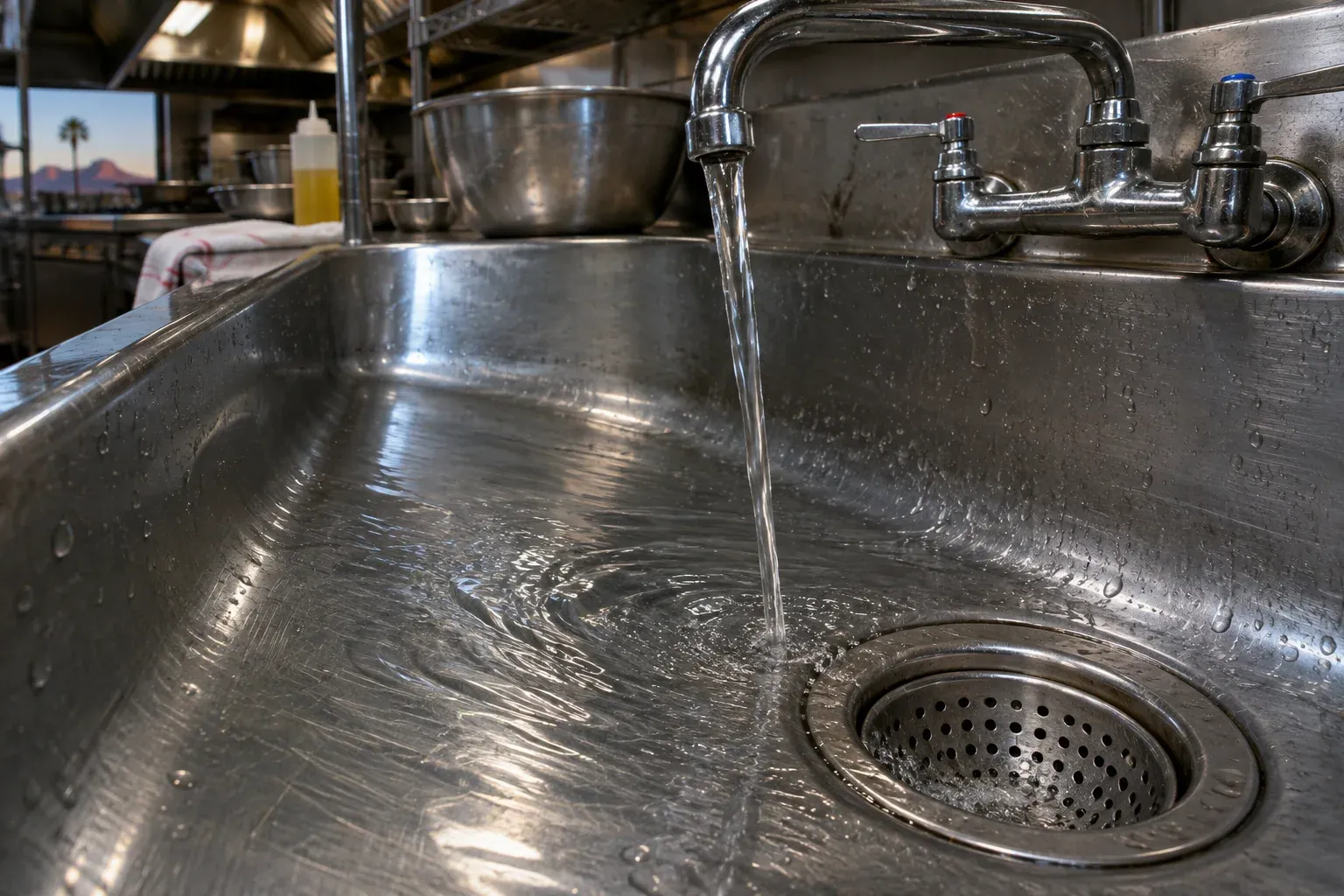
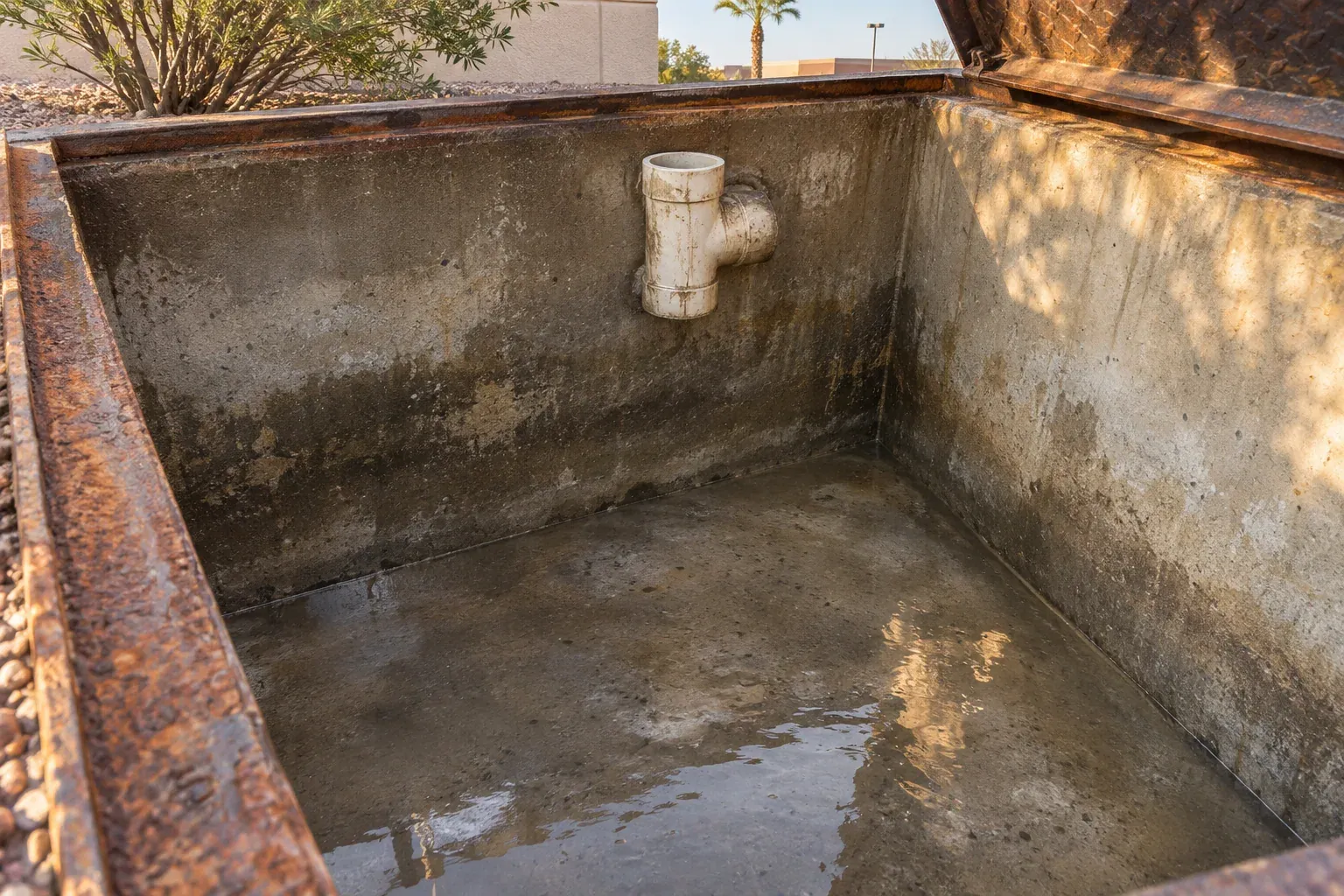
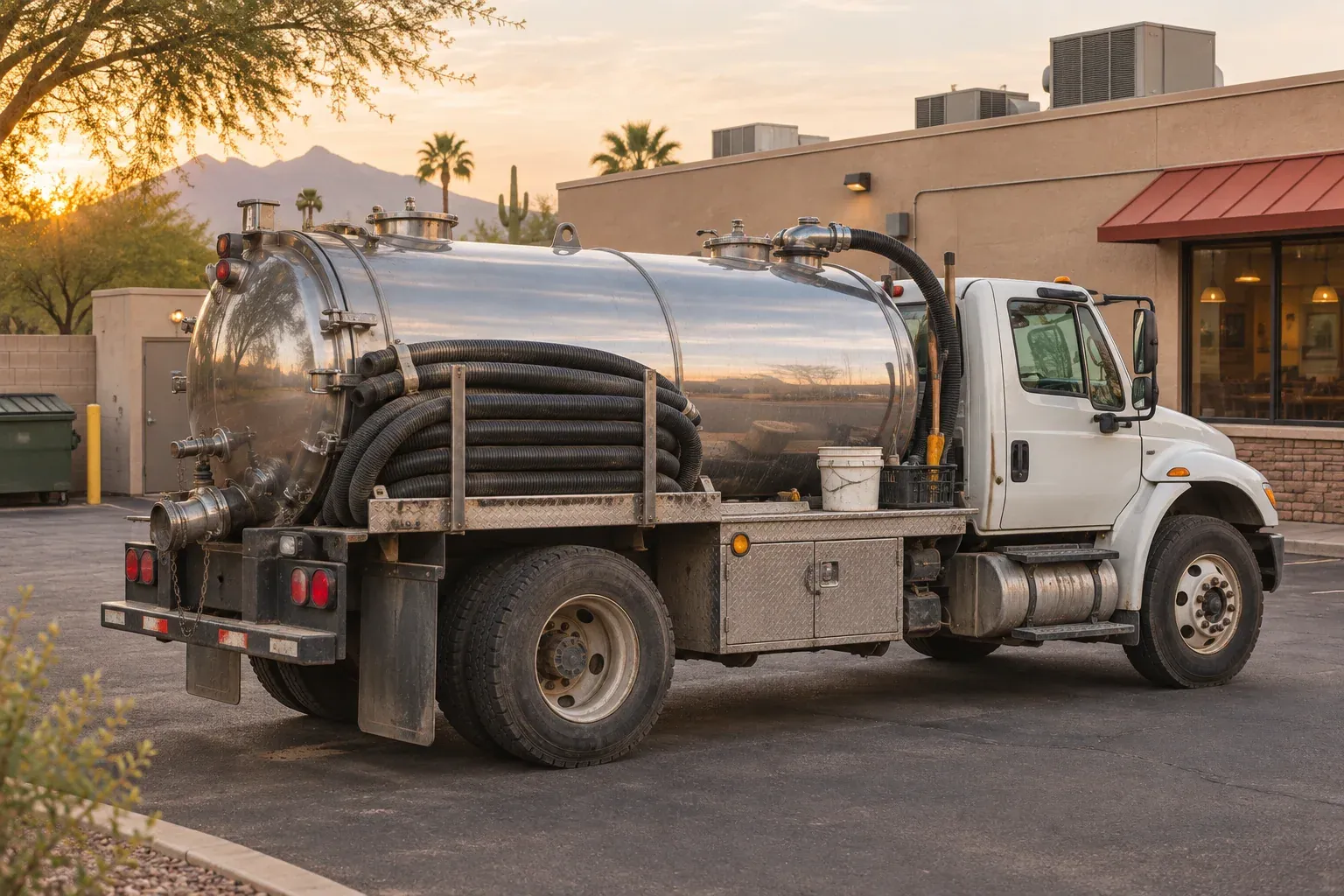
A kitchen drain line carries warm water with fat in it. The fat cools against the pipe wall, sticks, and catches food particles. Over months, the layer thickens from a film to a coating to a restriction. The pipe does not clog all at once; it loses diameter, and the last inch is the one that fails on a busy night.
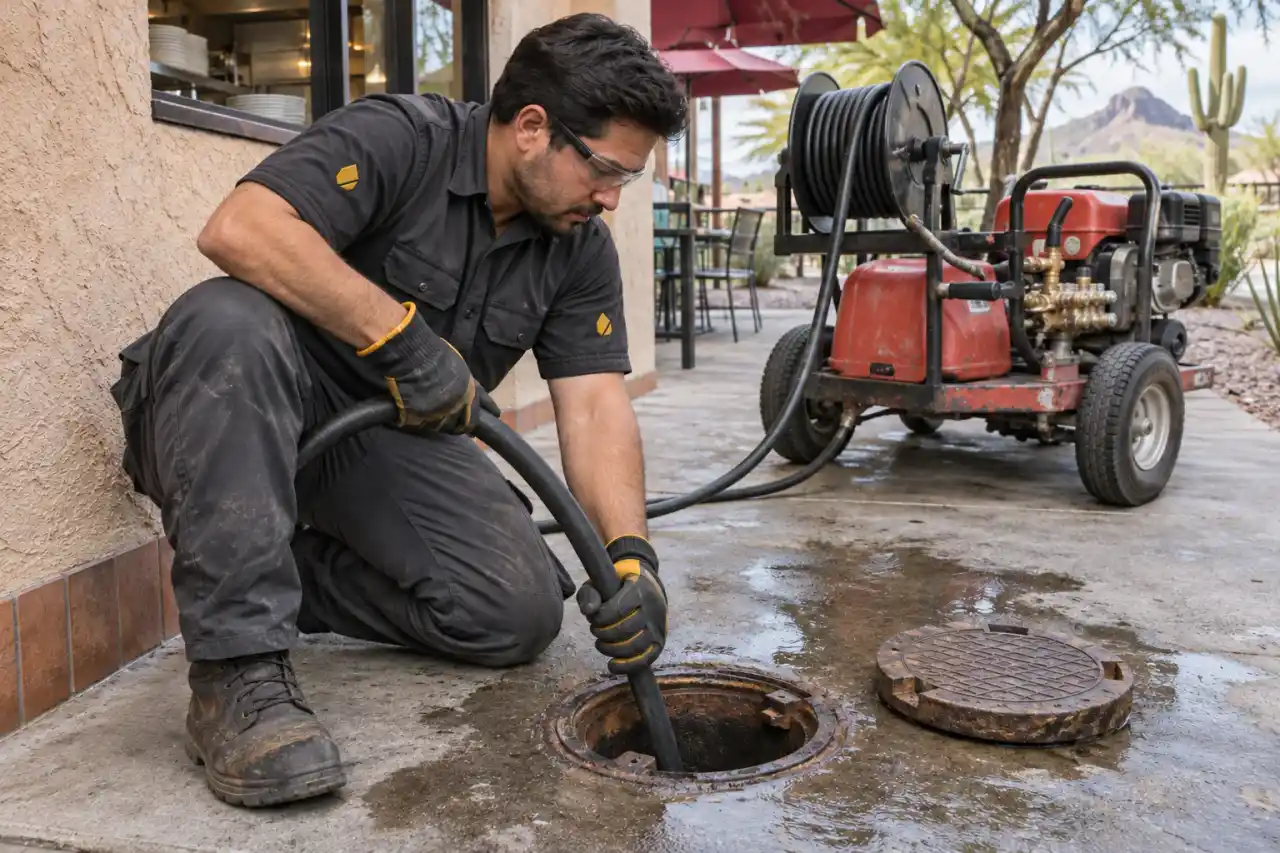
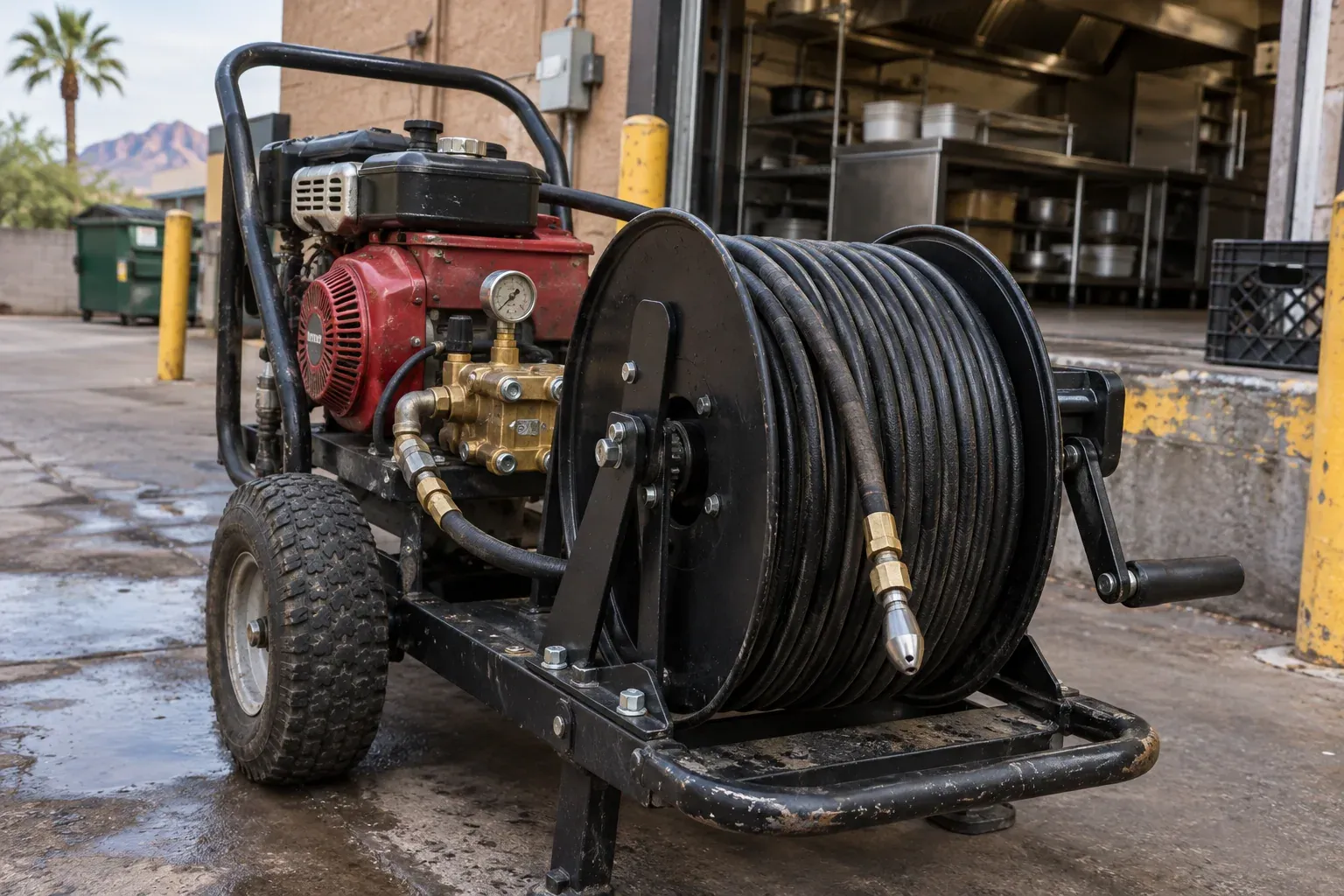
The buildup has a texture. Fresh grease is soft and grey. Old grease is hard, dark and waxy, and it can build up thick enough to cut the pipe diameter sharply. Water at low pressure runs over the top of it. Water at high pressure with a forward jet and a rear jet cuts into it and flushes it away.
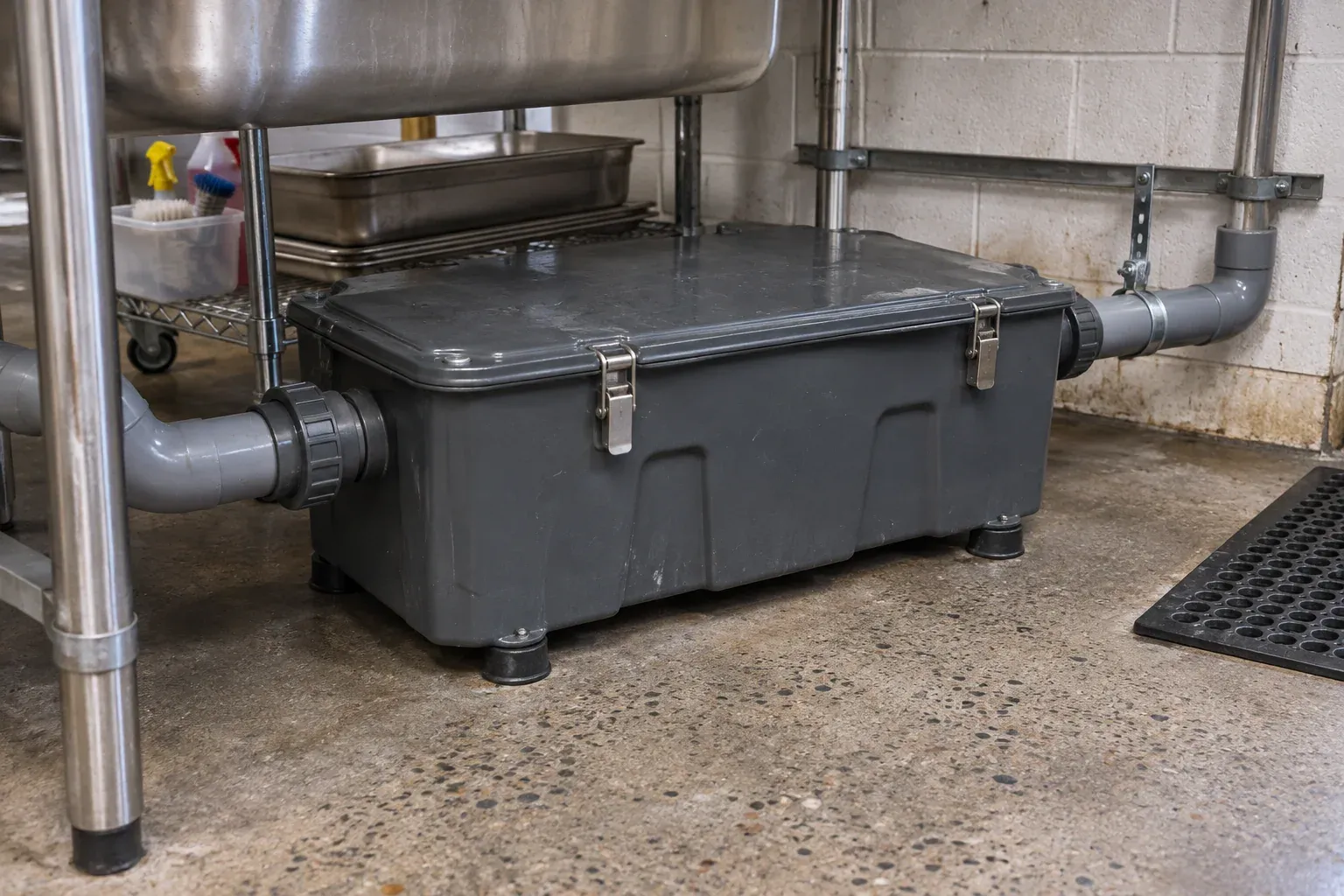
That is why a garden hose, a plunger or a bottle of drain cleaner does not solve the problem. Drain cleaners can open a channel through the grease, and some of them generate heat that damages older pipes. In a commercial kitchen they also add a chemical load that the city may prohibit in the trap, which is a separate compliance risk.