Q.01
Does every Tempe restaurant need a grease interceptor?
No. The code requires a trap or an interceptor. A kitchen with 4 or fewer fixtures on the grease line can use a trap; more than 4 fixtures, or a commercial dishwasher, needs an interceptor.
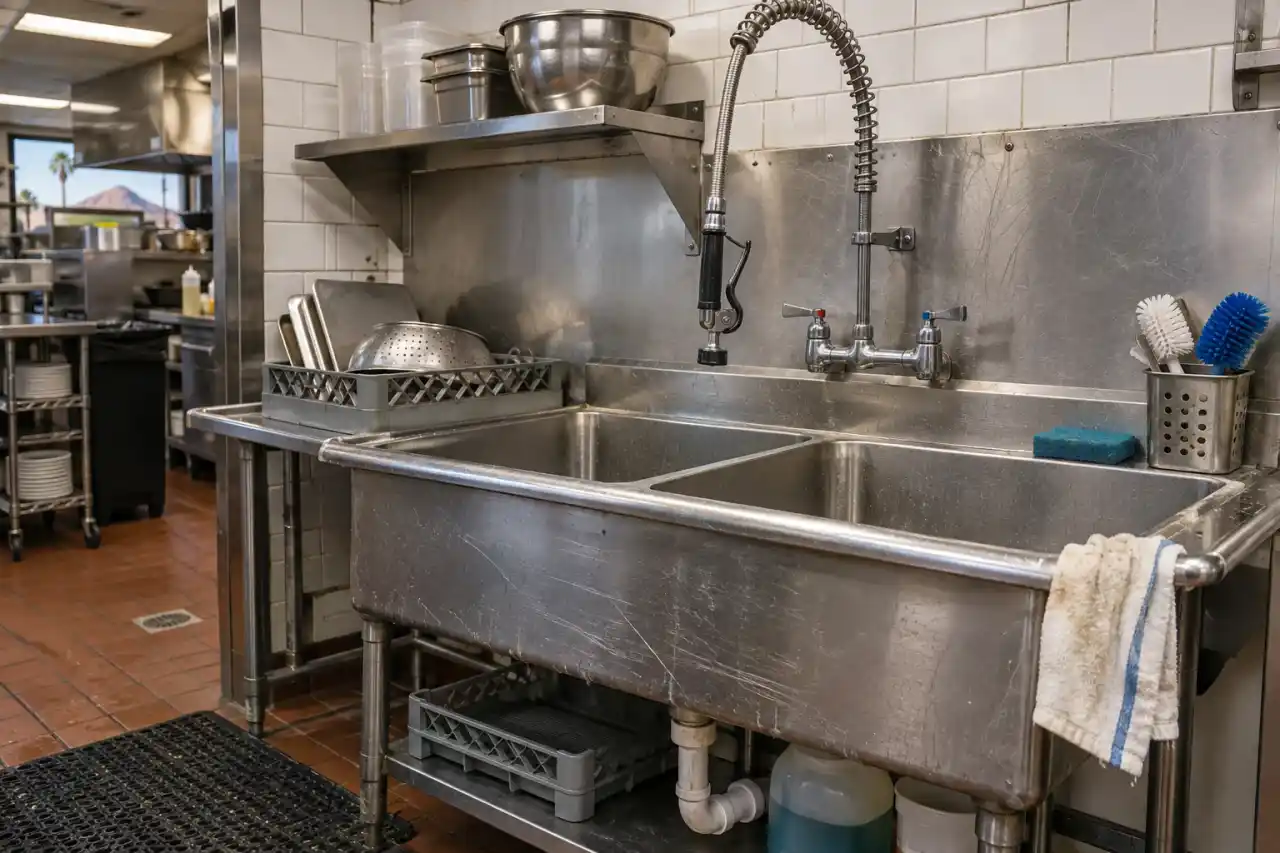
Service area · Tempe, AZ
You run a kitchen in Tempe. Tell us the device and the last pump-out date. We will call you back shortly.
Form open 24/7
Get a call back
Phoenix + 15 Valley cities
Tempe's rule is simple to state: if a kitchen serves food, it needs a grease device, and the device needs a schedule. City Code 27-22 requires an indoor grease trap or an outdoor interceptor at every food service establishment, and the FOG program sets the operating intervals at 30 days for a trap and 90 days for an interceptor. Records stay on site and have to be available when the city asks.
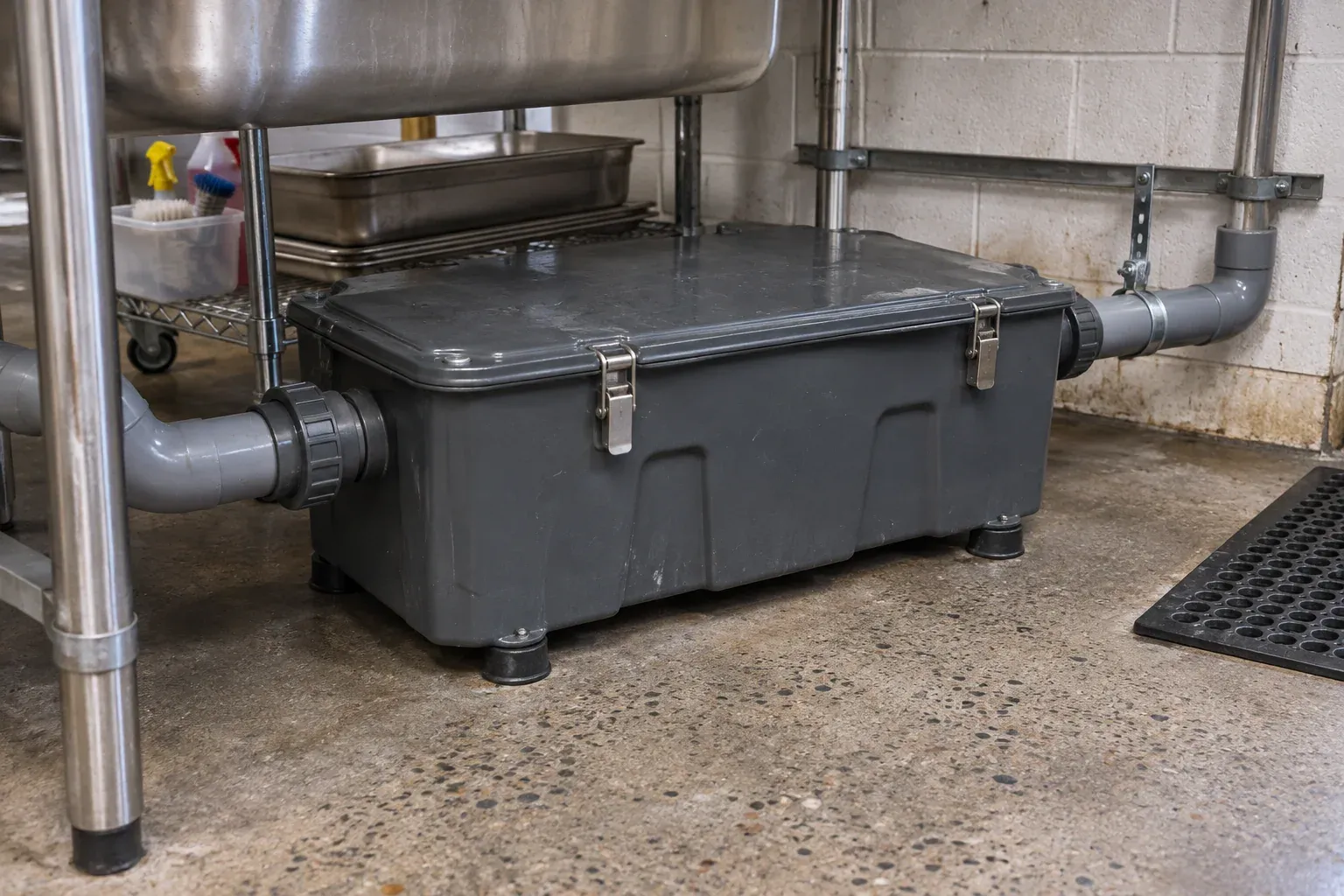
Tempe also publishes specific device sizing guidance. An interceptor has a 500 gallon minimum and a 2,500 gallon maximum, anything larger needs engineering design, a trap has a 50 gallon per minute and 100 pound minimum, and 4 or fewer kitchen fixtures can use a trap while more than 4 fixtures, or any commercial dishwasher, needs an interceptor. That guidance is worth reading before a new restaurant signs a lease.
01 / The 25 percent rule
Tempe's FOG program calls for quarterly service of an interceptor by a non-hazardous liquid waste hauler, or more often if needed.
The measured fill rate is what keeps the interval honest. A Mill Avenue bar with a fryer-heavy menu can hit 25 percent in 6 weeks, and the calendar does not protect it. A low-volume cafe in a professional building may still be under 15 percent at 90 days, and the record of the measurement is what makes that visible.
For a kitchen that is new to the city, the practical approach is to measure at every pump-out for the first 3 visits. The depths tell you whether the city interval fits the menu, and the answer is often not what the previous owner assumed.
02 / Good to know
Tempe's restaurant density is concentrated around Mill Avenue, Apache Boulevard, University Drive and the lake, and the load profile is different from a suburban dining room. Late-night volume, a short and fryer-heavy menu, and a customer base that orders at 1 am produce grease fast and in bursts.
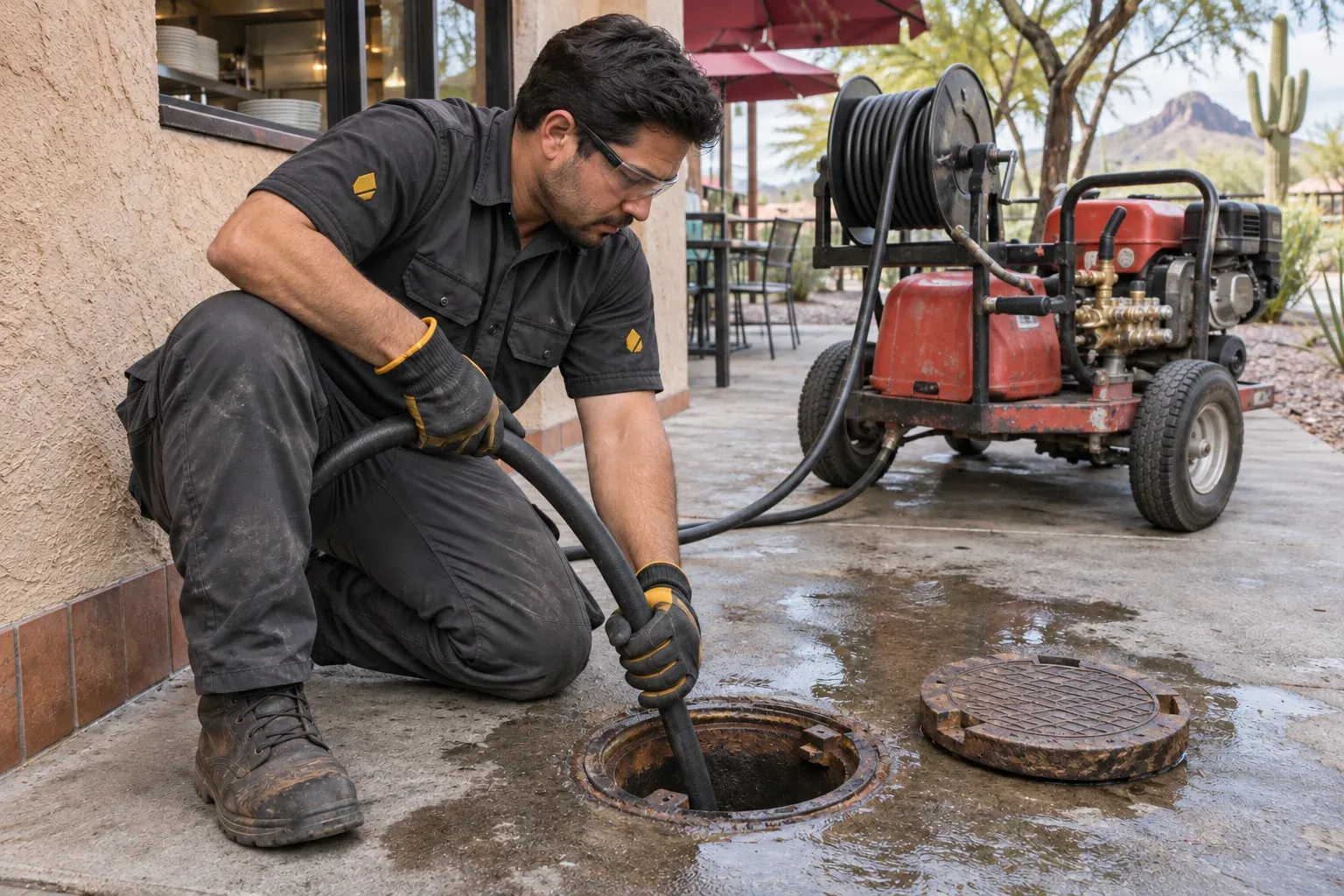
That pattern causes 2 specific problems. The trap fills on the weekend, not evenly across the month, so a 30 day visit can arrive 2 weeks late. And the line between the trap and the sewer gets a heavy load of food solids, because late-night kitchens scrape less carefully. A pump-out that does not include wall scraping and a line check leaves both problems in place.
The fix is a schedule that lands before the weekend, not after it, and a line jetting visit once a year on any kitchen that fries after midnight.
03 / Good to know
Tempe's program gives the numbers that most cities leave to a plumber. The minimum interceptor is 500 gallons, the maximum before engineering design is 2,500 gallons, and the trap minimum is 50 GPM and 100 pounds of grease capacity. The fixture count decides the device type: 4 or fewer fixtures on the grease line can use a trap, and more than 4, or a commercial dishwasher, needs an interceptor.
Two practical notes. A 500 gallon interceptor is a floor, not a target: a full-service restaurant with a dishwasher and 10 fixtures should be sized well above it. And a commercial dishwasher changes the calculation because of the volume and the temperature of the discharge, which is why the code treats it as an interceptor trigger.
04 / Records
Tempe requires the pump-out record to be kept on site and available for the city. The record should show the date, the hauler, the volume, the device and the disposal site. The Tempe FOG program (opens in a new tab) is the office for a question about a specific address, a variance or an inspection notice.
The inspection itself looks at 3 things: the device (present, accessible, correctly sized, baffles in place), the maintenance (pumped on the interval, records complete) and the practice (no additives used as a substitute, no oil going down the drain). A kitchen that has the file and the schedule in order spends most of the visit answering questions, not defending itself.
05 / Costs
Pricing follows the national ranges on the cost page. A 30 day trap schedule is 12 visits a year, so a small cafe at $125 to $200 a visit is $1,500 to $2,400 a year. A 90 day interceptor schedule is 4 visits, so a 1,000 gallon tank at $225 to $400 is $900 to $1,600 a year. A Mill Avenue kitchen that needs 6 visits because of the load should budget $1,350 to $2,400.
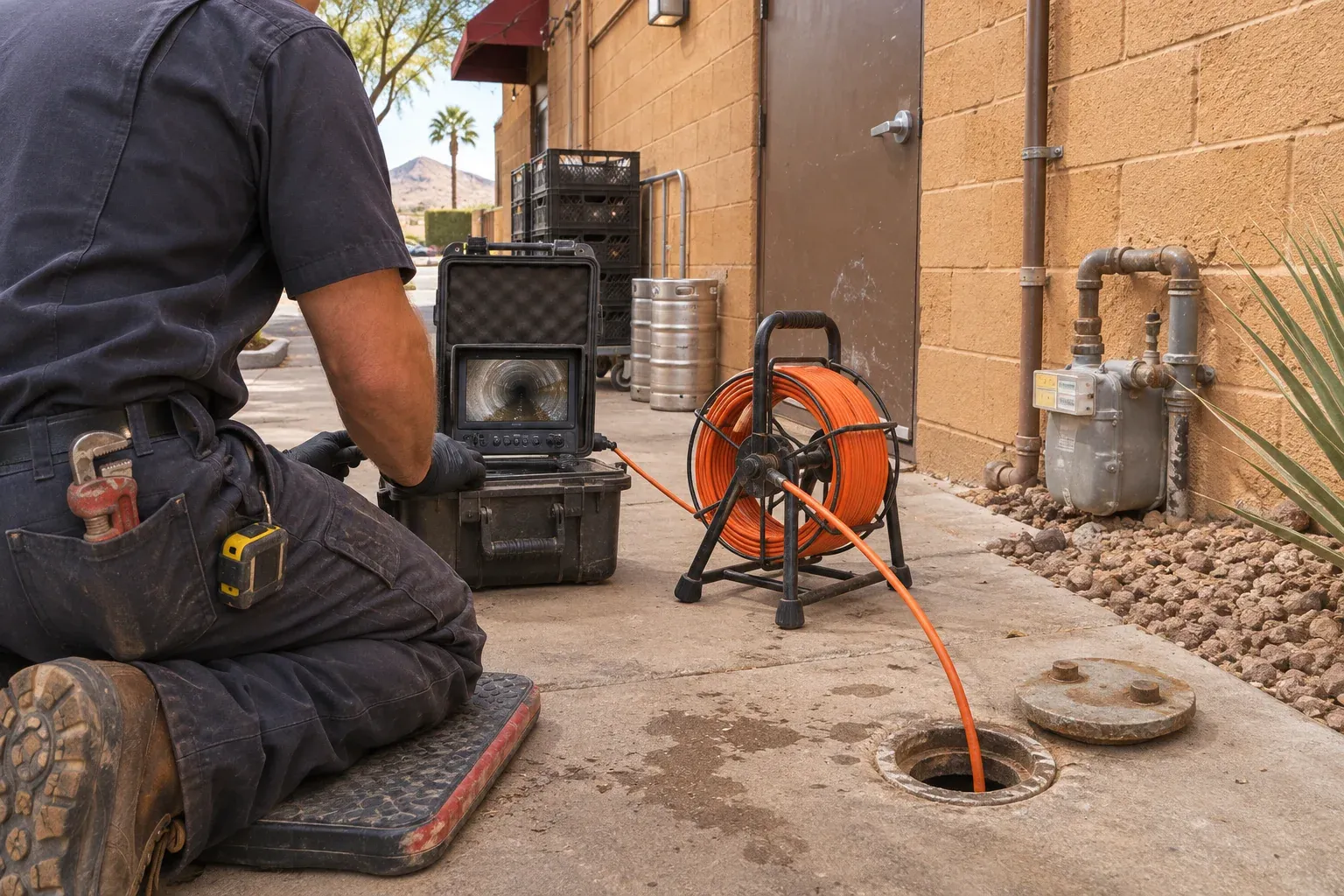
The wildcard is access. A device under a shared alley in a dense block, or a lid behind a patio, adds time to every visit. Settle the access plan before the first service, not after.
06 / How it works
For any Tempe building on a tank, the county rule that matters most is the one on sharing. Maricopa County's code prohibits 1 onsite wastewater system from serving more than 1 property, dwelling or commercial unit, unless it is impossible to build separate systems. A strip center or a multi-tenant building on a tank is exactly the case that rule describes.
For a restaurant tenant in that building, the tank is shared infrastructure with a single owner to ask. Find out where the tank is, who maintains it and when it was last pumped, because a neighbor's kitchen can load the same tank.
If the building is on the city sewer, none of this applies and the grease device is the whole job; use grease trap cleaning in Tempe. If it is not, the septic tank pumping guide shows what to ask the landlord for: sludge and scum readings, the gallons removed and the county approval.
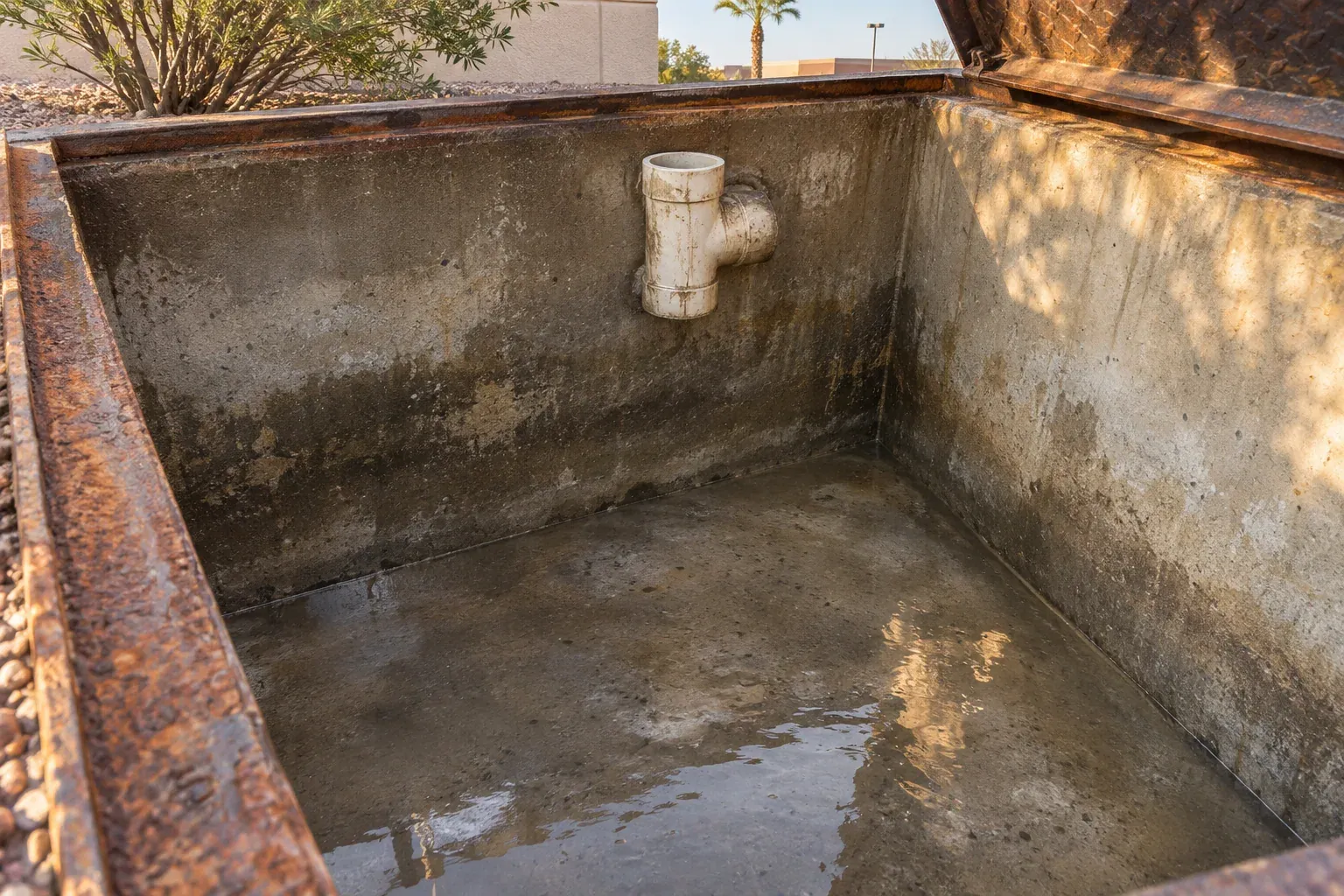
Rule card · Tempe City Code 27-22
Service area map
Tempe and the areas around Phoenix
The map shows Tempe and the address in Phoenix. Use the buttons below it to open any area page.
All areas07 / 4 questions
Still have a question?
Send the form with a short note. Someone from our team will call you back soon.
Get a call backQ.01
No. The code requires a trap or an interceptor. A kitchen with 4 or fewer fixtures on the grease line can use a trap; more than 4 fixtures, or a commercial dishwasher, needs an interceptor.
Q.02
The city's FOG program calls for quarterly service, or more often if needed. Confirm the count for the address with the Tempe FOG program (opens in a new tab).
Q.03
The Tempe FOG program (opens in a new tab) handles inspection questions.
Q.04
Commissary requirements are set by the Tempe FOG program, which has a page at Tempe FOG program (opens in a new tab).
Form open 24/7
Ask for a call back about your grease trap
Tell us which device and which kitchen. We will call you back shortly.
Thank you. You will be called back soon.