Q.01
Can a baffle be replaced without replacing the trap?
Usually yes. If the body is sound and the lid can be removed, a new baffle can be set and secured. The device is pumped first and tested after.
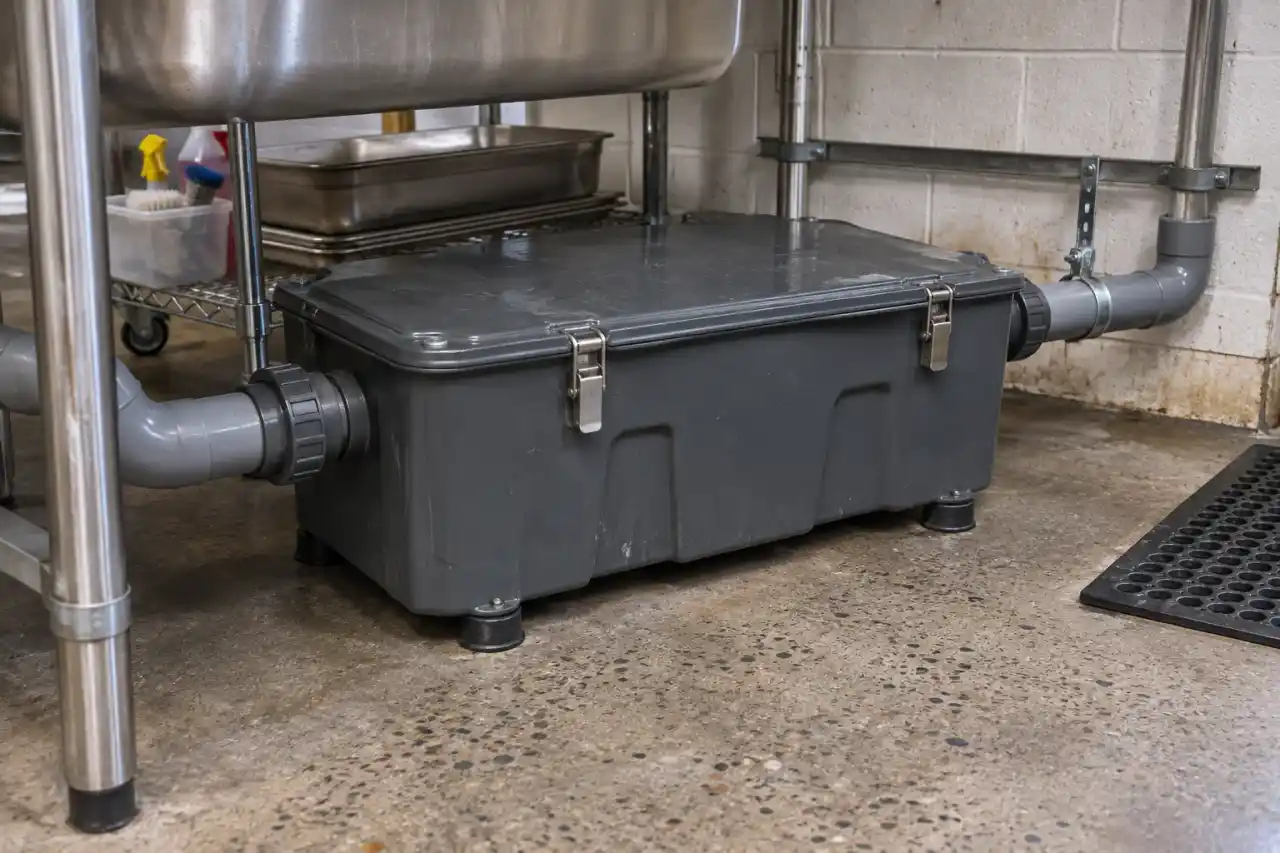
Service 07 of 09 · Phoenix, AZ
You need grease trap repair in Phoenix, and city code 28-15 requires a record of every repair for 3 years. Tell us the device and what you see, and someone from our team will call you back.
Form open 24/7
Get a call back
Phoenix + 15 Valley cities
01 / What you get
Grease trap and interceptor repair in Phoenix is usually a small job with a large consequence. The tank itself can last decades, and the parts that fail are the ones that make it work: the baffle that slows the flow, the lid and gasket that keep runoff out, and the outlet that sets the water level. A device with a missing baffle still holds grease, but it stops separating, and the grease goes into the sewer with the wastewater.
Repair is also the point where the work changes from pumping to plumbing. Pumping, as in grease trap cleaning, is a hauler's job. Replacing a baffle, a lid or a whole device is plumbing work, and installation or replacement of a grease interceptor goes through the city's plan review and needs a permit. Most repair calls come down to 3 questions: what failed, what the repair involves and where the permit line sits.
03 / How it works
Your request starts a fixed sequence.
03 / Costs
There is no reliable public price table for repair, because the scope varies too much. The useful anchors are the parts and the labor. A baffle or lid repair is typically $300 to $800 in national ranges, plus the pump-out. An outlet or inlet repair is a plumbing job that starts around $400 and rises with access and concrete work. A full interceptor replacement is a project in the thousands, and the permit and inspection are part of the cost.
Quotes for the same repair differ mostly in scope: pump-out included or not, permit included or not, concrete restoration included or not, inspection included or not. The cost page covers pump-out pricing, which is usually a separate line.
04 / Inspections
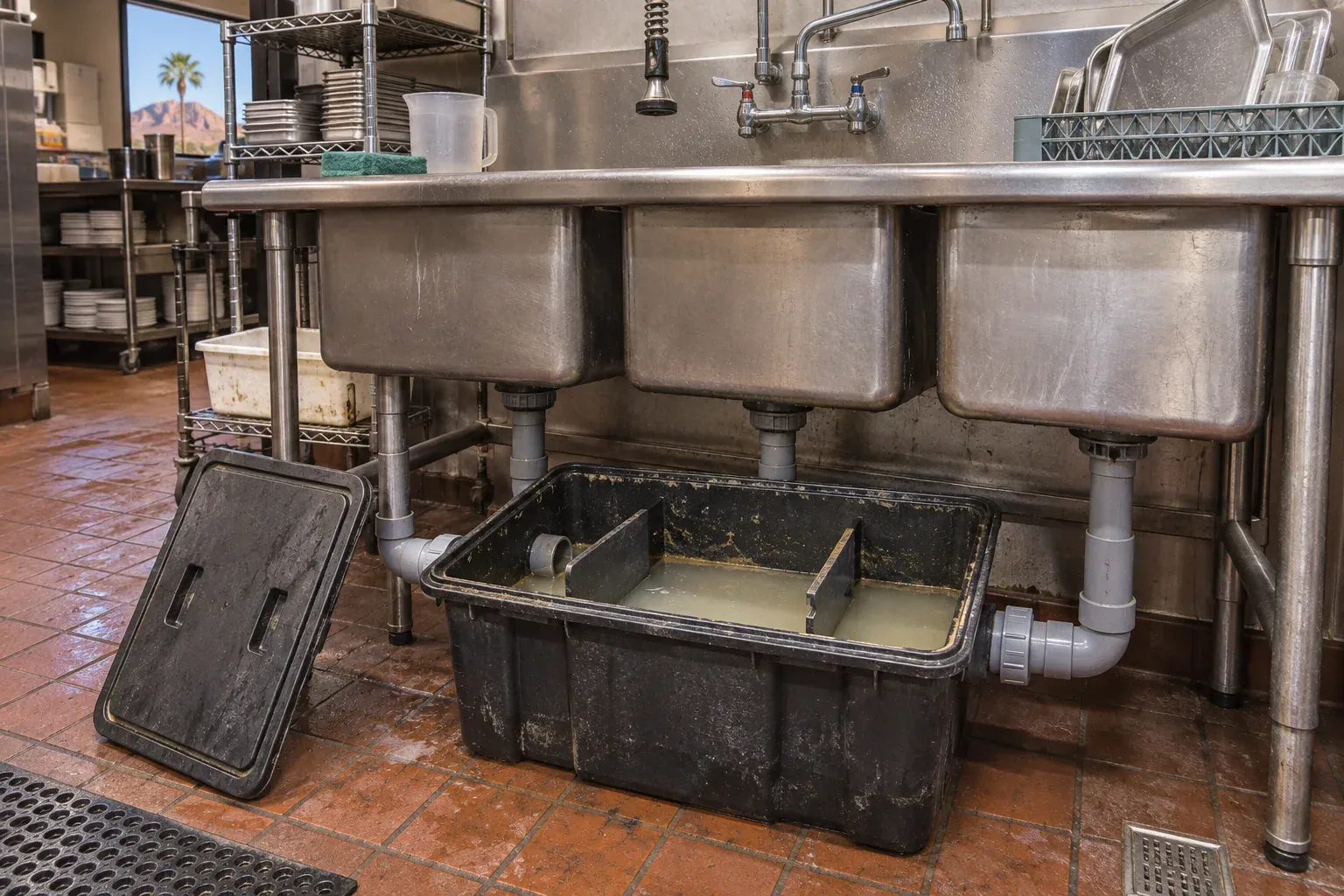
A hydromechanical trap has a baffle that forces the water to change direction. When it rusts out, breaks loose or is removed and never replaced, the trap becomes a box that grease flows through. A missing baffle is a defect inspectors look for.
A lid that does not seat lets in rainwater, mop water and debris. A hardened or missing gasket lets odor out and runoff in. A lid in a drive lane or parking lot can crack or bend under a truck tire, and a cracked lid is both a safety issue and a compliance issue.
The outlet fitting sets the water level and the point at which the clear layer leaves the device. A partially blocked or lowered outlet changes the retention time and can let grease out with the water.
A settled inlet pipe, a broken connection or a collapsed section between the fixture and the device causes backups that look like a full trap but are not.
Concrete tanks can crack, and steel tanks can rust through. A tank that is leaking groundwater in, or wastewater out, is a replacement rather than a repair in most cases.
05 / Good to know
Three questions decide it. Is the tank structurally sound? Is the size still right for the kitchen? Is the location still legal and accessible?
If the tank is sound and the size is right, a baffle, lid, gasket or outlet repair restores the device. If the tank is cracked, rusted through or full of hardened solids that cannot be removed, replacement is the realistic path. If the kitchen has changed since the device was installed, the size may be the actual problem, and a larger device may be the correct fix.
The third question is the one owners forget. A device under a new patio, a new drive lane or a new storage shed may be sound and correctly sized and still fail the access requirement, because a pumper cannot reach it. Moving a lid is a plumbing and concrete job.
06 / How it works
The service company pumps the device first, because nobody can inspect a baffle through a foot of grease. Then the parts are checked against the manufacturer's design: the baffle position, the outlet height, the lid seat and the gasket.
A baffle replacement is usually a short job. The device is pumped, the old baffle is removed, the new one is set and secured, and the device is refilled and tested with water. A lid replacement is similar, and a gasket replacement is quicker.
An outlet repair or an inlet repair is plumbing. The pipe is cut, the fitting is replaced and the joint is tested. If the work touches the building's plumbing system, it needs a permit, and the inspection happens before the trench is backfilled.
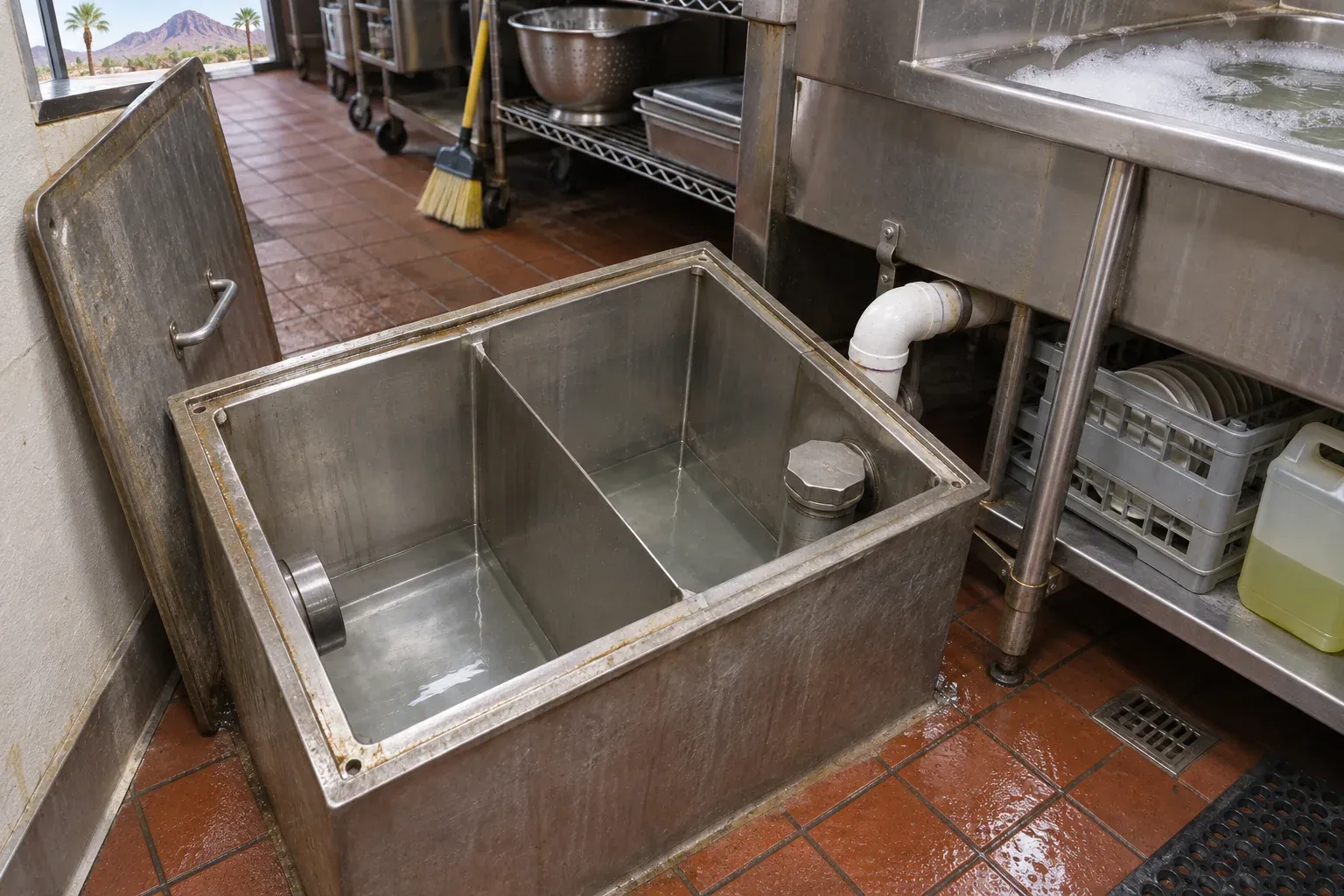
A full replacement is a bigger project: pump, disconnect, remove the old tank, set the new one, connect the inlet and outlet, test, and get the city inspection. In Phoenix, interceptors that are installed or replaced go through the city's plan review, and the city's FOG manual describes the smallest allowed gravity interceptor as a 2-compartment, 2-manway, 500 gallon device.
07 / Good to know
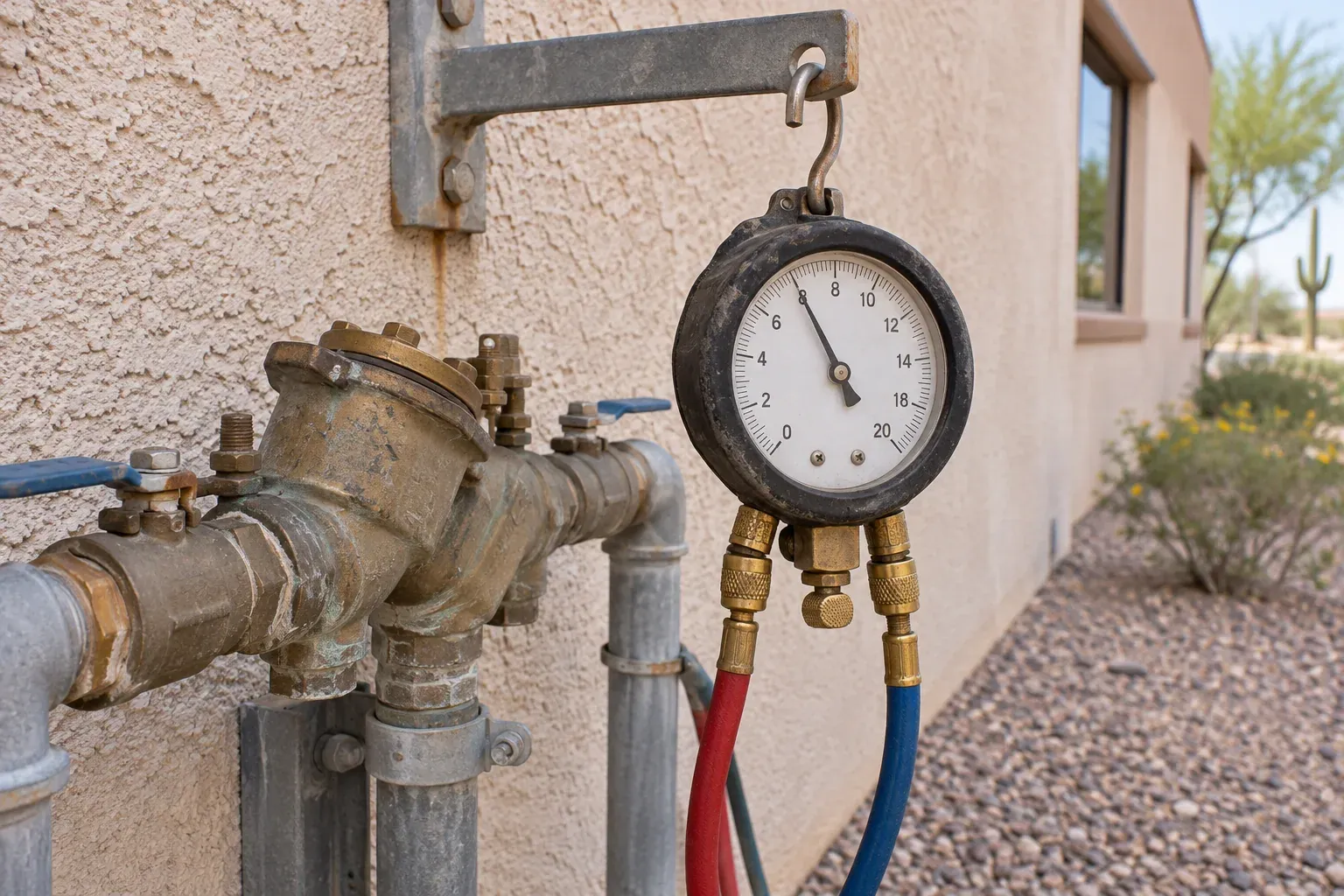
Every repair belongs in the FOG compliance records file. Phoenix City Code 28-15 F requires records of repair, replacement and maintenance to be kept at the facility for 3 years. A repair invoice with the date, the part and the reason is exactly what an inspector wants to see, because it explains a change in the device's performance.
Keep the repair invoice with the manifests, and photograph the new part before the lid goes back on. If the city inspects 2 years later and asks why the trap is working better than it did in the old service records, the photo and the invoice answer the question.

08 / Costs
Repair prices differ by scope. The usual variables are:
A baffle replacement inside a 1,000 gallon tank is mostly labor and access, and a device replacement is mostly permit, concrete and disposal of the old tank.
09 / Good to know
Two habits extend the life of a device. Keep the lids seated and the gaskets intact, so runoff and debris stay out. And pump on the grease trap pumping schedule, so solids never harden into a layer that has to be chipped out.
A tank that is pumped on time and kept sealed can last decades. A tank that takes in runoff, sits at 40 percent for months and has a cracked lid usually does not. The repair decision is much cheaper when it is made early.
10 / 6 questions
Still have a question?
Send the form with a short note. Someone from our team will call you back soon.
Get a call backQ.01
Usually yes. If the body is sound and the lid can be removed, a new baffle can be set and secured. The device is pumped first and tested after.
Q.02
Yes. Installation or replacement of a grease interceptor is plumbing work and goes through the city's plan review and needs a permit. The inspection happens before the device is covered.
Q.03
That depends on the lease. Many commercial leases put the device on the tenant, and some put structural repairs on the landlord. Read the maintenance clause before authorizing a replacement.
Q.04
A concrete tank can last decades if it is maintained and the lids stay sealed. A steel trap can rust through in a much shorter time, especially in a wet pit. Condition, not age, decides the replacement.
Q.05
No. The baffle is what makes the device separate grease. Removing it turns the trap into a holding box and puts grease in the sewer, and Phoenix City Code 28-15 A requires interceptors to be kept in continuously effective operating condition, including necessary repairs to internal structures.
Q.06
It has to be made accessible. A pumper cannot service a device that cannot be opened, and the city can require access as a condition of compliance. Moving a lid is a concrete and plumbing job.
Form open 24/7
Ask for a call back about your grease trap
Tell us which device and which kitchen. We will call you back shortly.
Thank you. You will be called back soon.