Q.01
How often does Phoenix inspect?
The interval depends on the facility, and inspections can follow complaints or backups, so the practical answer is to be ready at any time.
Phoenix guide · 3 min read
You have a question about a grease trap in your Phoenix kitchen. The answer is below. When you want a pump-out, ask for a call back.
The word inspection makes restaurant managers nervous, and it should not. The Phoenix program checks 3 things: that the device exists and works, that the maintenance is documented, and that the kitchen is not using chemistry or a bypass to avoid the work. All 3 are answerable in a few minutes if the file is in order.
01 / Good to know
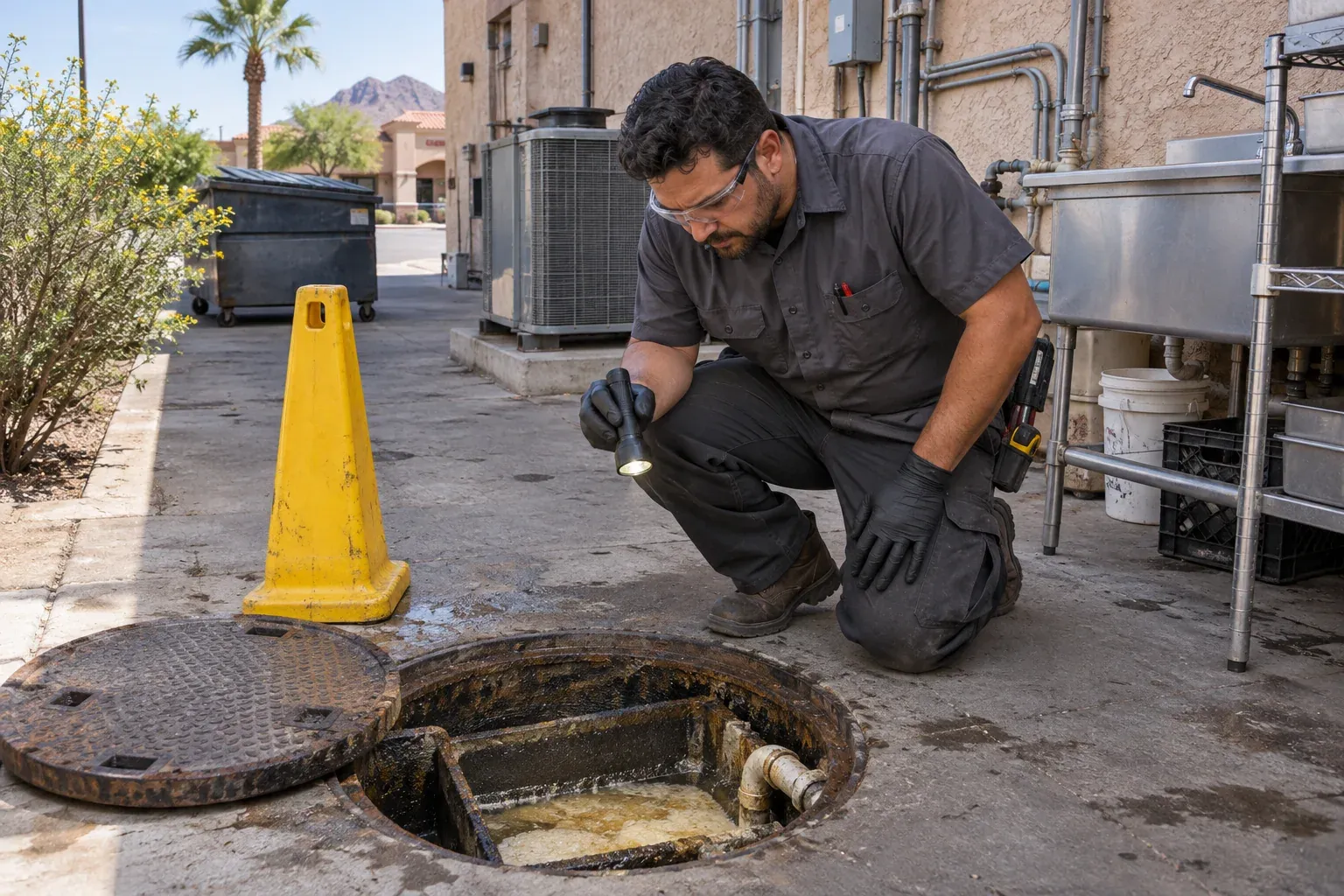
The inspector starts at the lid. The device has to be present, accessible and the right type for the kitchen. The lid comes off, and the inspector looks at 4 things: the grease mat, the solids, the baffle and the outlet.
A missing or damaged baffle is a common defect, because it is invisible from the outside and it stops the device from separating. A cracked lid or a failed gasket lets runoff in. A blocked outlet changes the water level and the retention time.
The inspector may measure the depths, or may ask for the last pumper's numbers. Either way, the device has to be under the 25 percent limit.
02 / Records
Phoenix requires 3 years of FOG compliance records at the facility: cleaning, volume removed, device capacity, disposal, repair, replacement and maintenance. The inspector will ask for the file, and the file is where many restaurants run into trouble. Pump-outs that follow a dated grease trap pumping schedule leave those numbers on file.
The 5 things to have ready:
A restaurant that cannot find the manifests can often reconstruct them from hauler invoices and bank statements, and then keep the log current. That is a better answer than an empty folder.
03 / Questions
The inspector will look at the kitchen and ask about habits. The questions are usually about 4 things: where the fryer oil goes, whether the dish pit scrapes into the trash, whether there is an additive in use, and whether the trap has ever been bypassed.
The additive question has a specific answer in Phoenix. Chemicals, enzymes, bacteria and emulsifiers used in place of physical cleaning are prohibited by 28-15 G. A product used alongside a pump-out is a different case, but a product sold as a replacement is a violation.

04 / Records
The inspector does not pump the device, does not repair it and does not set the price of a service. Inspections happen on the program's schedule and can follow a complaint or a backup.
The inspector is not the person to argue with about the schedule. If the device is over the limit or the records are missing, the conversation is about the correction, not the interpretation.
05 / Good to know
Keep the binder at the host stand or in the office. Put the current year in front, the 2 prior years behind it, and the device documents and repair invoices at the back. Add a cover page with the device size, the hauler's number, the city program's number and the last 4 service dates.
Then walk the device once a month. A lid that is cracked, buried or not seated is a repair ticket, and a repair ticket is cheaper than a violation.
07 / 4 questions
Still have a question?
Send the form with a short note. Someone from our team will call you back soon.
Get a call backQ.01
The interval depends on the facility, and inspections can follow complaints or backups, so the practical answer is to be ready at any time.
Q.02
The inspector tells you what the code requires and what the device needs. The schedule is yours to set and document.
Q.03
Missing records can be a violation on their own. Reconstruct what you can and start the log the same week.
Q.04
Yes. Size does not exempt a food service establishment from the program.
Form open 24/7
Ask for a call back about your grease trap
Tell us which device and which kitchen. We will call you back shortly.
Thank you. You will be called back soon.