Q.01
Is used cooking oil pickup the same as grease trap cleaning?
No. The oil is collected for rendering, and the trap grease is hauled as liquid waste. Different companies, different containers, different rules.
Service 08 of 09 · Phoenix, AZ
You need used cooking oil pickup in Phoenix, because fryer oil belongs in a sealed container and not in the trap. Tell us the volume and the kitchen, and someone from our team will call you back.
Form open 24/7
Get a call back
Phoenix + 15 Valley cities
01 / What you get
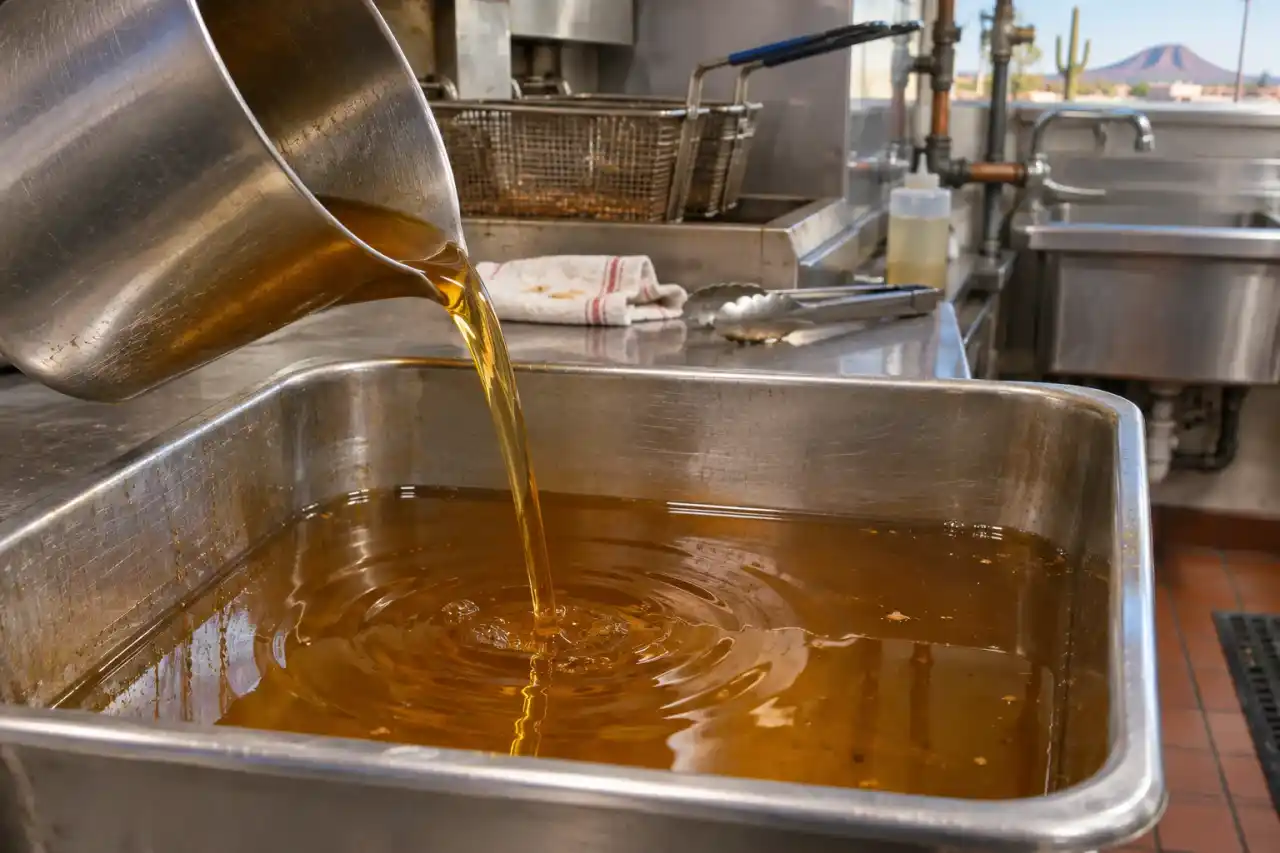
Used cooking oil pickup in Phoenix is the collection of fryer oil for rendering and recycling. It is a different waste stream from the grease trap, handled by different companies, under different rules. The oil in the fryer is a commodity with a market price. The grease in the trap, handled by commercial grease trap cleaning, is wastewater that has to be hauled and disposed of, and putting fryer oil into the drain is what turns a commodity into a compliance problem.
The collection side matters to the owner or manager who is deciding whether to sign a rendering contract, what to expect from it, and how to keep the fryer oil out of the trap in the first place.
03 / How it works
Your request starts a fixed sequence.
03 / Used oil
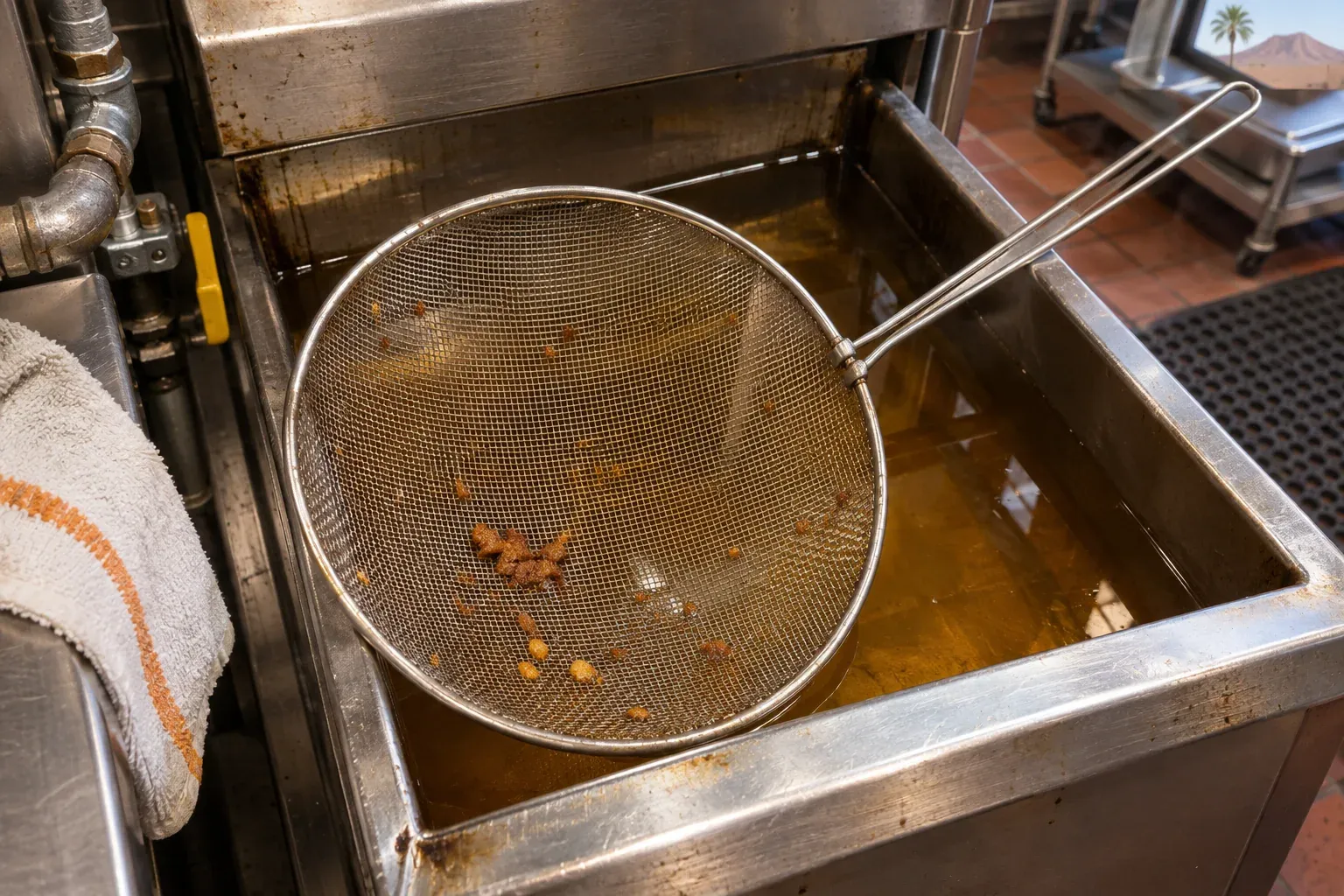
Fryer oil is clean enough to be rendered into animal feed, biodiesel and industrial products. It is collected in a sealed container, weighed and sold. Trap grease is a mix of oil, food solids, wastewater and detergent, and it has to be treated as liquid waste.
The regulatory split follows the physical difference. Phoenix City Code 28-15 governs the interceptor and the records for the waste that goes down the drain. Used cooking oil is collected separately by rendering companies. A restaurant needs both: a trap that captures what goes down the drain, and a container for what goes in the rendering barrel.
Mixing them is the common mistake. A kitchen that pours fryer oil into the sink because the rendering barrel is full sends a heavy grease load into the trap and shortens the interval. A kitchen that pours trap grease into the rendering barrel contaminates the load and can lose the contract.
04 / Used oil
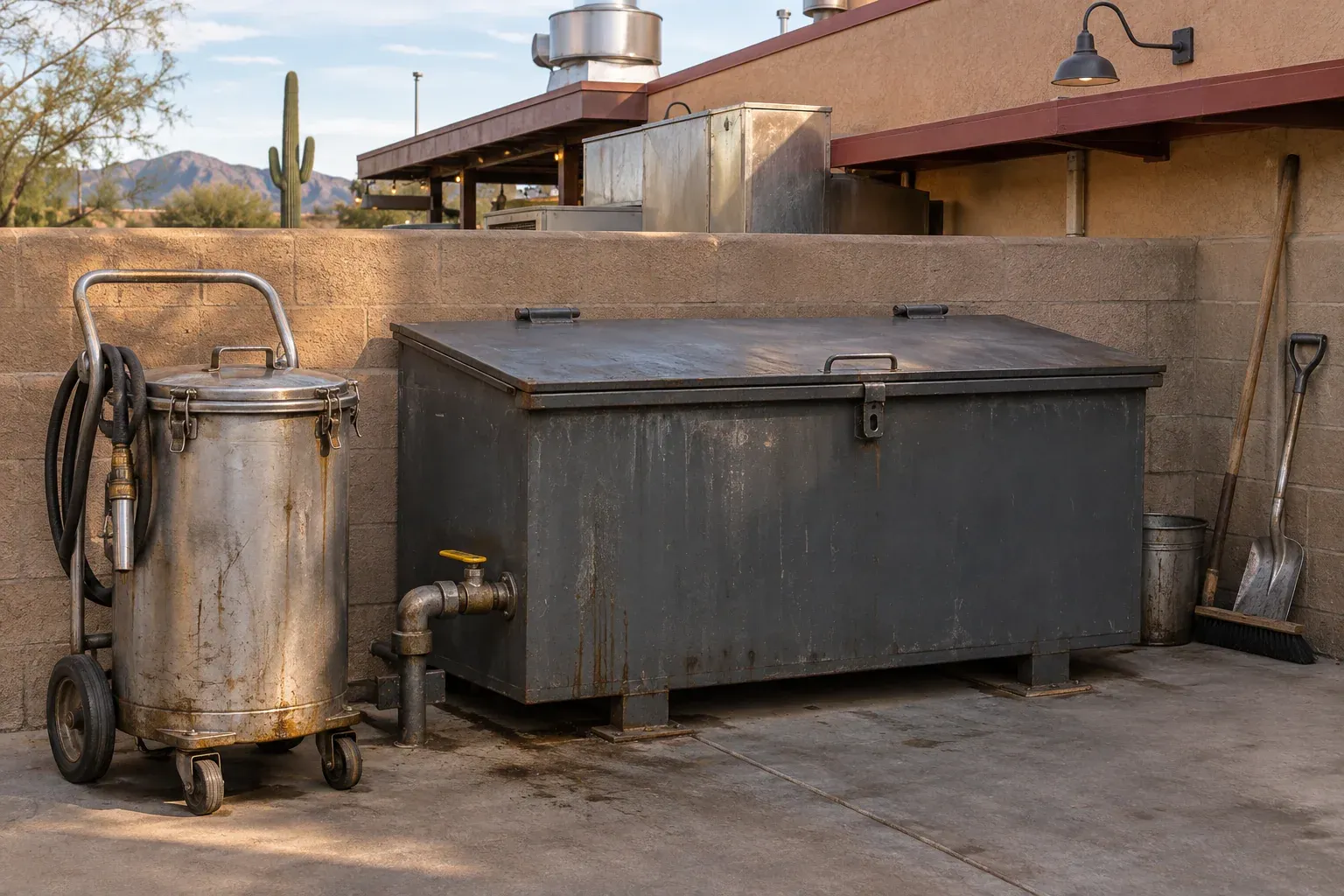
The standard arrangement is a container, a pickup schedule and a payment by weight or by volume. The container is usually a 55 gallon drum or a wheeled bin with a lid, placed outside near the kitchen door. The pickup runs on a set schedule, often weekly or every 2 weeks, and the driver weighs the container and leaves a receipt.
The payment varies with the market. Some companies pay per pound, some pay per gallon, and some charge for the container and take the oil at no charge. A high-volume fryer operation can see a small revenue line; a low-volume cafe may see a wash on the container cost. Either way, the value is in the disposal, not the check.
What to ask before signing: the pickup frequency, the container size, whether the container is included, the payment terms, the notice period, and what happens if the oil is contaminated with water or solids. Contract length and container terms vary.
05 / Used oil
The one place it belongs is the rendering container, and the one thing that keeps the container usable is a lid and a rule that only fryer oil goes in.
06 / Used oil
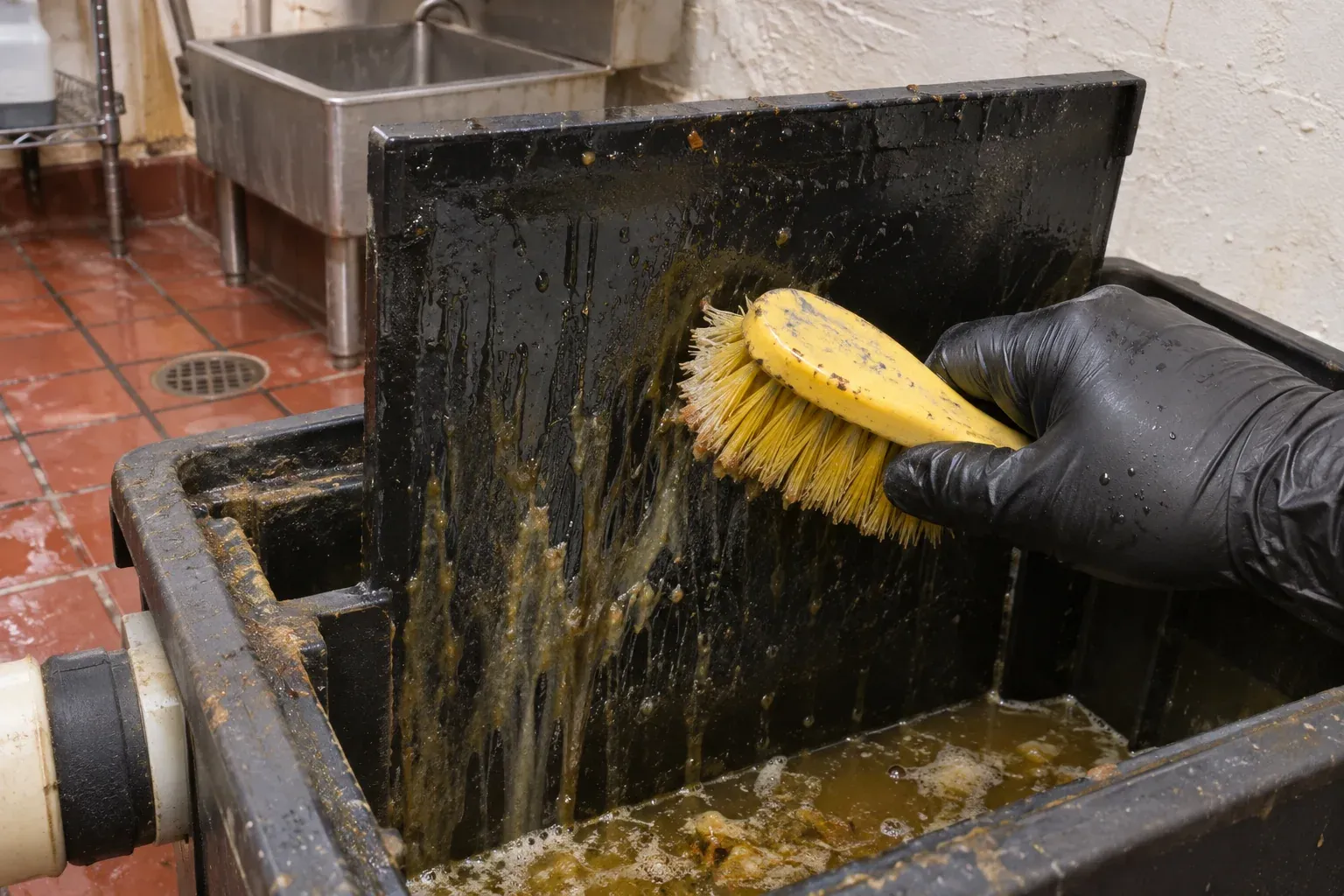
Phoenix's FOG program is about what reaches the sewer. The city's guidance and code focus on the interceptor, its maintenance and its records. The additive ban in 28-15 G is relevant here too: a product that claims to dissolve oil in the drain is not a substitute for physical cleaning, and it does not make fryer oil safe to pour.
Maricopa County permits the vehicles that haul non-hazardous liquid waste, which covers the trap side. Rendering companies are a separate business from liquid waste haulers, and the rendering receipts can be kept with the trap manifests in your FOG compliance records.
07 / Good to know
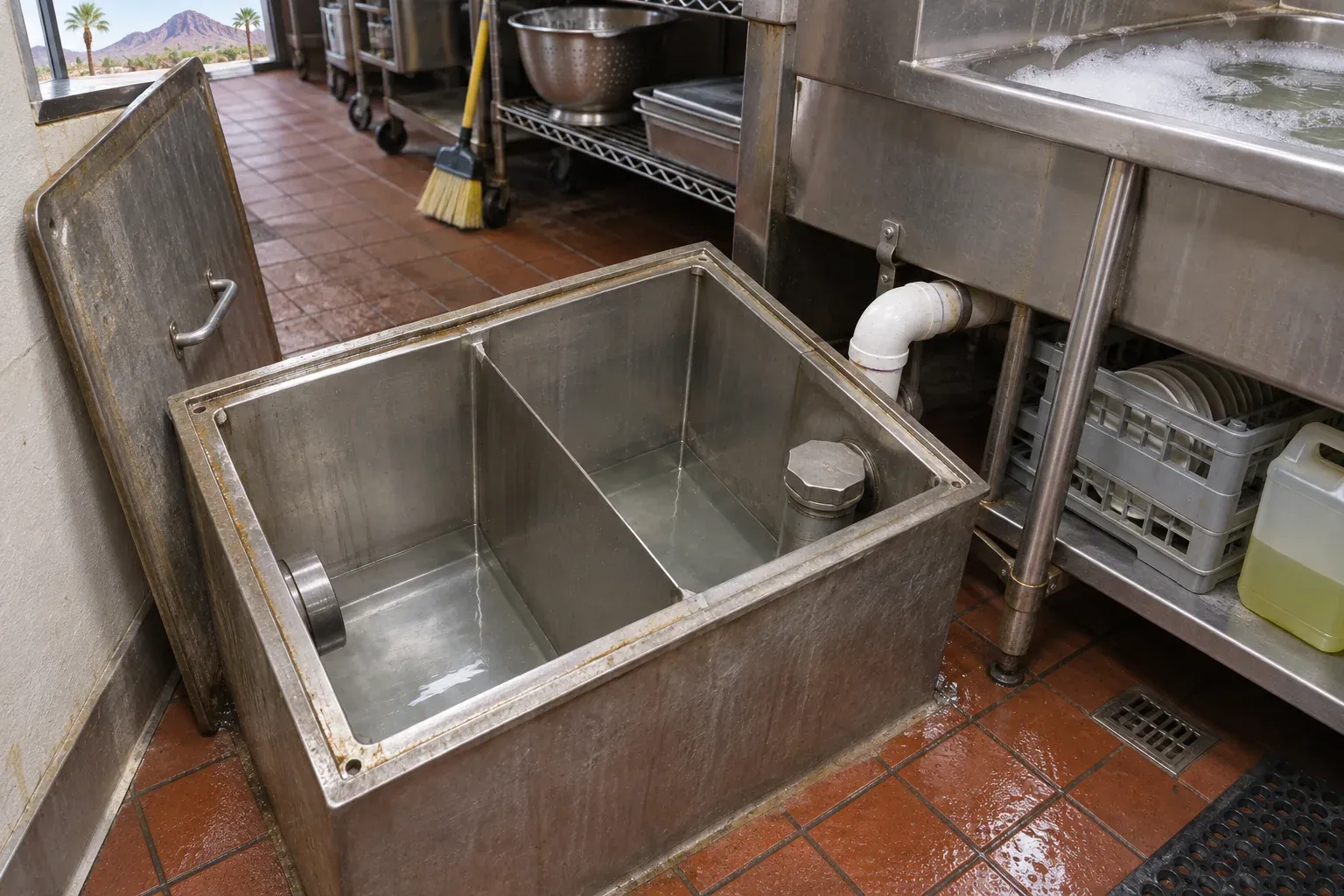
Oil volume depends on the menu, and the rendering payment per gallon is small, so the real value is that the oil does not go into the trap. In the national grease trap cleaning cost ranges, a 1,000 gallon interceptor on a 90 day schedule costs $900 to $1,600 a year, and a kitchen that dumps oil can need extra visits.
The other economic angle is the trap itself. A kitchen that keeps oil out of the drain can often stay inside the city minimum. A kitchen that dumps oil needs a shorter interval, and the extra visits are the cost of the habit.
08 / Records
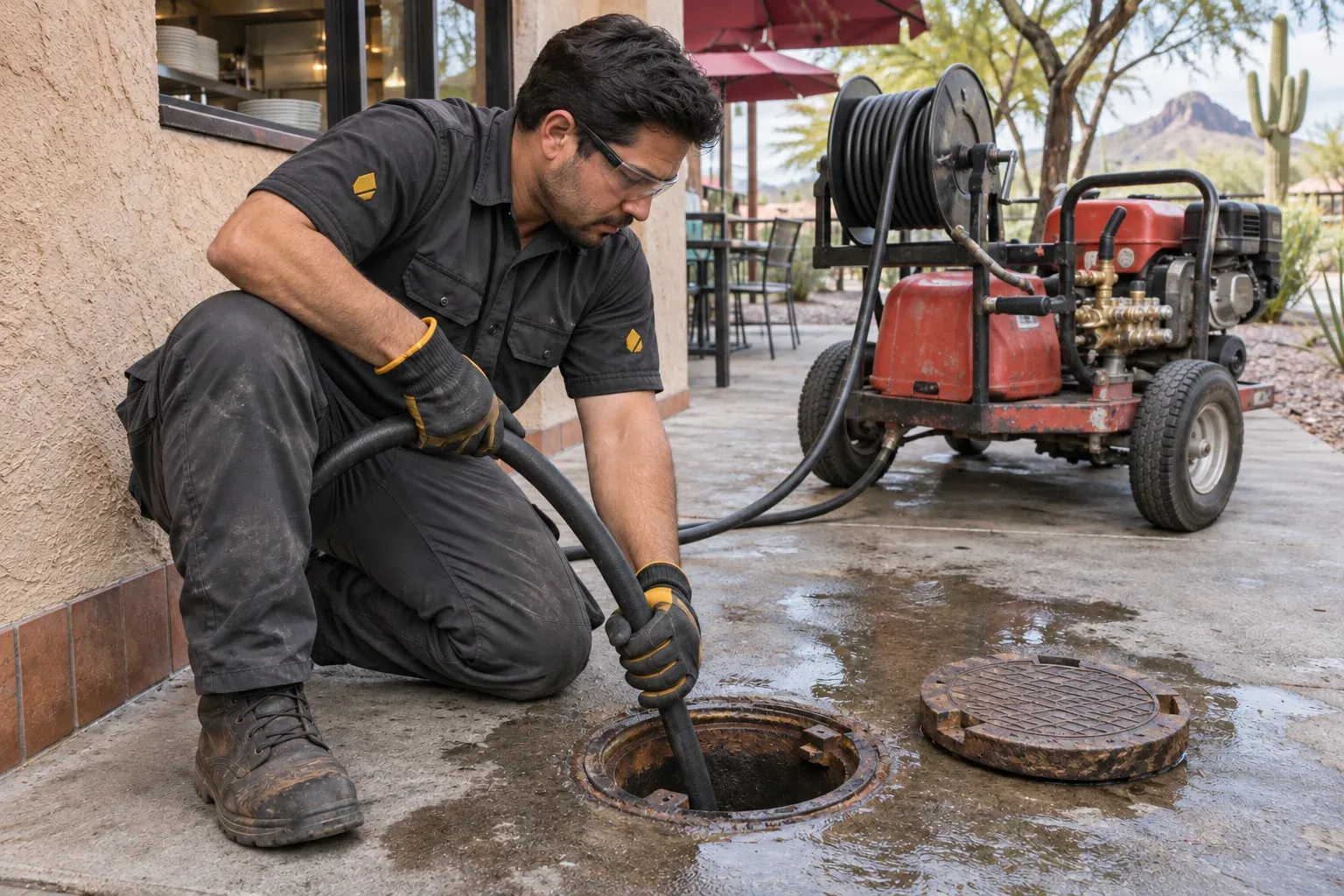
The container needs 3 things: a level surface, access for the truck and a lid that stays closed. A drum on a slope leaks. A drum behind a locked gate gets skipped. A drum without a lid takes rainwater, and water in the load is a common reason a load is rejected.
The pickup usually runs on a fixed day. The kitchen's job is to have the container accessible and to keep the area around it clear. The driver's job is to weigh or measure the load and leave a receipt. If the container is overfilled, the excess goes on the ground or into the drain, which is the outcome the whole arrangement exists to prevent.
In a strip center, the container is often shared or placed in a common area, and the lease or the property manager decides the location. In a standalone building, the container usually sits at the back door, screened from the street. Either way, the container should not sit next to the grease interceptor lids, because a spill from one becomes a problem for the other.
09 / Good to know
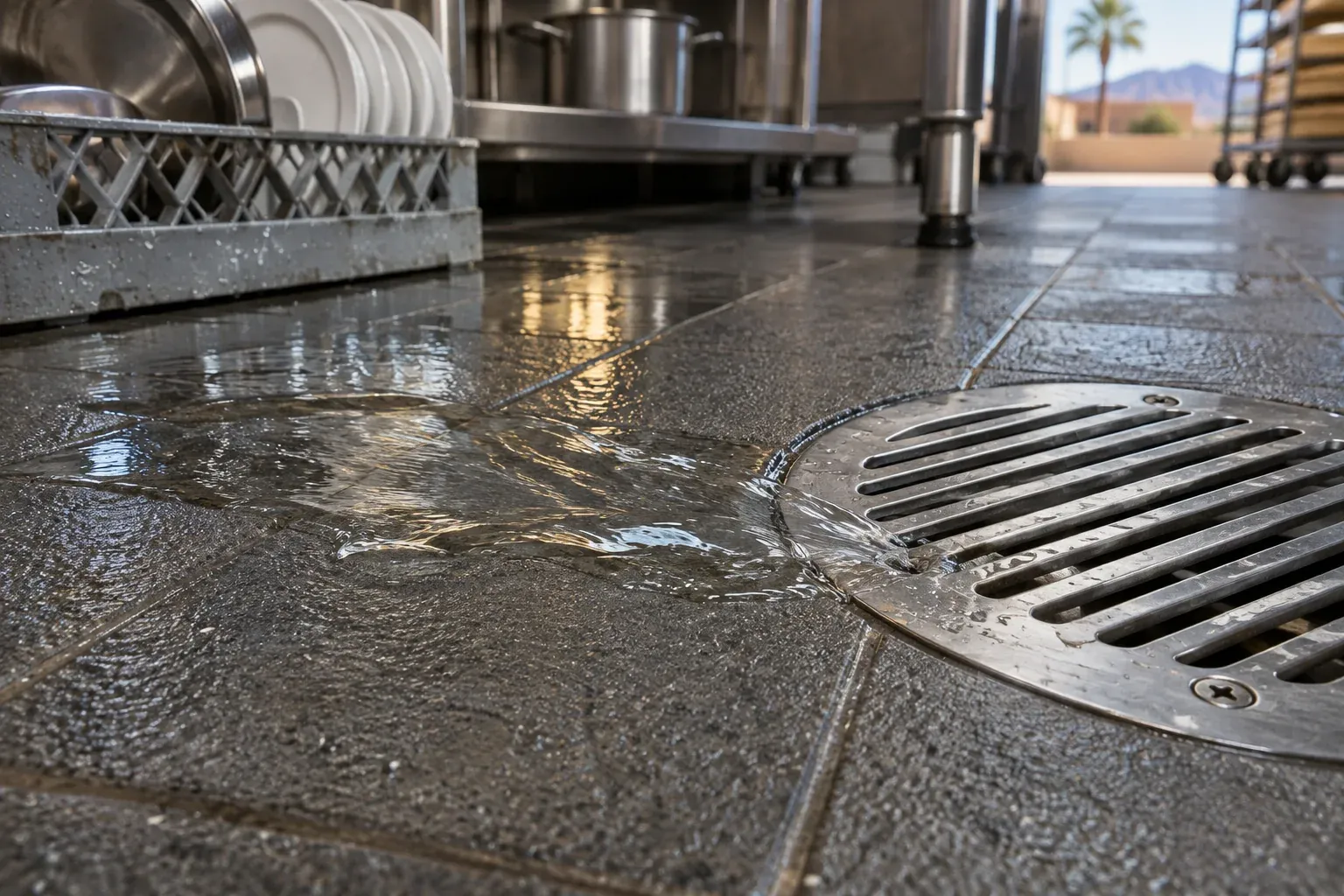
A useful routine is 5 minutes of training at close. Fryer oil goes in the rendering container. Pan grease goes in the rendering container or the trash, never the sink. The dish pit scrapes into the trash before it rinses. The floor drain gets a strainer and the strainer gets emptied.
That routine helps keep the trap interval inside the city minimum. A kitchen that dumps oil can need more frequent pump-outs, and the extra visits can cost more than the oil is worth. The training also protects the line, which is the part that turns a slow drain into an emergency.
10 / Good to know
A load with water, detergent or trap grease is contaminated, and the rendering company may reject it or charge for disposal. If the container has standing water, pump it out before the pickup, and if the oil has been mixed with chemicals, tell the hauler before the truck arrives.
A rejected load is not the end of the world, but it is a cost. The cleanest fix is prevention: one container, one lid, and one rule about what goes in it.
11 / 6 questions
Still have a question?
Send the form with a short note. Someone from our team will call you back soon.
Get a call backQ.01
No. The oil is collected for rendering, and the trap grease is hauled as liquid waste. Different companies, different containers, different rules.
Q.02
Some do, by weight or volume, and some take it at no charge or charge for the container. The market price moves, so ask for the current terms rather than relying on a page.
Q.03
Weekly or every 2 weeks is common for a full-service kitchen, and monthly for a low-volume cafe. The schedule should match the oil volume so the container does not overflow between visits.
Q.04
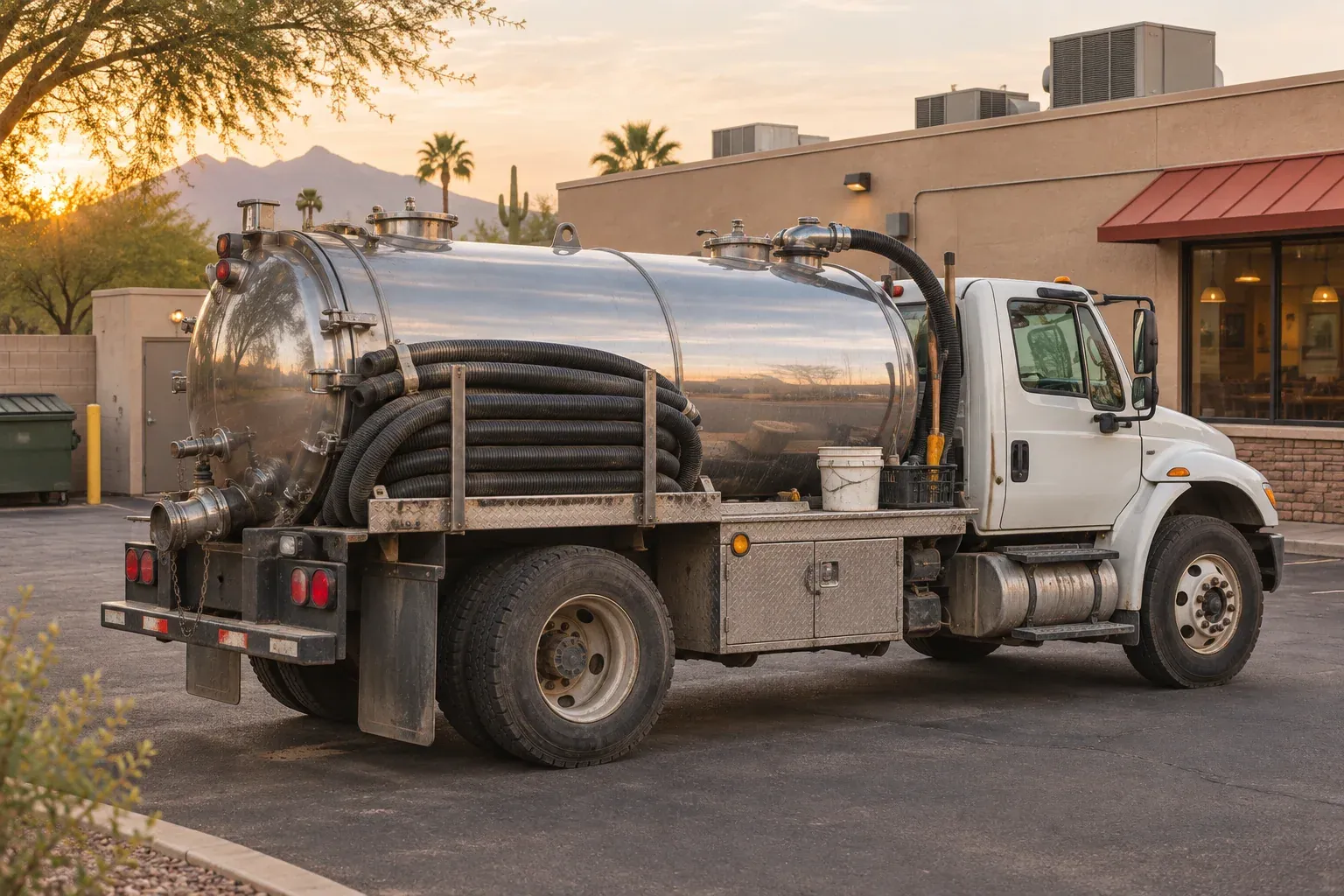
No. Trap grease has water, solids and detergent in it, and it contaminates the load. It belongs in the vacuum truck, not the rendering barrel.
Q.05
It congeals in the trap and the line, it shortens the pump-out interval, and it can cause a backup. It also adds to the load that the city's pretreatment program is trying to keep out of the sewer.
Q.06
For restaurants, collection is a private service. The city regulates what goes into the sewer, and the rendering company handles the oil that stays out of it.
Form open 24/7
Ask for a call back about your grease trap
Tell us which device and which kitchen. We will call you back shortly.
Thank you. You will be called back soon.