Q.01
How often does Peoria require a pump-out?
Every 90 days under City Code 25-173, and sooner if the device reaches 25 percent of its capacity.
Service area · Peoria, AZ
You run a kitchen in Peoria. Tell us the device and the last pump-out date. We will call you back shortly.
Form open 24/7
Get a call back
Phoenix + 15 Valley cities
Peoria's grease trap code is closer to Phoenix than to Glendale. City Code 25-173 requires interceptor pumping every 90 days, and the record has to stay at the restaurant for 3 years. That puts Peoria restaurants on a quarterly habit, which is easy to remember and easy to miss when the kitchen gets busy.
The Peoria wrinkle is geography. The city runs from Old Town and the Grand Avenue corridor out to Vistancia and Lake Pleasant, and the restaurant stock changes with it. Old Town has small, older buildings, which is where grease trap cleaning on a small trap is most likely. The P83 district near the sports complex has newer, larger kitchens with event traffic. Vistancia has suburban centers with engineered devices.
01 / City rules
City Code 25-173 sets the 90 day interval and the 3 year record requirement. A 25 percent limit is the common physical test in Valley programs, so a device that is a quarter full is a problem even if the calendar says it is due next month.
The record should show the date, the hauler, the volume, the device and the disposal site. A repair belongs in the same file. Peoria's program is administered through the city's pretreatment group, and an inspector can ask for the manifests.
02 / Good to know
The P83 district around the Peoria Sports Complex has a load profile that a quarterly calendar handles badly. Spring training brings a 6 week surge, and a restaurant that is comfortable at 90 days in August can be at 25 percent in 45 days in March.
The fix is a pre-season check, not a permanent shorter interval. Measure the device in late January or early February, pump if it is above 15 percent, and keep the pre-season manifest. That single extra visit is cheaper than an emergency during a sold-out game.
The same logic applies to any event-driven kitchen in the city, including the ones that serve the stadium traffic and the ones on the Grand Avenue corridor that see weekend volume from the lake.
03 / Service area
Old Town Peoria around 83rd Avenue and Grand Avenue has small restaurants in buildings that have been through several uses. The grease device is often an indoor trap sized for a coffee shop or a small diner, and the current menu may be heavier than the original.
The 3 issues are predictable. The trap is undersized, so it fills in weeks. The line is old, so the drain is slow even after a pump-out. And the lid may be in a location that a truck cannot easily reach. A restaurant in that situation should get a measurement and a line check before setting a schedule, because the schedule alone will not fix a trap that is too small.
04 / Good to know
A 90 day interval assumes a device that is large enough to hold 90 days of grease at the kitchen's volume. A 500 gallon interceptor serving a full-service restaurant may not, and a 2,000 gallon tank serving a cafe may be able to go longer than the city requires.
The practical check is the fill rate. If a device gains 8 percent a month, 90 days puts it at 24 percent, which is inside the limit but with no margin. If it gains 12 percent a month, 90 days puts it at 36 percent, which is a violation waiting for an inspection. The measurement at each pump-out is what tells the two apart.
05 / Costs
Pricing follows the national ranges on the cost page. A 90 day schedule is 4 visits, $900 to $1,600 for a 1,000 gallon interceptor, and more if the tank is 2,000 gallons. A trap on a 30 day habit is 12 visits, $1,500 to $2,400 a year.
The Peoria variables are access and distance. A device in a Vistancia center is easy to reach but far from the disposal site. A device in Old Town is close to the disposal site but hard to reach. Both show up in the quote, and both are worth asking about before the first visit.
06 / Septic
A Peoria building on a septic tank carries a requirement that surprises buyers: an inspection at the sale. Arizona rule R18-9-A316 and Maricopa County both say the party transferring a property served by an onsite wastewater facility must hire a qualified inspector within 6 months before the transfer. The buyer files a Notice of Transfer within 15 calendar days after the sale, and the county lists the fee as $60 for each parcel.
For a restaurant property that changes hands, that makes the pump-out part of the deal. A tank pumped and measured before the inspection arrives with clean numbers, and a grease log that shows the interceptor kept up gives a buyer a reason to trust the system.
A building on the Peoria sewer has no such inspection, and the work is the grease device on its schedule. The septic tank pumping guide explains what the inspection and the notice involve. The grease side is on the grease trap pumping schedule page.
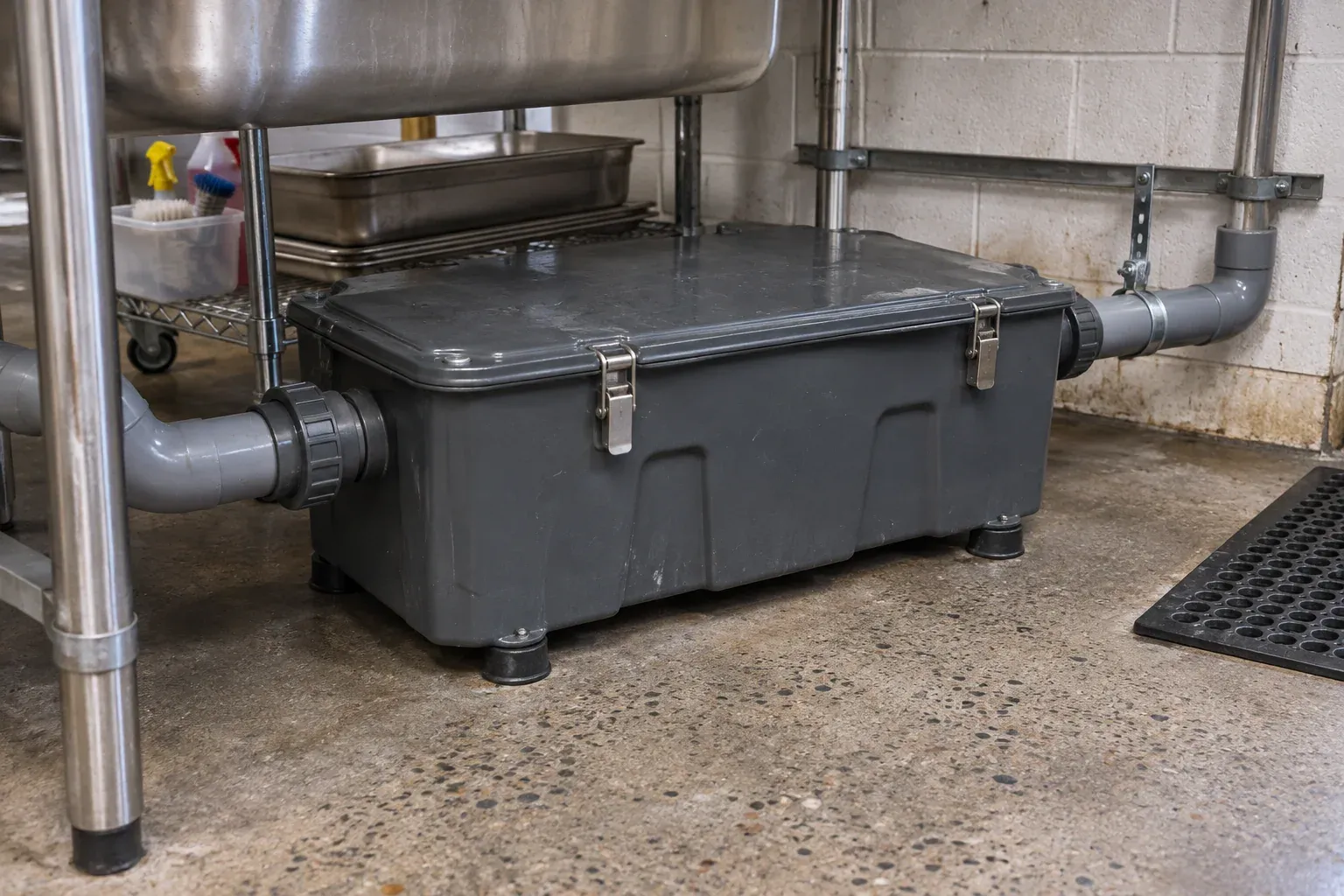
Rule card · Peoria City Code 25-173
Service area map
Peoria and the areas around Phoenix
The map shows Peoria and the address in Phoenix. Use the buttons below it to open any area page.
All areas07 / 4 questions
Still have a question?
Send the form with a short note. Someone from our team will call you back soon.
Get a call backQ.01
Every 90 days under City Code 25-173, and sooner if the device reaches 25 percent of its capacity.
Q.02
3 years, at the facility.
Q.03
Often yes. A pre-season measurement and an extra pump-out is cheaper than an emergency during the season.
Q.04
The rule is the same, but a small trap will hit 25 percent sooner, so the practical interval is shorter. Measure at every visit and let the depth set the schedule.
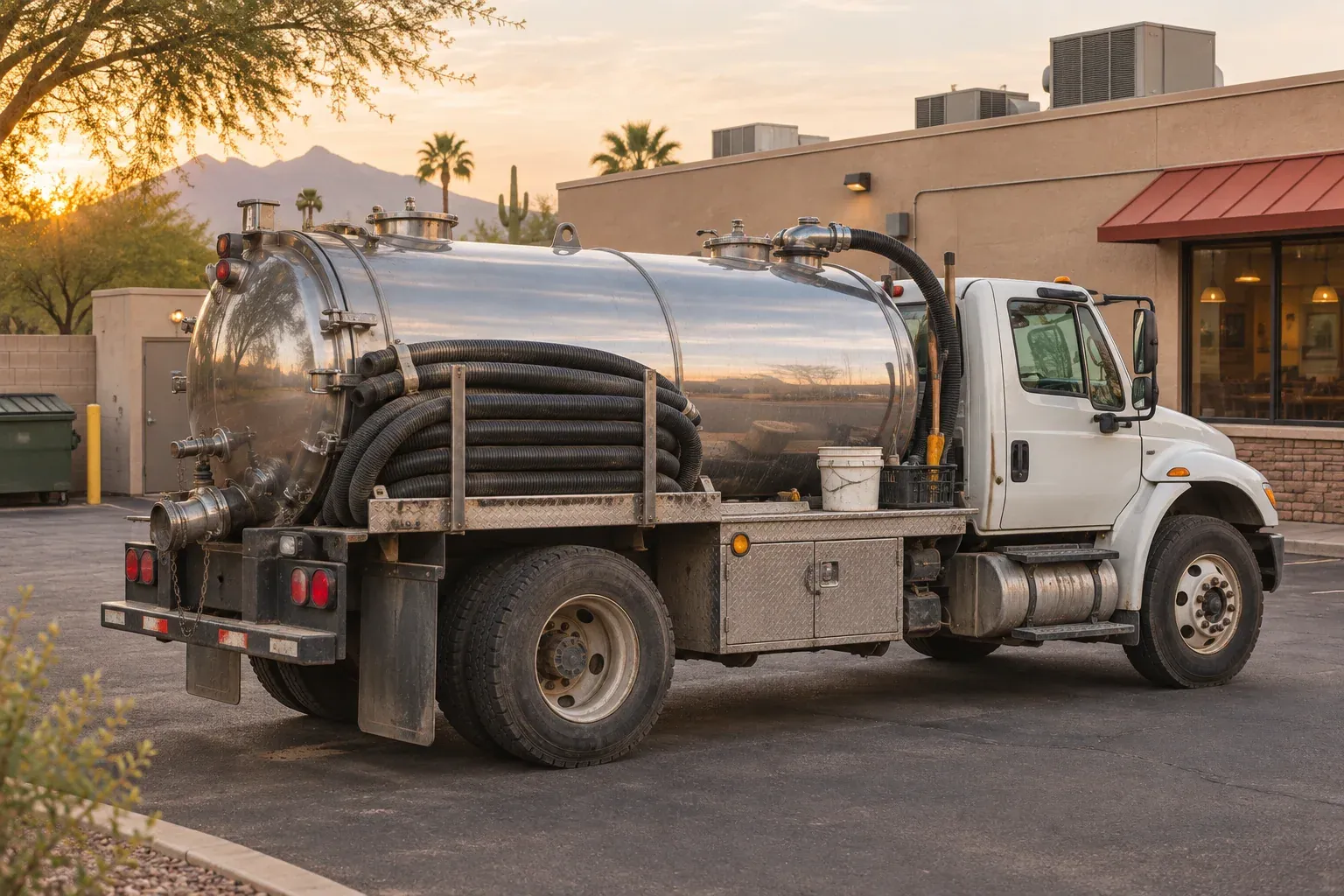
Form open 24/7
Ask for a call back about your grease trap
Tell us which device and which kitchen. We will call you back shortly.
Thank you. You will be called back soon.