Q.01
Is 30 days really required for a grease trap in Phoenix?
For a hydromechanical interceptor, yes. Phoenix City Code 28-15 D requires a full pump-out and cleaning at least every 30 days and prohibits more than 90 days without maintenance.
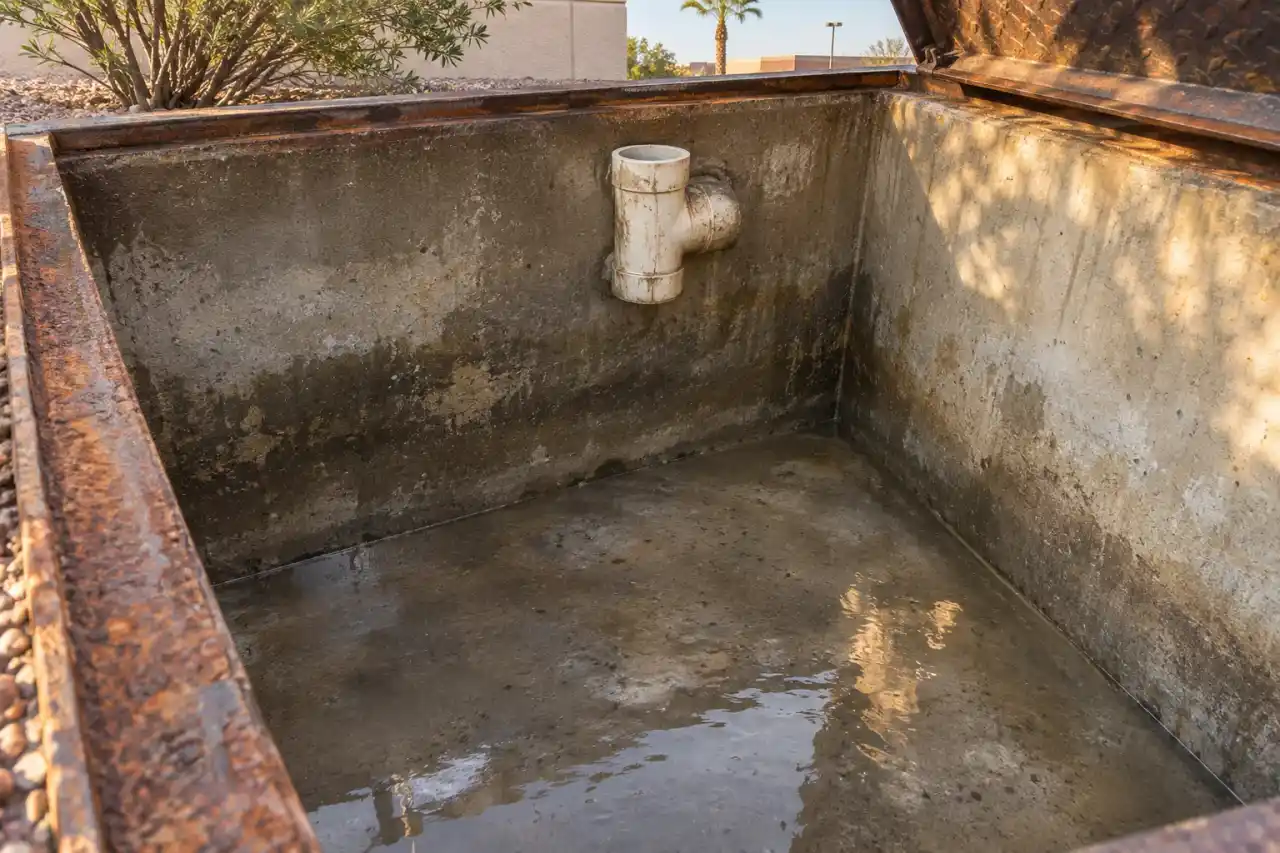
Service 06 of 09 · Phoenix, AZ
You need a grease trap pumping schedule in Phoenix, with a trap every 30 days and a gravity interceptor every 3 months. Tell us the city, the device and the last date, and someone from our team will call you back.
Form open 24/7
Get a call back
Phoenix + 15 Valley cities
01 / What you get
Grease trap pumping frequency in Phoenix comes down to how often to pump, and that answer is set by 2 things: the city code that covers the address and the physical limit of the device. Phoenix sets a 30 day floor for hydromechanical traps (grease trap cleaning) and a 90 day floor for gravity interceptors (grease interceptor pumping) at food service establishments, and the 25 percent capacity rule can shorten either one. Pumping frequency is the shorter of the two, written on a calendar and backed by a service log.
The reason this matters is that the Valley is not one jurisdiction. A restaurant in Phoenix, a restaurant in Gilbert and a restaurant in Glendale can have identical kitchens and 3 different legal intervals. The interval has to follow the rule of the city that covers the address.
03 / How it works
Your request starts a fixed sequence.
03 / Good to know
| City or community | Trap interval | Interceptor interval | Records | Code |
|---|---|---|---|---|
| Phoenix | 30 days, never more than 90 | 90 days for a food service establishment | 3 years at the facility | 28-15 C, D, F |
| Tempe | 30 days | 90 days | On site, on request | 27-22 and FOG program |
| Scottsdale | 30 days | 90 days | 3 years at the facility | SRC 31-167 |
| Mesa | No fixed interval | No fixed interval | 3 years at the facility | 8-4-22 |
| Chandler | No fixed interval, 25% rule | No fixed interval, 25% rule | 3 years, 5 required items | 51-24 |
| Gilbert | 6 months | 6 months | 3 years | 66-244, 66-243 |
| Glendale | 180 days | 180 days | 3 years at the facility | 33-238 |
| Peoria | 90 days | 90 days | 3 years at the facility | 25-174 |
| Surprise | No fixed interval | No fixed interval | 3 years at the facility | 58-306 |
| Salt River Pima-Maricopa | 30 days, never more than 90 | 90 days, never more than 180 | 3 years plus the yearly log | SRPMIC pretreatment |
Read the table with the 25 percent rule in hand. A city that publishes no interval is not a city without a standard: Chandler's page states the rule of thumb plainly, and Mesa's code requires the device to be in continuously efficient operation at all times. The common operating standard in the Valley is to pump before the grease and solids reach a quarter of the device, although only some codes put a number on it.
04 / Schedule
The interval is a rough proxy for how fast the device fills, and the fill rate depends on the device size, the menu, the dishwashing volume and the kitchen practices. A small trap in a busy breakfast restaurant can reach 25 percent well before the 30 day mark. A large interceptor at a low-volume cafe can still be well under 25 percent at 90 days.
Cities pick a number that protects the sewer from the median case, then add a physical test to catch the outliers. Phoenix uses 30 and 90 plus the 25 percent rule. Gilbert uses 6 months and the carry-over test. Mesa skips the calendar and relies on the operating standard and the inspection. The number is a floor, not a prediction.
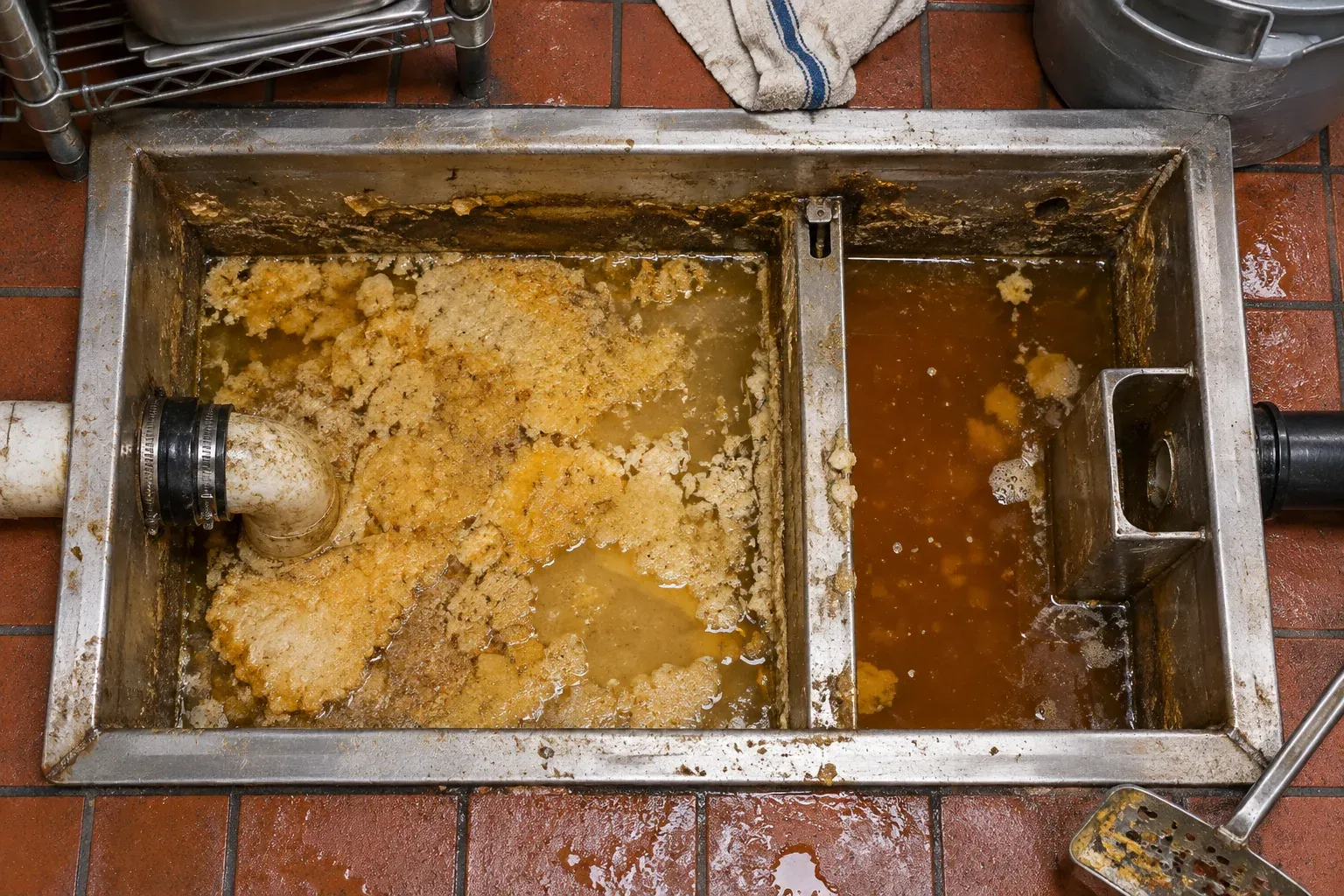
For a single restaurant, the practical method is to measure for 3 cycles. Record the grease depth and the solids depth at each pump-out in your FOG compliance records, and the rate of accumulation becomes visible. If the device gains 10 percent a month, the pump-out interval that keeps it under 25 percent is 60 days, whatever the city minimum says.
05 / 7 steps
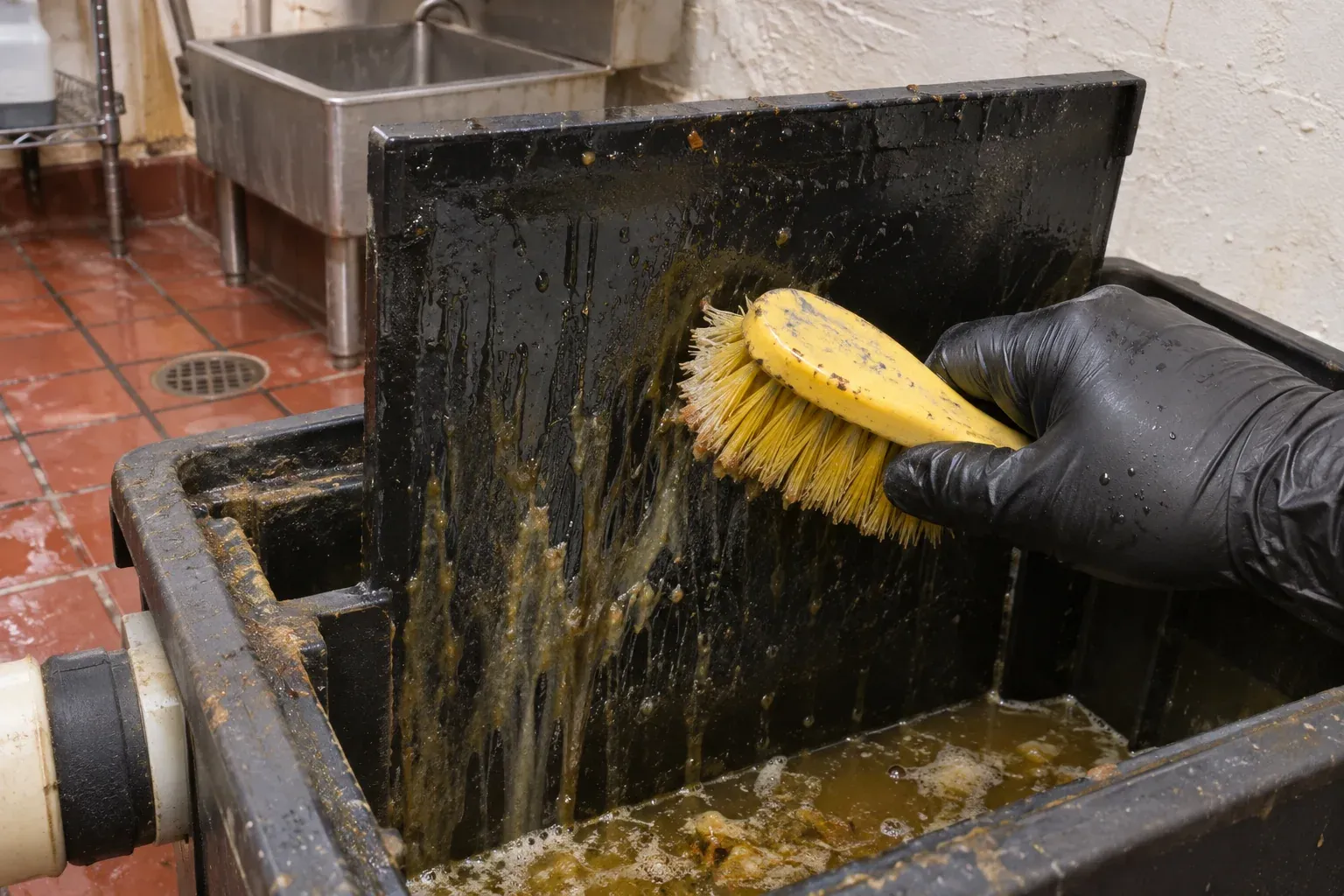
That process takes one hour to set up and answers the question the inspector will ask: why this interval, and what proves it.
06 / Good to know
The Valley has a winter visitor season, when covers go up and the fryers run longer, and a slower summer. A busy season can fill the device faster, and a schedule set in a quiet month may not hold in a busy one.
The monsoon is a separate issue. A heavy rain event can flood a lid that sits low in a parking lot, and a lid that is not seated lets runoff into the tank. If the interceptor is in a low spot, check the lids after a storm and pump if the tank has taken on water, because a diluted tank is a tank that is not separating.
07 / Schedule
A missed pump-out does not fail immediately. The device fills, the separation gets worse, and grease starts leaving the outlet. The first symptom is a slow drain. The second is a smell. The third is a backup during service.
At that point the visit is not a scheduled pump-out, it is an emergency, and the price reflects it. The emergency page covers the first 10 minutes. The cheaper path is a calendar with a reminder and a company that calls to confirm the visit.
08 / Good to know
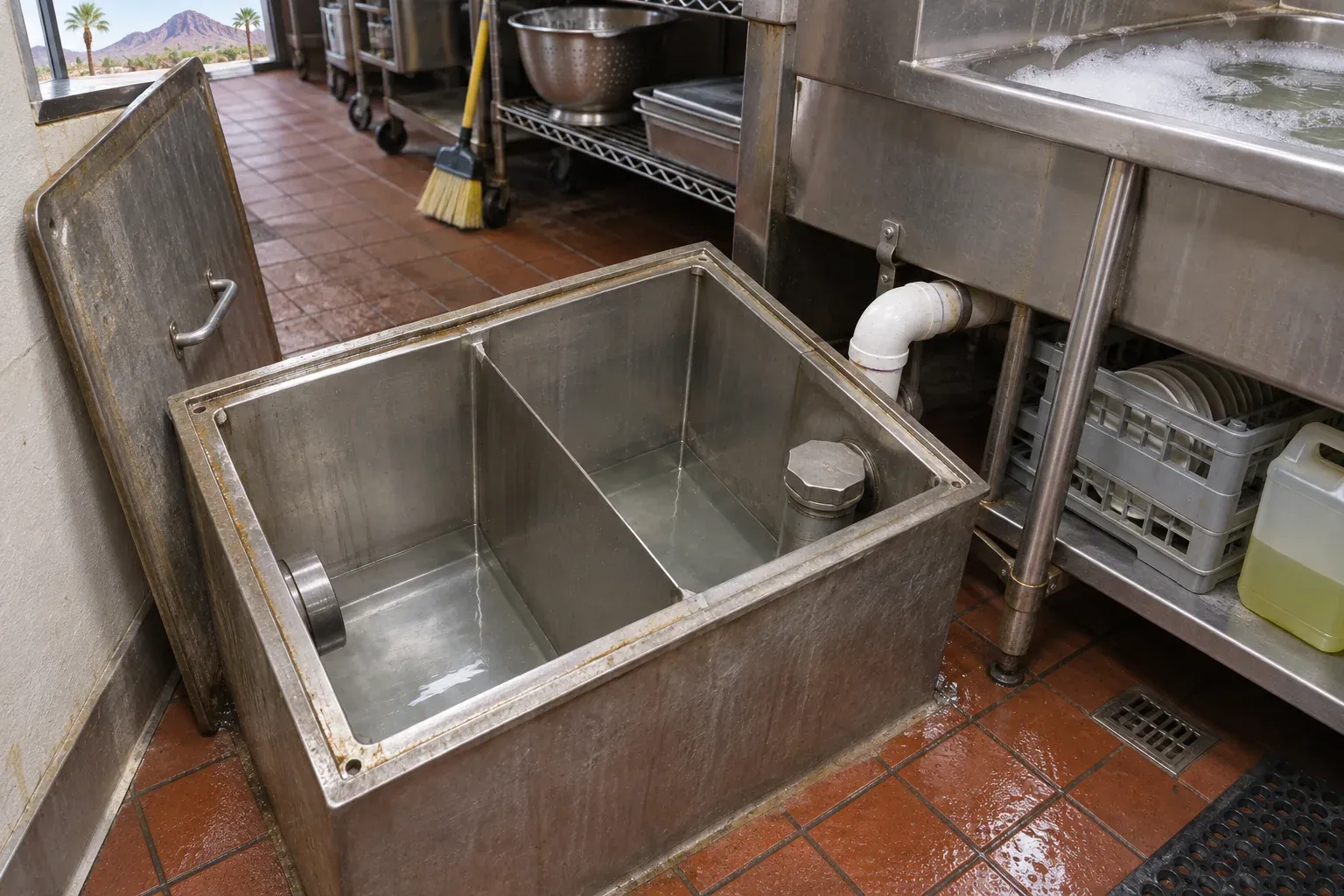
A shared interceptor in a strip center or a food hall is a compliance problem waiting to happen, because the device serves several restaurants and nobody owns the calendar.
The lease usually says who is responsible. If it does not, the property manager becomes the default coordinator, and the practical fix is a written schedule that names one company, one interval and one record keeper. Each tenant gets a copy of the manifest, and the property manager keeps the master file.
The rule that applies is the one for the city the building drains into, and the interval is set by the combined load, not by the smallest tenant. A food hall with several concepts on one interceptor can reach 25 percent well before 90 days, and a calendar that works for a single restaurant may fail there.
09 / Good to know
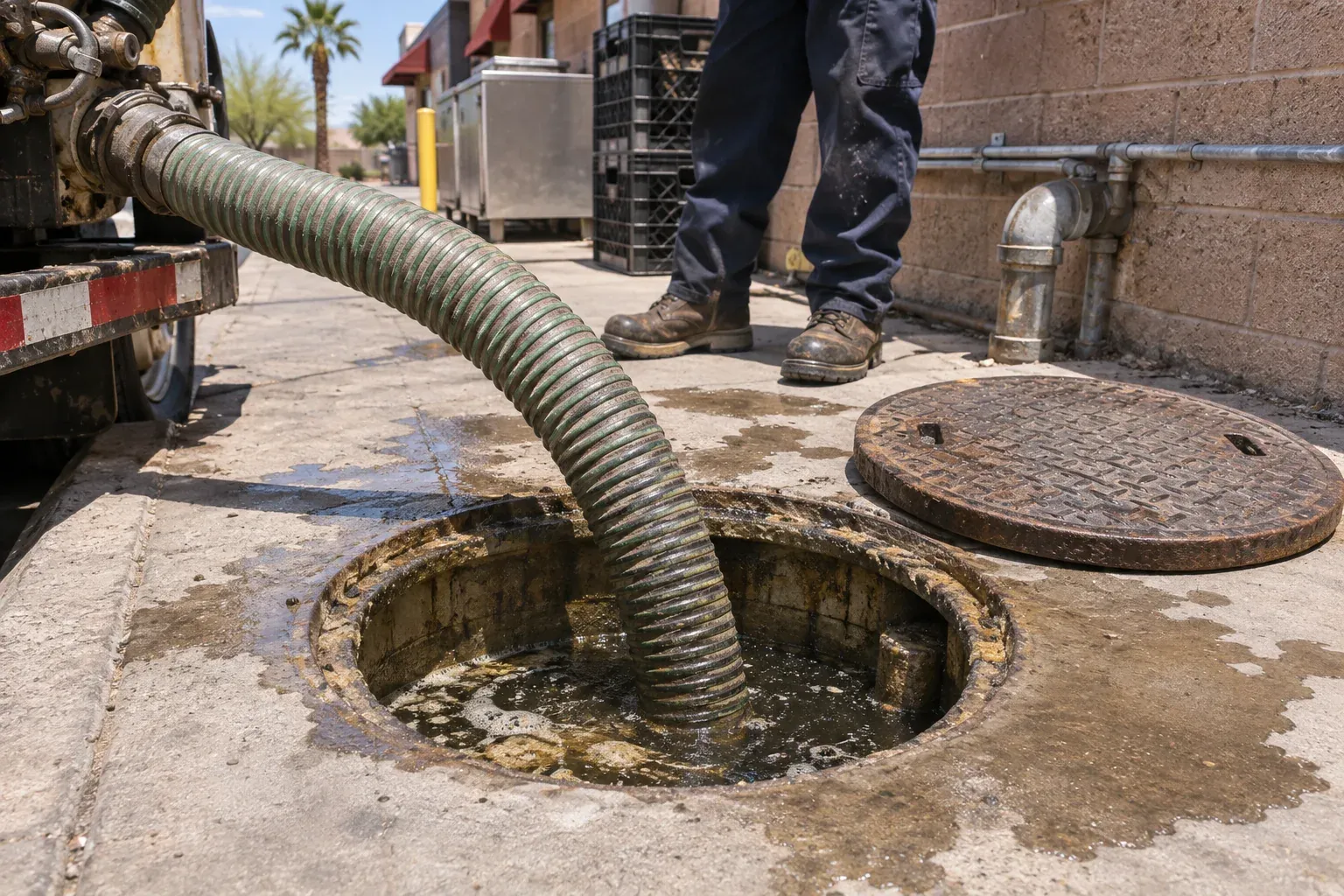
A variance is the city's written permission to run a different interval than the code default. It is not a waiver of the 25 percent rule, and it is not permanent. Phoenix allows the Director to grant one, and Gilbert allows a longer interval if the owner can show it works.
A typical evidence package is 12 months of manifests, depth measurements at every visit, a device that is correctly sized, and a service history with no overflows or violations. A restaurant that measures at every pump-out is collecting that package without extra work.
10 / 6 questions
Still have a question?
Send the form with a short note. Someone from our team will call you back soon.
Get a call backQ.01
For a hydromechanical interceptor, yes. Phoenix City Code 28-15 D requires a full pump-out and cleaning at least every 30 days and prohibits more than 90 days without maintenance.
Q.02
Only if the city grants a variance, and only with records that support it. The 25 percent rule still applies, so "looks fine" has to mean a measured grease and solids depth under a quarter of the device.
Q.03
Each city writes its own pretreatment ordinance. Gilbert's floor is 6 months with a carry-over test and a director's approval for anything longer. Phoenix's floor is 30 and 90 days plus the 25 percent rule. The rule of the city that covers the address applies.
Q.04
Yes, in practice. A kitchen that adds a fryer, a rotisserie or a larger dish pit sends more grease to the device. Measure at the next 2 pump-outs and shorten the interval if the accumulation rate rises.
Q.05
Maricopa County Environmental Services permits the hauler vehicles, and the local sewer provider sets the discharge rules.
Q.06
The city pretreatment or FOG program, through inspections and through responses to backups and complaints. Enforcement ranges from a notice with a deadline to a requirement for extra pumping, a variance or a repair.
Form open 24/7
Ask for a call back about your grease trap
Tell us which device and which kitchen. We will call you back shortly.
Thank you. You will be called back soon.