Q.01
Who pays for a shared interceptor in a multi-tenant building?
The lease decides. Common arrangements are the landlord pays and recovers through CAM, or each tenant pays a share. The tenant still keeps its own record.
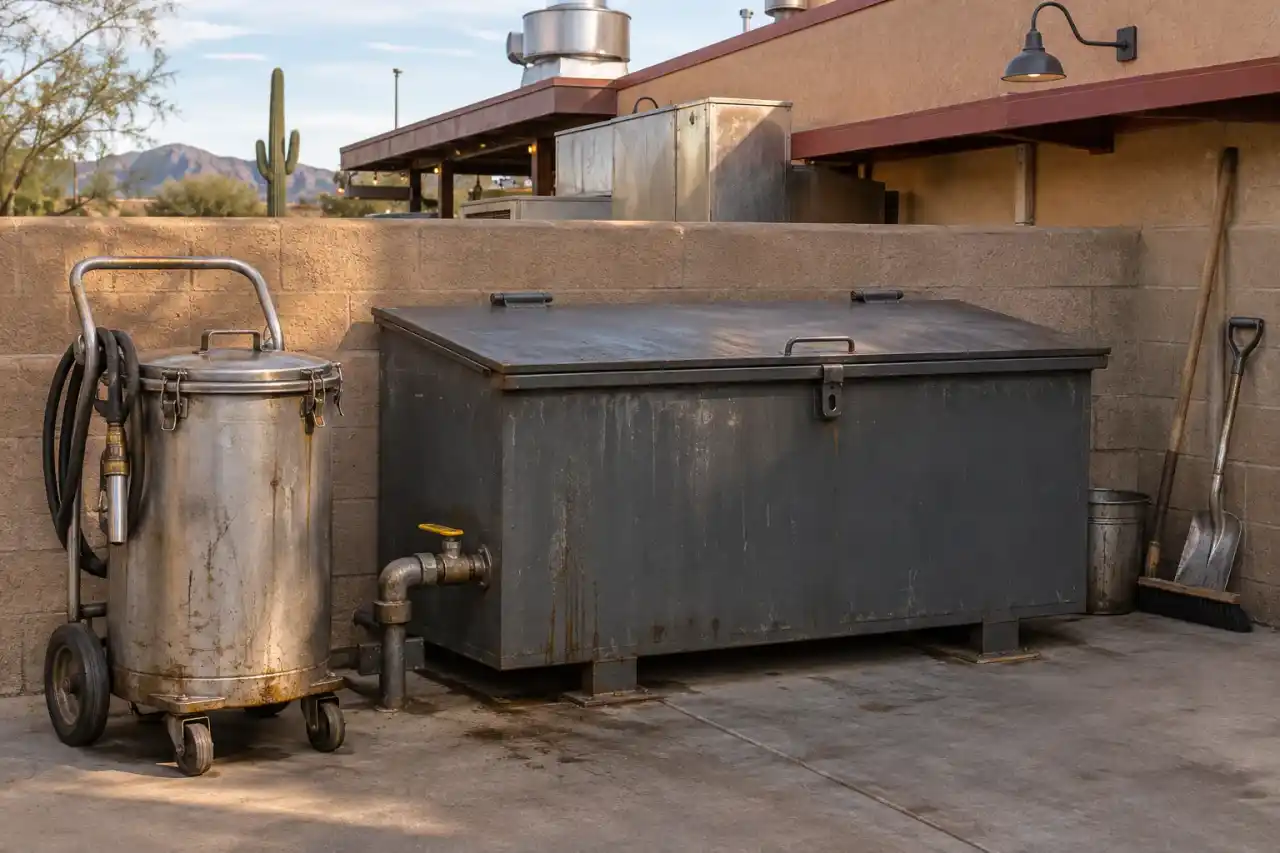
Phoenix district · Downtown Phoenix
You need grease trap cleaning in Downtown Phoenix, Phoenix, and city code calls for a trap pump-out at least every 30 days. Tell us the device and the last pump-out date, and someone from our team will call you back.
Form open 24/7
Get a call back
Phoenix + 15 Valley cities
Downtown Phoenix kitchens run from the convention center district through Roosevelt Row to the warehouse blocks south of the tracks, and almost all of them share one feature: the grease device is not in a parking lot. It is in a building, often behind a door that only the building engineer can open, and the truck has to work from a loading zone that is reserved for deliveries at 6 am.
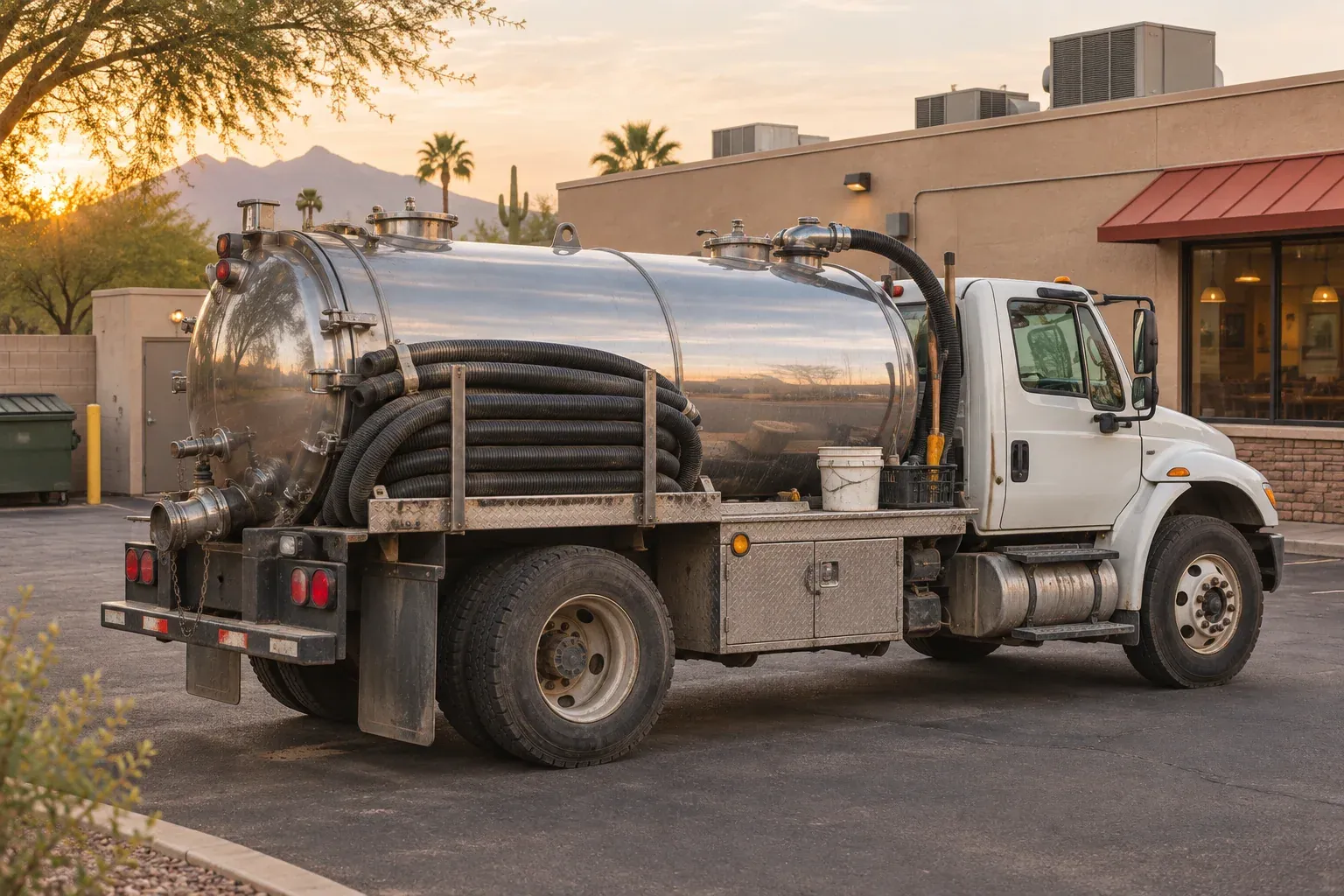
The city rule does not change. A hydromechanical trap gets grease trap cleaning at least every 30 days and never more than 90, a gravity interceptor gets grease interceptor pumping at least every 90 days, and the 25 percent limit applies. What changes is how the visit is planned, because a pumper who cannot reach the device at the scheduled time is a pumper who comes back at night and charges for it.
01 / Lines
A multi-tenant building may have one interceptor serving several restaurants, which means the device is sized for the combined load and the schedule belongs to the building, not to one tenant. The lease usually says who is responsible, and when it does not, the building engineer becomes the coordinator.
The record problem in a shared building is that each tenant needs its own file. An inspection at a restaurant door asks the restaurant for the manifest, and "the building has it" is not an answer. Ask for a copy of every manifest and keep it in the restaurant's own binder.
02 / Services
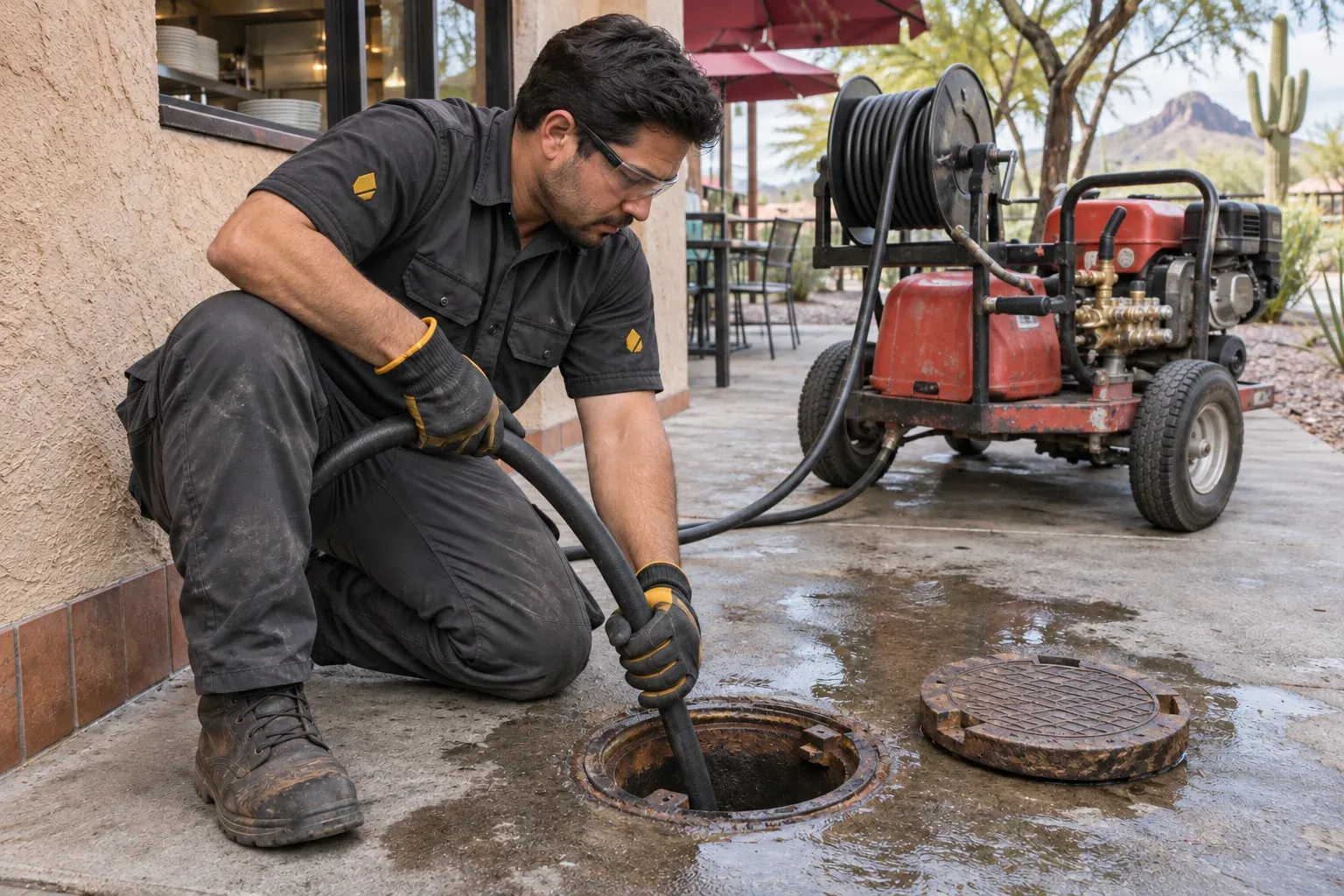
Three practical notes for a downtown kitchen. The loading zone has a schedule, and a vacuum truck is not a delivery van, so the building may need to reserve a window. The service elevator may be needed if the device is above or below grade, and a full hose run up a stairwell is a different job. And the alley may be shared with other tenants, so the visit has to be coordinated rather than announced.
The cheapest way to handle all 3 is to put the access plan in the service contract: where the truck parks, which door and elevator are used, who holds the key, and what time window works.
03 / Good to know
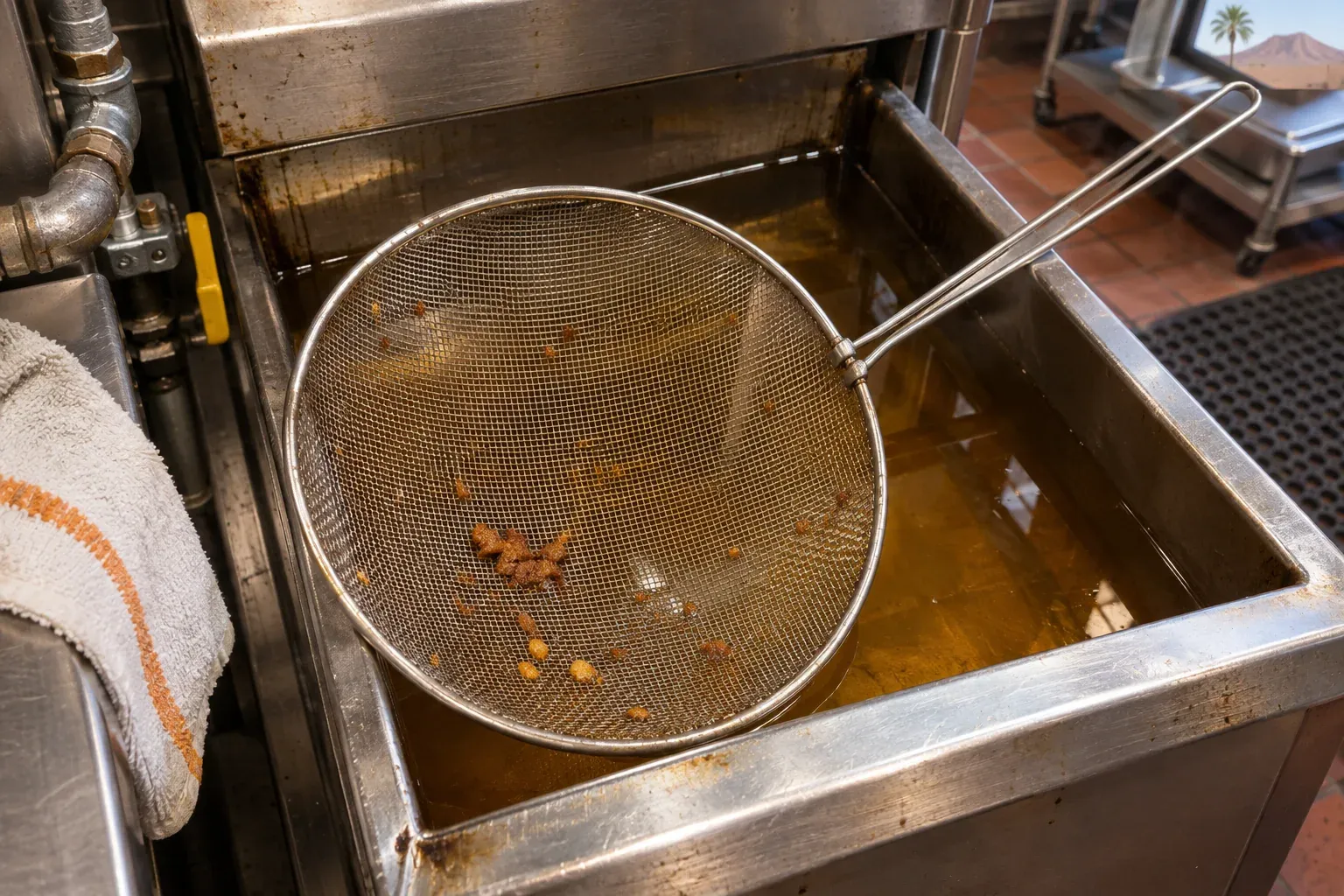
Downtown has a lot of adaptive reuse, and a restaurant in a 1920s warehouse may have a device that was installed for a different use. The common findings are a small indoor trap serving a full menu, a line with decades of grease, and a lid that is painted shut or covered by a floor finish.
The first visit should include a measurement and a line check. If the trap is at 25 percent in 3 weeks, the device is the problem, and the answer is a larger trap or a shorter interval. If the drain is slow after a pump-out, the answer is jetting, not more pumping.
04 / Costs
Pricing follows the national ranges on the cost page, with a downtown premium for access and after-hours work. A 50 gallon trap at $125 to $200 a visit on a monthly schedule is $1,500 to $2,400 a year. A 1,000 gallon shared interceptor at $225 to $400 a visit on a quarterly schedule is $900 to $1,600, split among tenants when the lease says so.
Rule card · Phoenix City Code 28-15
Service area map
Downtown Phoenix and the areas around Phoenix
The map shows Downtown Phoenix and the address in Phoenix. Use the buttons below it to open any area page.
All areasNear Downtown Phoenix
05 / 4 questions
Still have a question?
Send the form with a short note. Someone from our team will call you back soon.
Get a call backQ.01
The lease decides. Common arrangements are the landlord pays and recovers through CAM, or each tenant pays a share. The tenant still keeps its own record.
Q.02
Yes, with the right hose length and access. The visit takes longer and the price reflects it.
Q.03
The city interval is every 30 days for a hydromechanical trap, and the 25 percent limit can require more.
Q.04
Usually for the first visit, to open the room and confirm the device. After that, a key or an escort arrangement is enough.
Form open 24/7
Ask for a call back about your grease trap
Tell us which device and which kitchen. We will call you back shortly.
Thank you. You will be called back soon.