Q.01
Can a restaurant have both?
Yes. Some kitchens have a small trap at a fixture and an interceptor for the main line. Both need service and both belong on the manifest.
Phoenix guide · 4 min read
You have a question about a grease trap in your Phoenix kitchen. The answer is below. When you want a pump-out, ask for a call back.
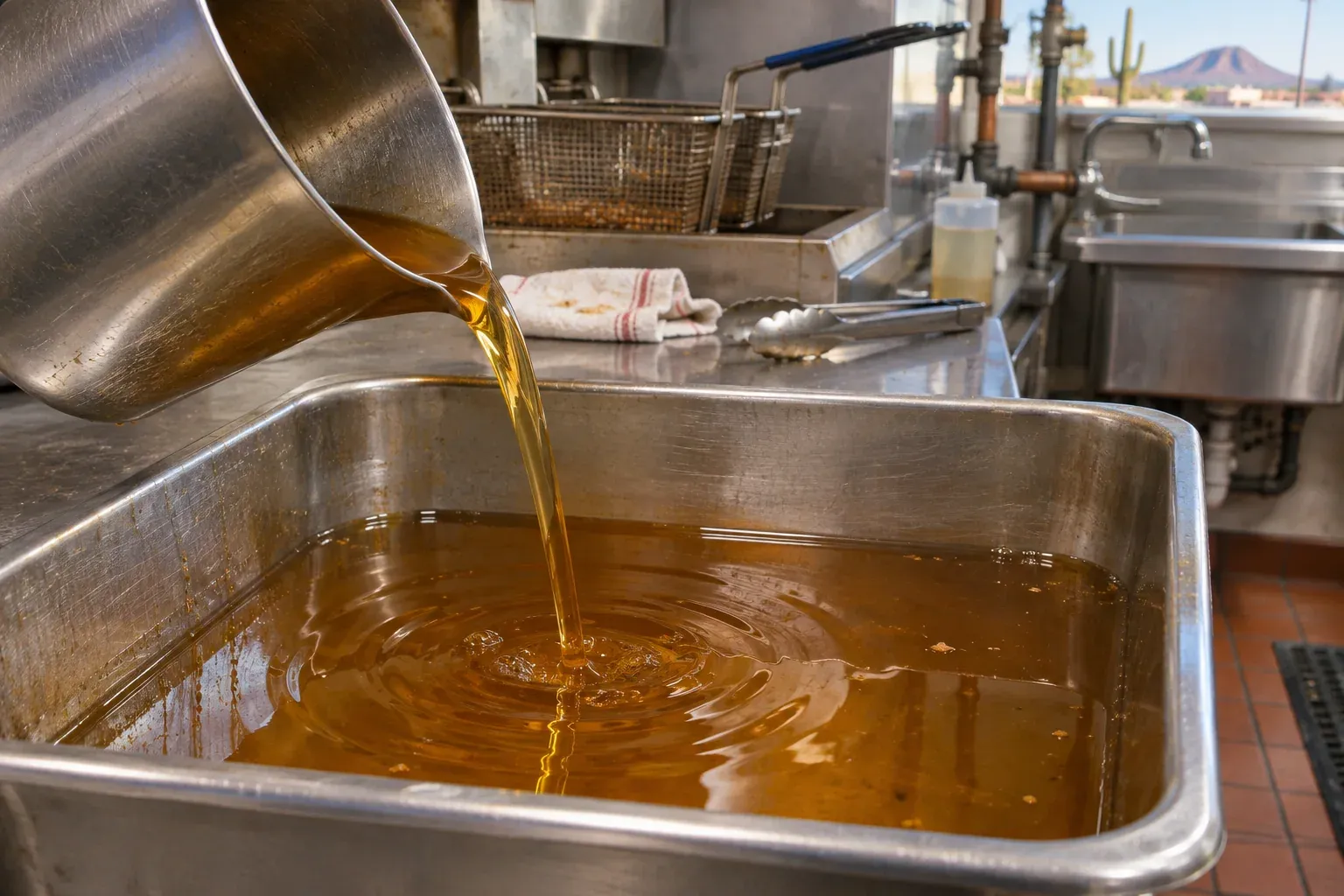
Most kitchen managers use the 2 words interchangeably, and that is where scheduling mistakes start. A 30 day rule for a trap is not a 30 day rule for an interceptor, and a pump-out price for one is not a price for the other. The good news is that a 30 second look tells you which one you have. A trap needs commercial grease trap cleaning every 30 days, and an interceptor needs grease interceptor pumping every 90.
01 / Good to know
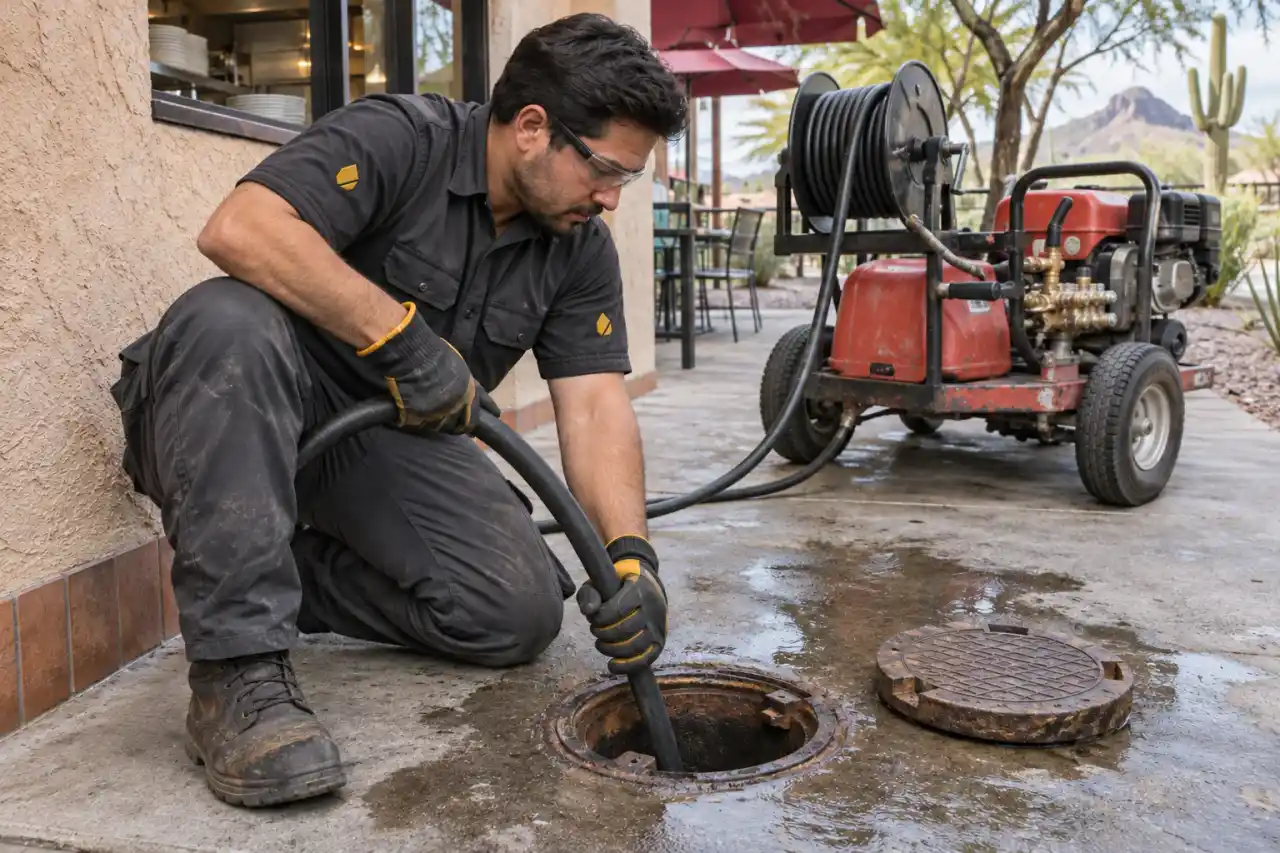
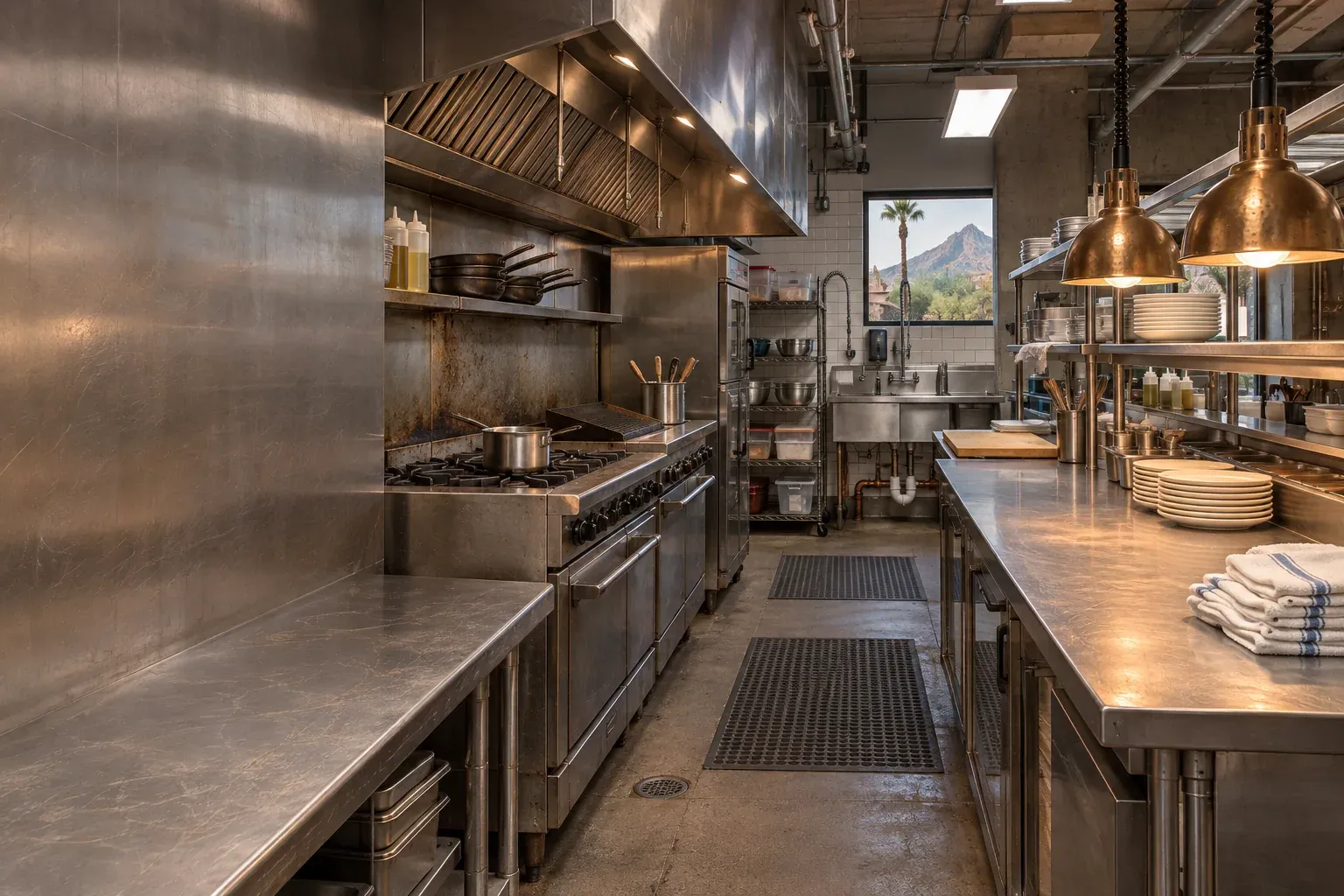
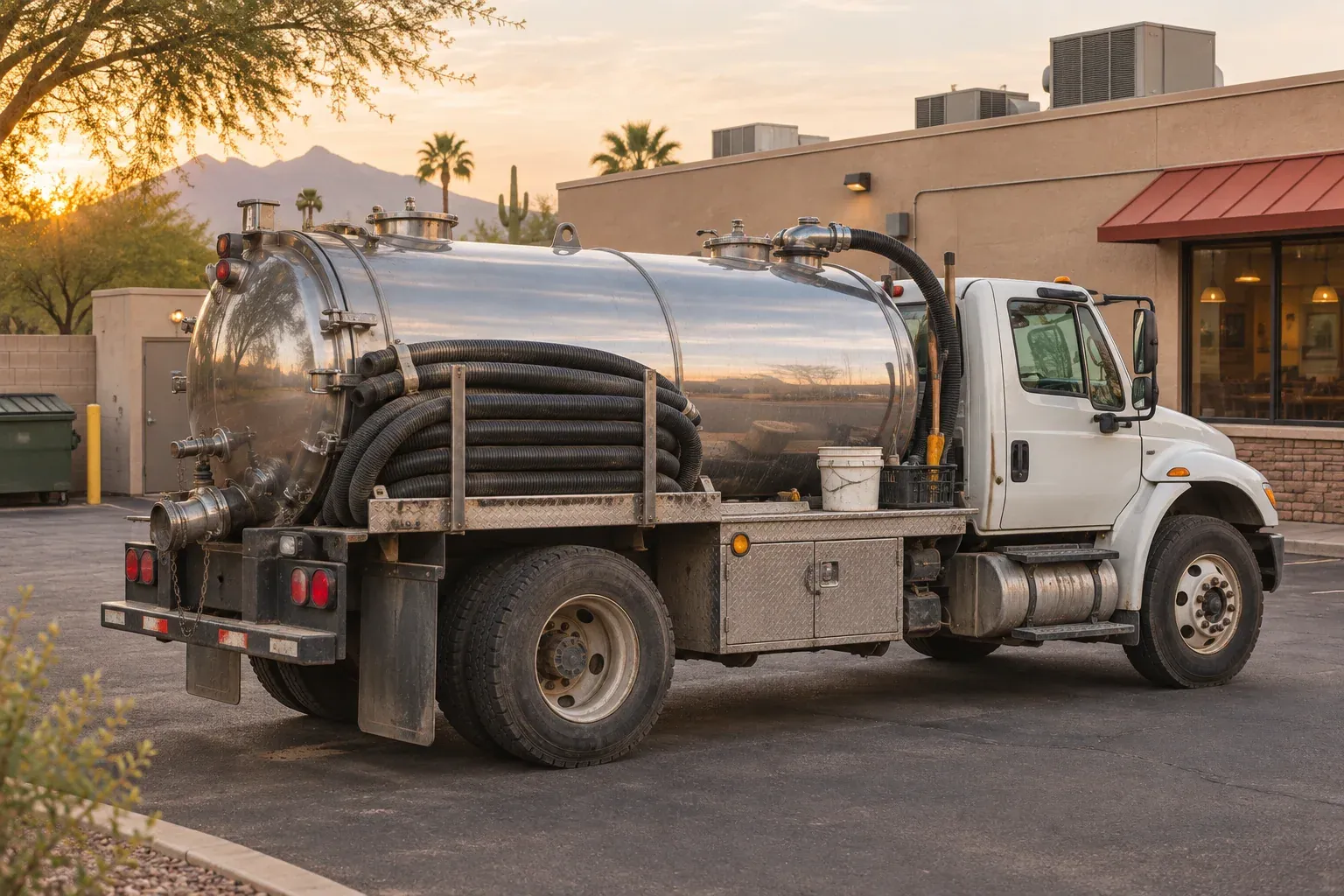
Open the door where the sink drain goes. If the device is a metal box with a lid, roughly the size of a suitcase, under the sink or in a closet, it is a hydromechanical trap. If the plumbing goes through the floor and out to a round lid in the parking lot, it is a gravity interceptor.
The second test is the rating. A trap is rated in gallons per minute and in pounds of grease capacity, because it treats flow as it passes. An interceptor is rated in gallons, because it holds wastewater long enough for the grease to rise.
02 / Good to know
| Feature | Hydromechanical trap | Gravity interceptor |
|---|---|---|
| Location | Under the sink, in a closet, in a floor pit | Buried outside, lids at grade |
| Size | 10 to 100 gallons | 500 to 2,500 gallons, sometimes more |
| Rating | Gallons per minute and pounds of grease | Gallons of liquid volume |
| Flow | Treats the flow as it passes | Holds the flow for residence time |
| Typical interval | 30 days in Phoenix | 90 days in Phoenix |
| Service | Portable pump or small truck | Vacuum truck |
| Failure mode | Fills fast, overflows at the fixture | Carries over to the sewer |
03 / Good to know
The fixture count decides it in most jurisdictions. Tempe's program states the rule plainly: 4 or fewer kitchen fixtures on the grease line can use a trap, and more than 4 fixtures, or any commercial dishwasher, needs an interceptor. Other Valley cities set their own sizing rules.
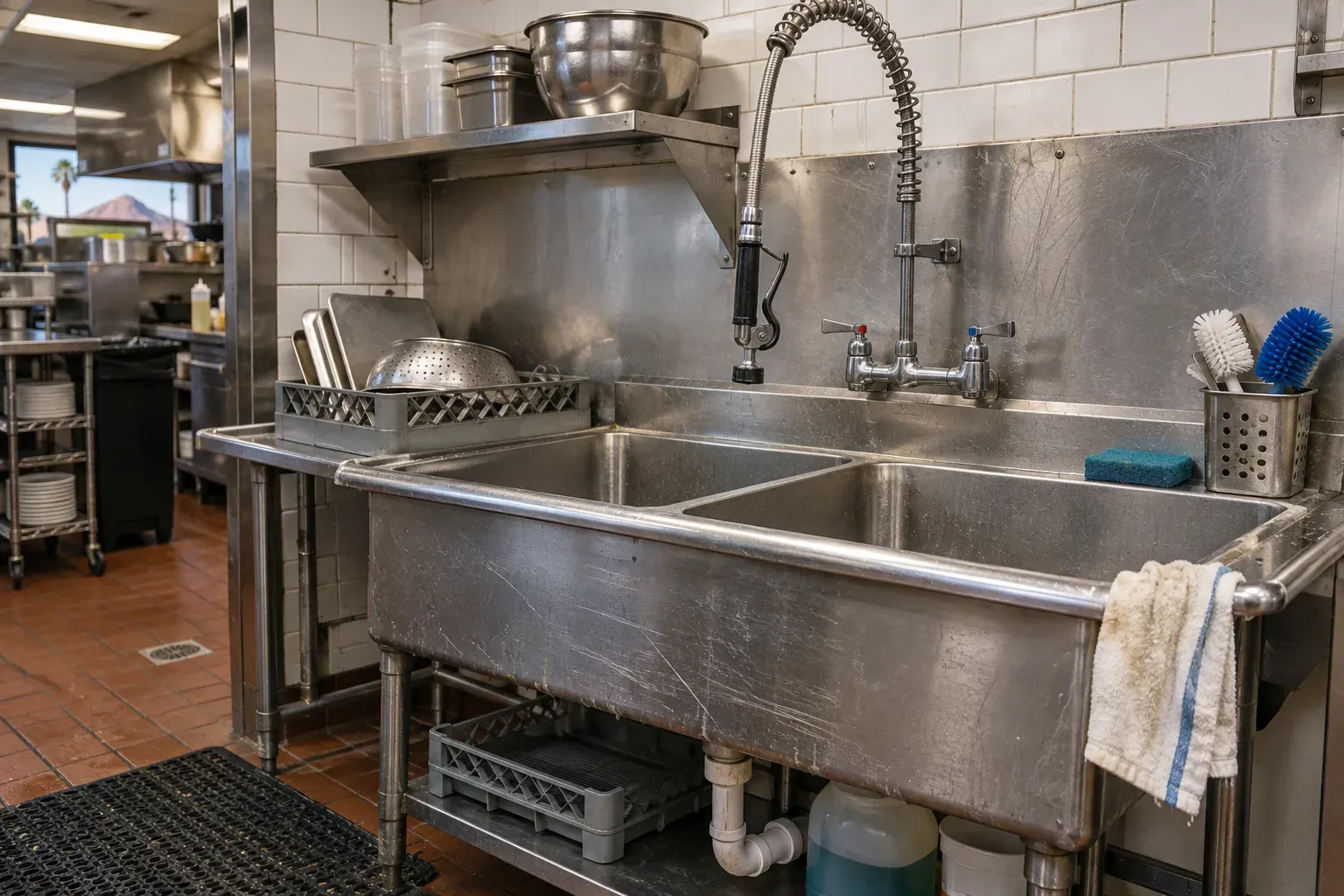
A full-service restaurant with a dishwasher, a three-compartment sink, a prep sink, a mop sink and a hand sink is an interceptor kitchen. A coffee shop with a small sink and no dishwasher can be a trap kitchen.
04 / Compare
A trap on a 30 day schedule is 12 visits a year. An interceptor on a 90 day schedule is 4. At the middle of the national ranges, that is $1,500 to $2,400 a year for the trap and $900 to $1,600 for the interceptor, which is counterintuitive: the smaller device costs more to maintain.
That is the trade-off at installation. A trap is cheaper to buy and more expensive to run. An interceptor is a construction project and cheaper per year. A restaurant that plans to stay in a space for 10 years can come out ahead with the interceptor. A cracked tank or a missing baffle is a grease trap repair call before it is a replacement.
05 / Good to know
If it is outside and it is measured in hundreds of gallons, it is an interceptor. The word trap is used loosely, and the invoice should follow the device.
Some hydromechanical units are 100 gallons and sit in a floor pit. Size the service to the gallons, not to the location.
No. The device is the property's or the tenant's, depending on the lease. The city enforces the maintenance.
A truck can pump both in one visit if they are on the same property, and the manifest should list both volumes.
06 / Good to know
If the answers are unclear, the schedule check asks 3 questions and returns the rule and the next due date.
08 / 4 questions
Still have a question?
Send the form with a short note. Someone from our team will call you back soon.
Get a call backQ.01
Yes. Some kitchens have a small trap at a fixture and an interceptor for the main line. Both need service and both belong on the manifest.
Q.02
No. A recovery device is an automated unit that separates and removes grease, and it needs written approval in some jurisdictions, including the Salt River Community.
Q.03
A trap can, because it is inside and small. An interceptor with a sealed lid usually does not smell unless the lid or gasket has failed.
Q.04
Yes, with a plumbing permit, if there is room for the tank and the drain lines can reach it.
Form open 24/7
Ask for a call back about your grease trap
Tell us which device and which kitchen. We will call you back shortly.
Thank you. You will be called back soon.