Q.01
Can I pour hot water down the floor drain to clear it?
No. Hot water melts the grease temporarily and pushes it further down the line, where it cools and sets again.
Service 04 of 09 · Phoenix, AZ
You need emergency grease trap cleaning in Phoenix, and the first step is to stop using water in the kitchen. Tell us where it backs up and send the form, and someone from our team will call you back.
Form open 24/7
Get a call back
Phoenix + 15 Valley cities
01 / What you get
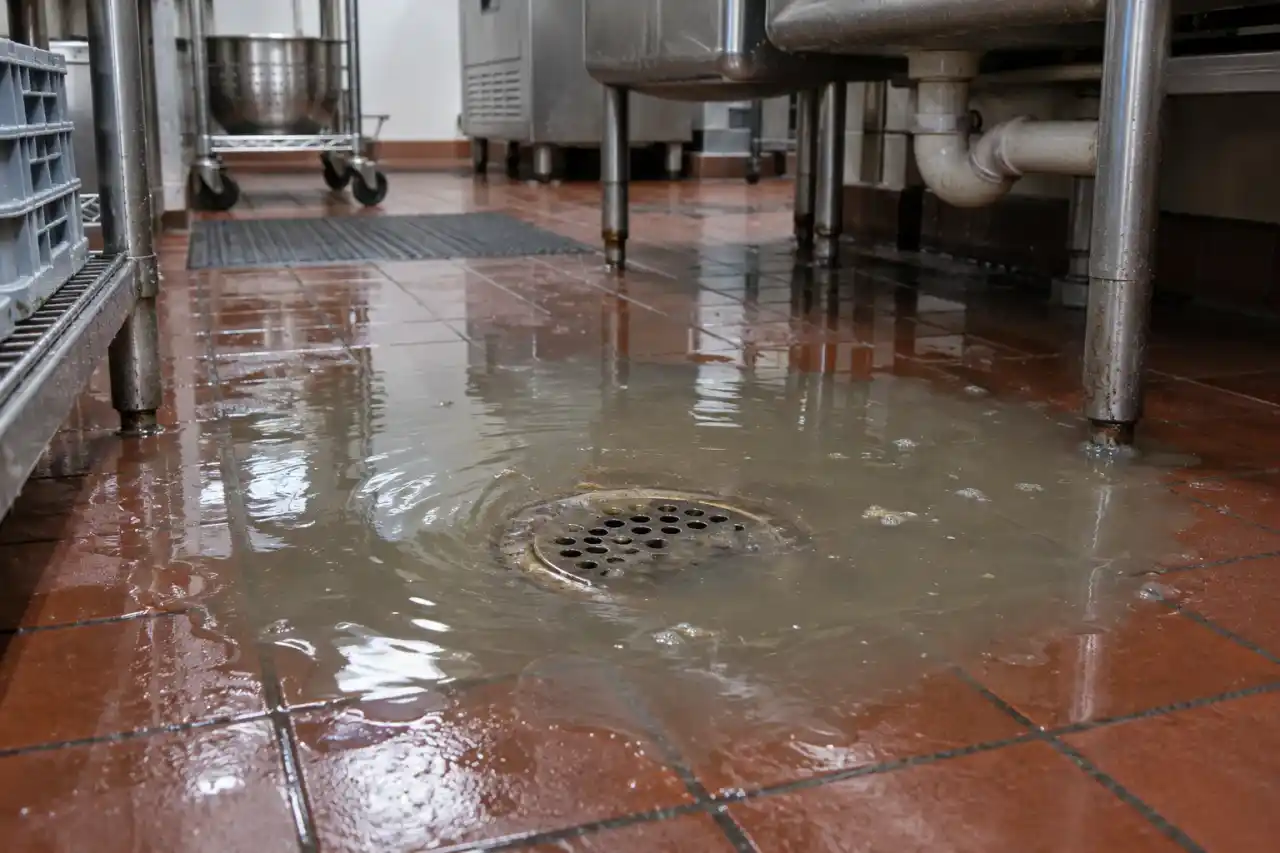
A grease backup in Phoenix usually announces itself at the worst possible time: the middle of dinner service, with a full dining room and a dish pit that cannot stop. The water coming up is grey, warm and greasy, and it comes from the floor drain because that is the lowest point in the system. What is happening is either a full interceptor, a blocked line between the trap and the sewer, or both.
The first 10 minutes matter more than the next 2 hours. Stop the water, protect the floor, move food away from the area, and call for service. A snake can open a drain, but a grease backup usually needs a vacuum truck and kitchen line jetting.
02 / The signs
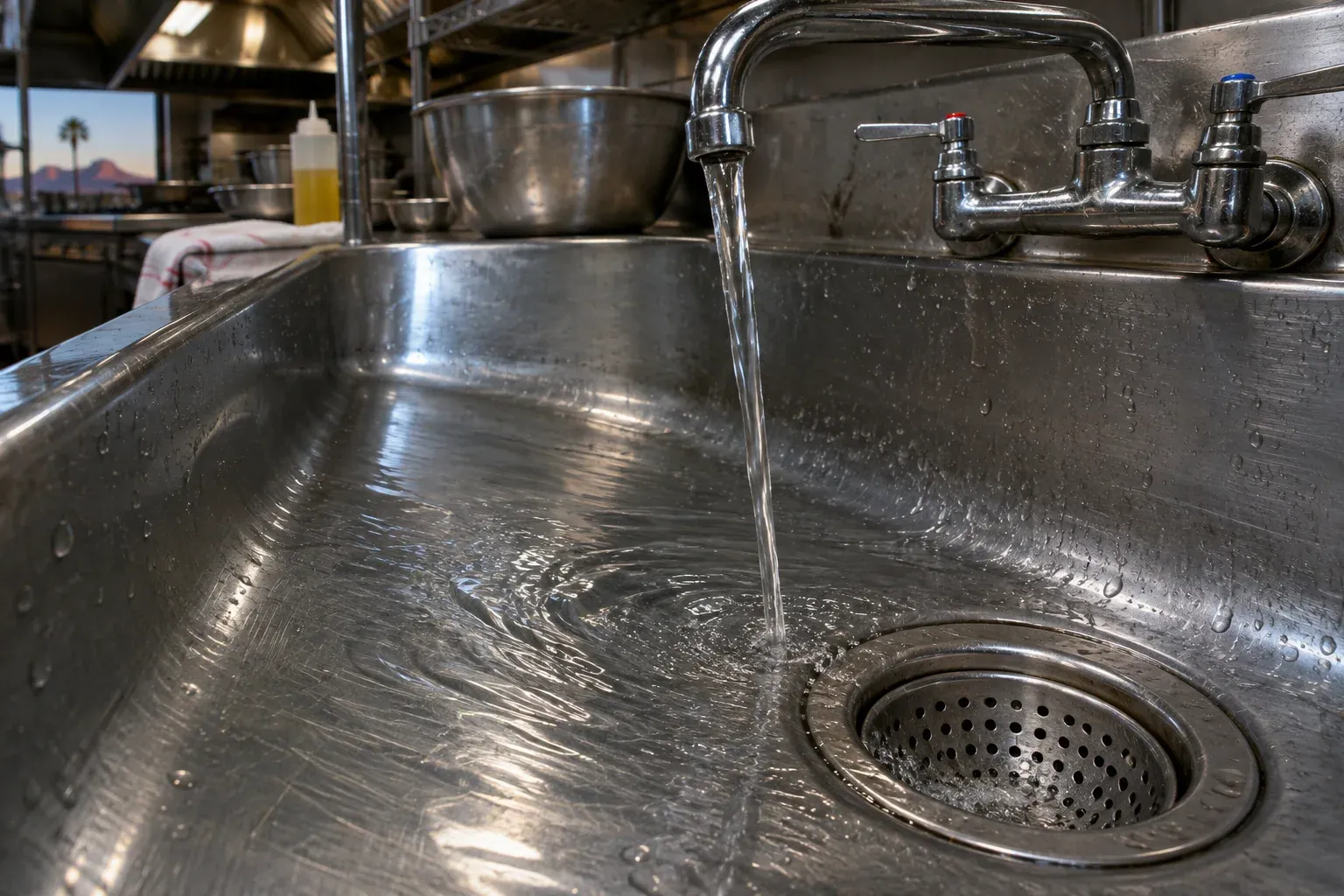
Stop using water in the kitchen. No sinks, no dishwasher, no mop sink, no ice machine dump.
Shut off the dishwasher and any equipment that drains to the floor sink.
Put a barrier around the area and keep staff and customers out of it. Grey water is a slip hazard and a contamination hazard.
Move any food, small equipment or packaging that is within splash range.
Take a photo of the water level and the drain, with a timestamp. It helps with the landlord, the insurer and the service company.
Call. Give the address, the device type if you know it, whether the drain is still rising and whether the kitchen is open.
If water is coming up fast and there is a floor drain nearby that is still clear, do not try to divert it with towels and a squeegee. The water is backing up from the line. Let it pool in the lowest area and keep people out until the pumper arrives.
03 / How it works
Your request starts a fixed sequence.
04 / Costs
In the national grease trap cleaning cost ranges, a scheduled pump-out runs $225 to $400 for a 1,000 gallon tank. An emergency call adds $100 to $250 in national cost guides, and an emergency pump-out often lands at $400 to $800 before any line jetting or repair. A Saturday night visit with a full tank, a blocked line and a cleanup can exceed $1,000.
The variables are the time of day, the gallons, whether the line needs jetting, whether a camera is used, and how much cleanup is required. The pump-out and the jetting are priced as separate lines, and the after-hours premium can apply to each.
05 / Warning signs
There are 3 common causes, and they need different tools.
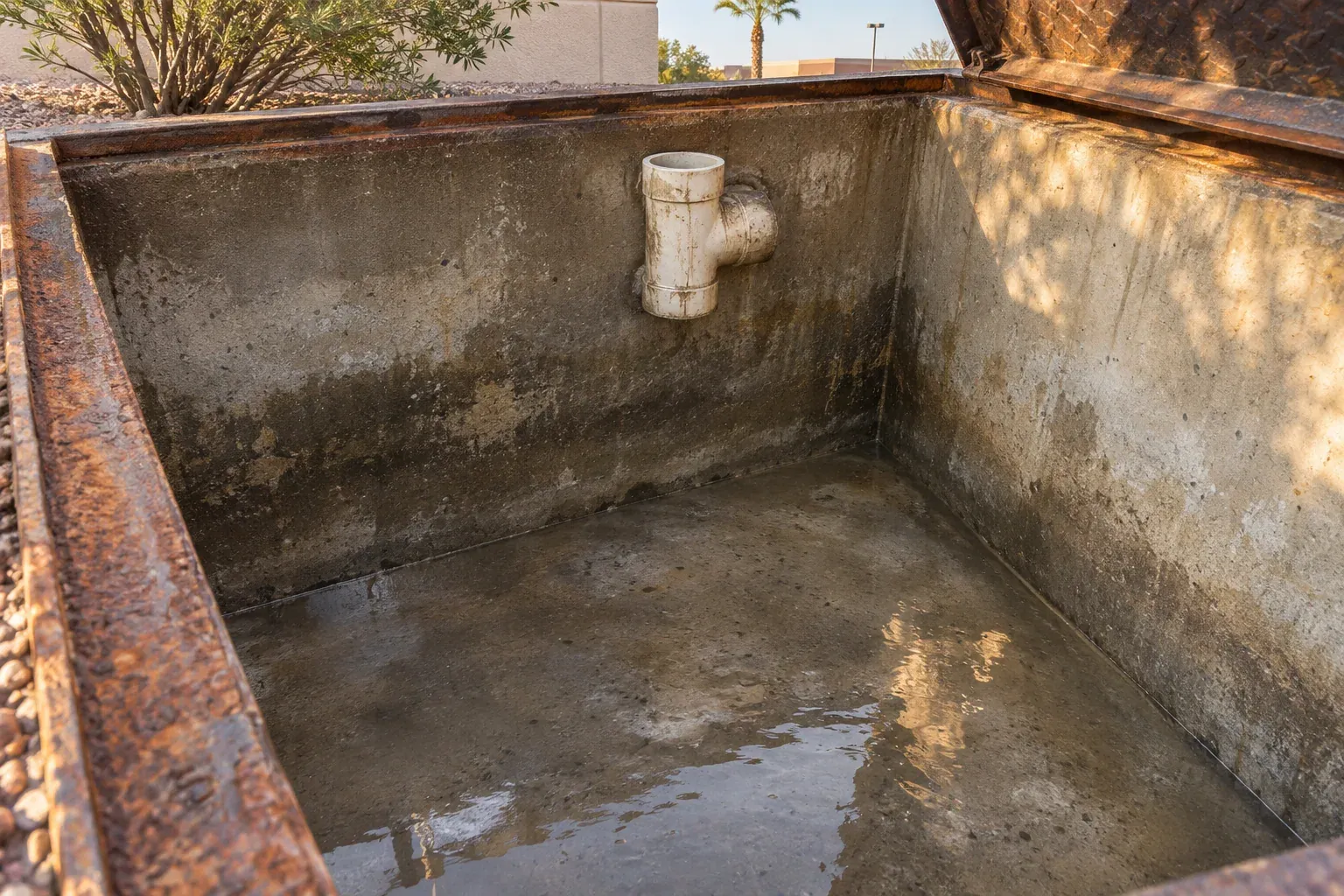
An interceptor at or above 25 percent stops working effectively, and the grease can go out the outlet into the line. The fix is grease interceptor pumping, and the cause is a schedule that was too long or a device that is undersized for the menu.
Grease has coated the pipe between the trap and the sewer until the diameter is gone. The fix is jetting, and pumping alone will not solve it.
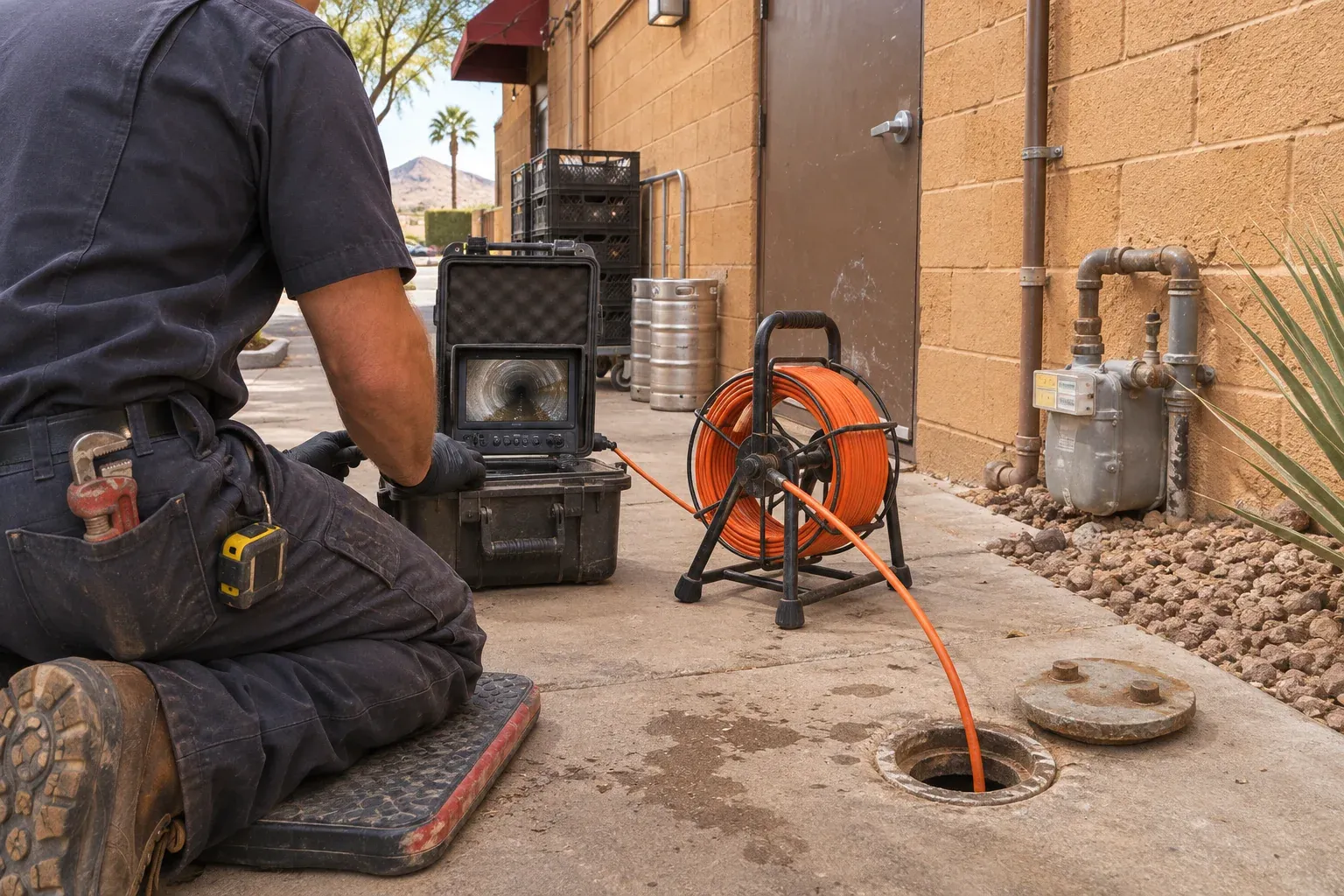
An older clay or cast iron line can have an offset joint, a crack or a root mass. Jetting may open it for a while, but the repair is the permanent fix, and a camera check is what tells you which one you have.
A good emergency visit identifies which of the 3 is happening before the truck leaves. The pumper pumps the device, checks the inlet and outlet, jets the line if it is blocked, and cameras the line if it keeps blocking. A visit that only pumps and leaves can be repeated within weeks.
06 / How it works
The situation is assessed before hooking up. If the device is full and the line is holding, the pump-out comes first. If the line is blocked, the jetting comes first or immediately after, because pumping a tank while the line is blocked just means the next flush goes back onto the floor.
The work area gets a mat or absorbent. The lids come off, the device is measured and pumped, the line is jetted from the correct access point, and the floor is cleaned. If the backup reached a dining area, the cleanup is a separate scope, and a grease film on a tile floor needs a degreaser, not a mop with dish soap.
Documentation matters more on an emergency than on a routine visit. The manifest, the camera footage and the before-and-after photos are what the restaurant needs for the landlord, the insurer and the city if the backup reached a storm drain or the sidewalk.
07 / Good to know
Prevention is a schedule plus a kitchen practice change. The schedule is the city interval, which for a Phoenix interceptor is every 3 months and for a trap is every 30 days, tightened if the device hits 25 percent early. The practice change is about what goes down the drain: no fryer oil, no pan grease, no food scraps through the disposer, and no grease solvents that hide the problem.
Two cheap habits make a difference. Train the closing staff to pour cooled fryer oil into the rendering container, not the sink. And keep a log of every slow drain, so the pattern shows up before the overflow does.
08 / Good to know
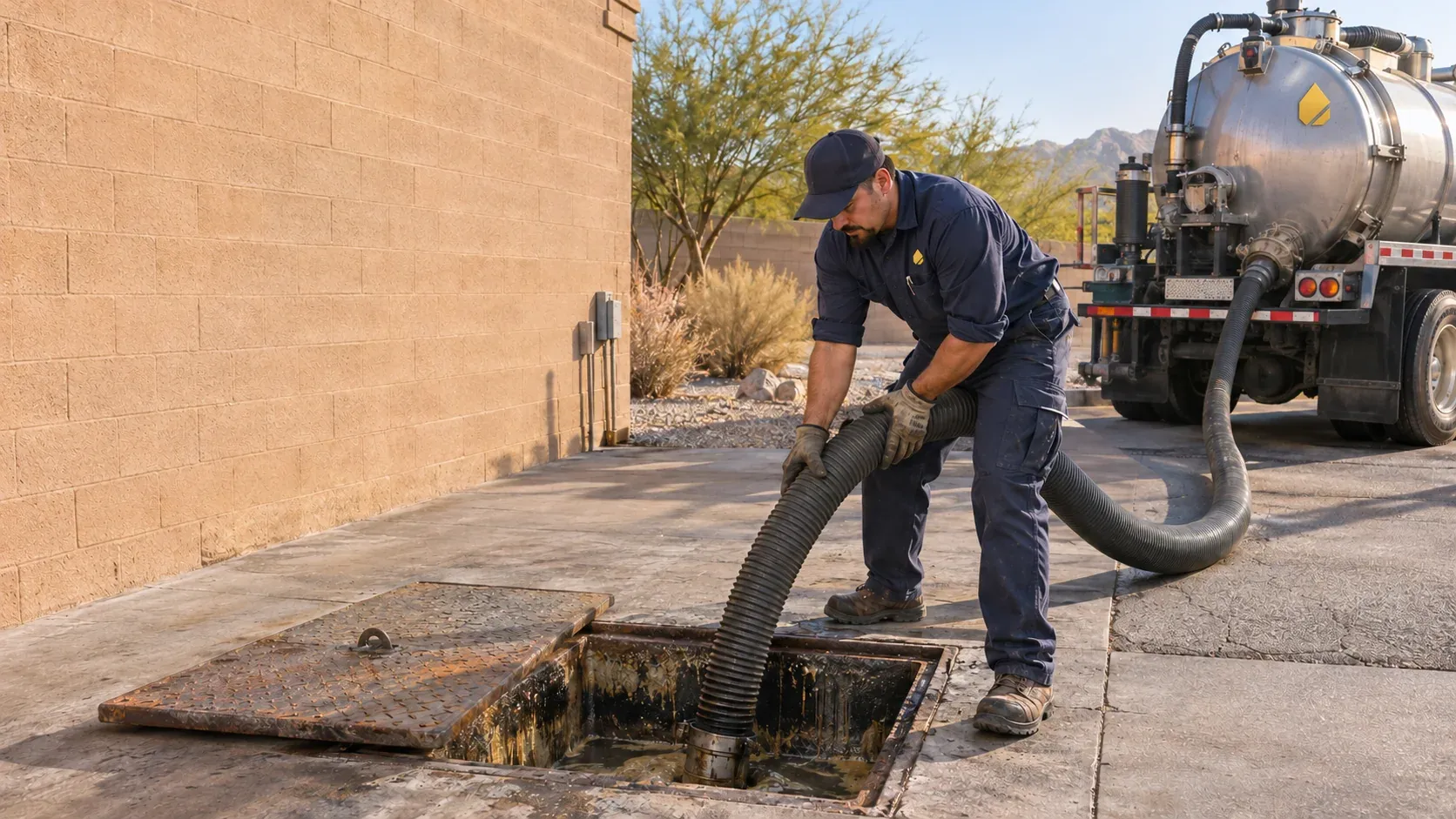
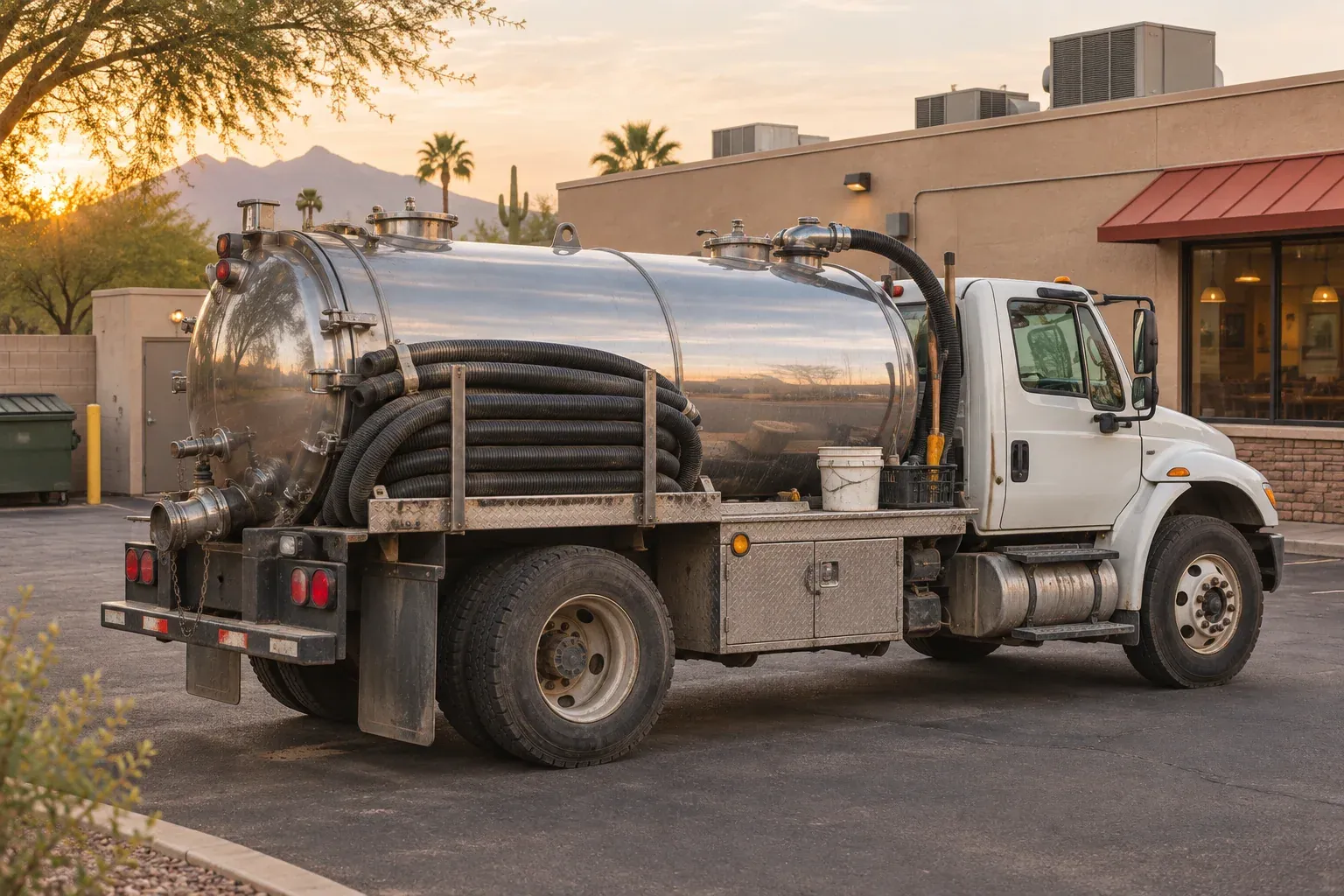
The equipment matters: a vacuum truck with a 2,500 gallon tank and a jetter on board can handle the pump-out and the line in one visit. A snake can open a path but cannot remove the grease.
In Maricopa County, the vehicle that hauls the waste needs a non-hazardous liquid waste operating permit from Maricopa County Environmental Services, and Phoenix's FOG manual requires the waste to go to a licensed disposal facility. The manifest names the disposal site.
If the backup reached a storm drain, a sidewalk or a neighboring property, contact the city as well. Phoenix's FOG program is the contact for grease-related sewer questions. The FOG compliance page explains what happens after a report.
09 / 6 questions
Still have a question?
Send the form with a short note. Someone from our team will call you back soon.
Get a call backQ.01
No. Hot water melts the grease temporarily and pushes it further down the line, where it cools and sets again.
Q.02
It is a bad idea on 3 counts. It can damage older pipes, it adds a chemical load to the device, and Phoenix prohibits chemicals used in place of physical cleaning. A grease blockage needs mechanical removal.
Q.03
Arrival depends on the time of day and where the truck is when the call comes in. Keep the after-hours number next to the FOG binder so the first call takes 1 minute.
Q.04
Coverage for a drain or sewer backup varies by policy and often needs an added endorsement. Photograph everything before cleanup and call the agent that day. The service invoice and the manifest support the claim.
Q.05
Phoenix can require corrective action, extra pumping or a repair after a violation, and a discharge to the storm drain is a separate environmental issue. The program's focus is compliance and prevention. The failed inspection page walks through the process.
Q.06
That is the signal that the line needs a camera inspection, or that the device is undersized for the menu. A second backup within 30 days should trigger a camera and a conversation about the trap size, not another pump-out.
Form open 24/7
Ask for a call back about your grease trap
Tell us which device and which kitchen. We will call you back shortly.
Thank you. You will be called back soon.