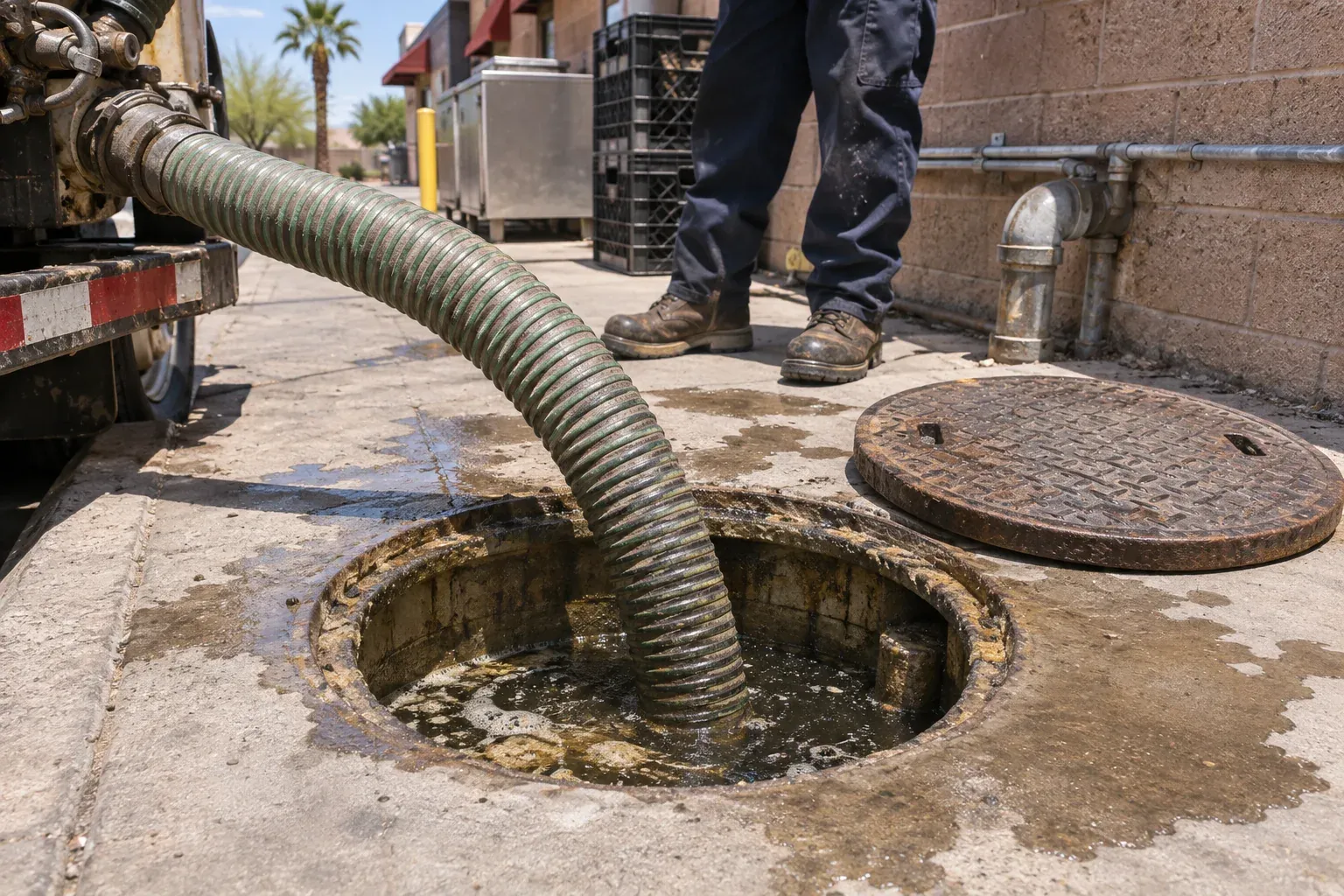
EPA's guidance is blunt: never pour cooking oil or grease down the drain. Grease harms the bacteria that break down waste in the tank and the drainfield, and the county's own septic FAQ warns that solids, grease and oils can migrate out of a tank that is not maintained.
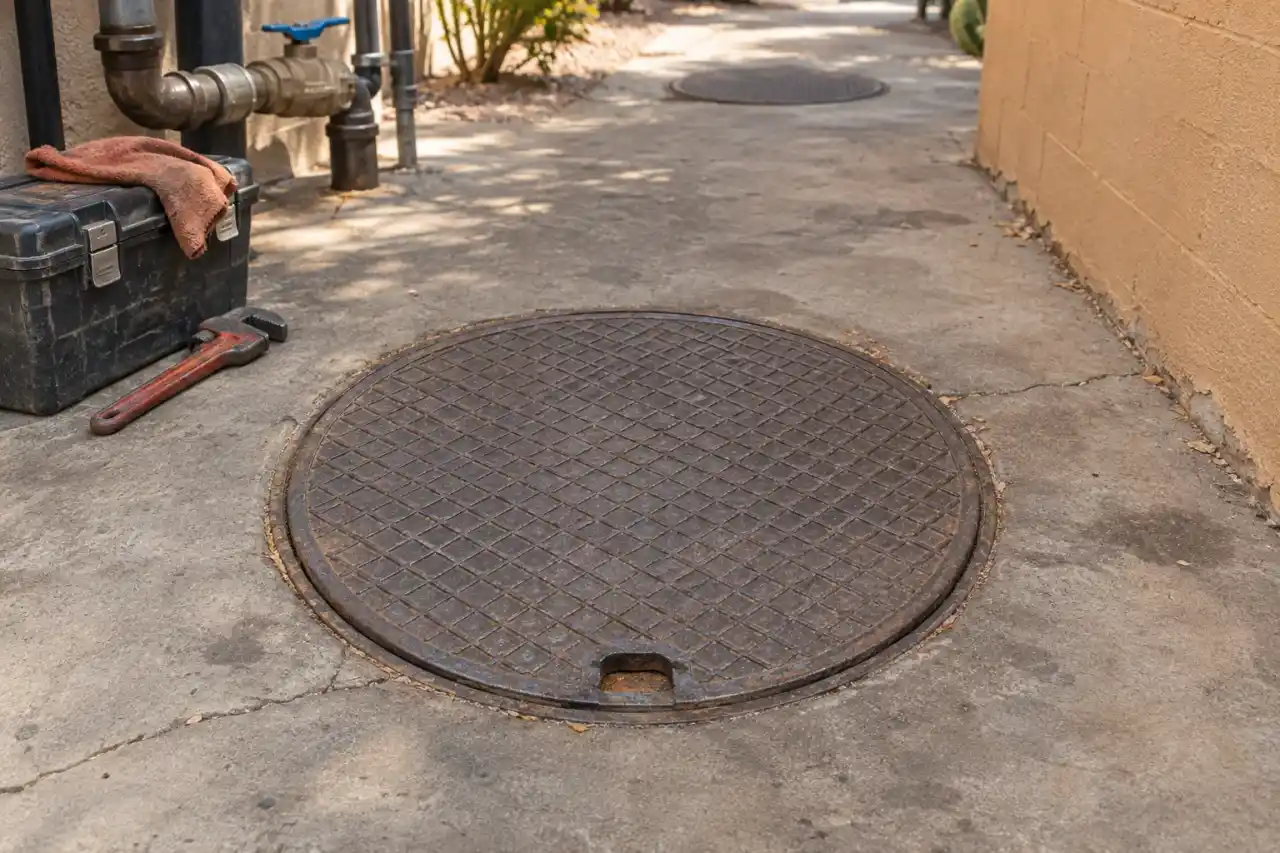
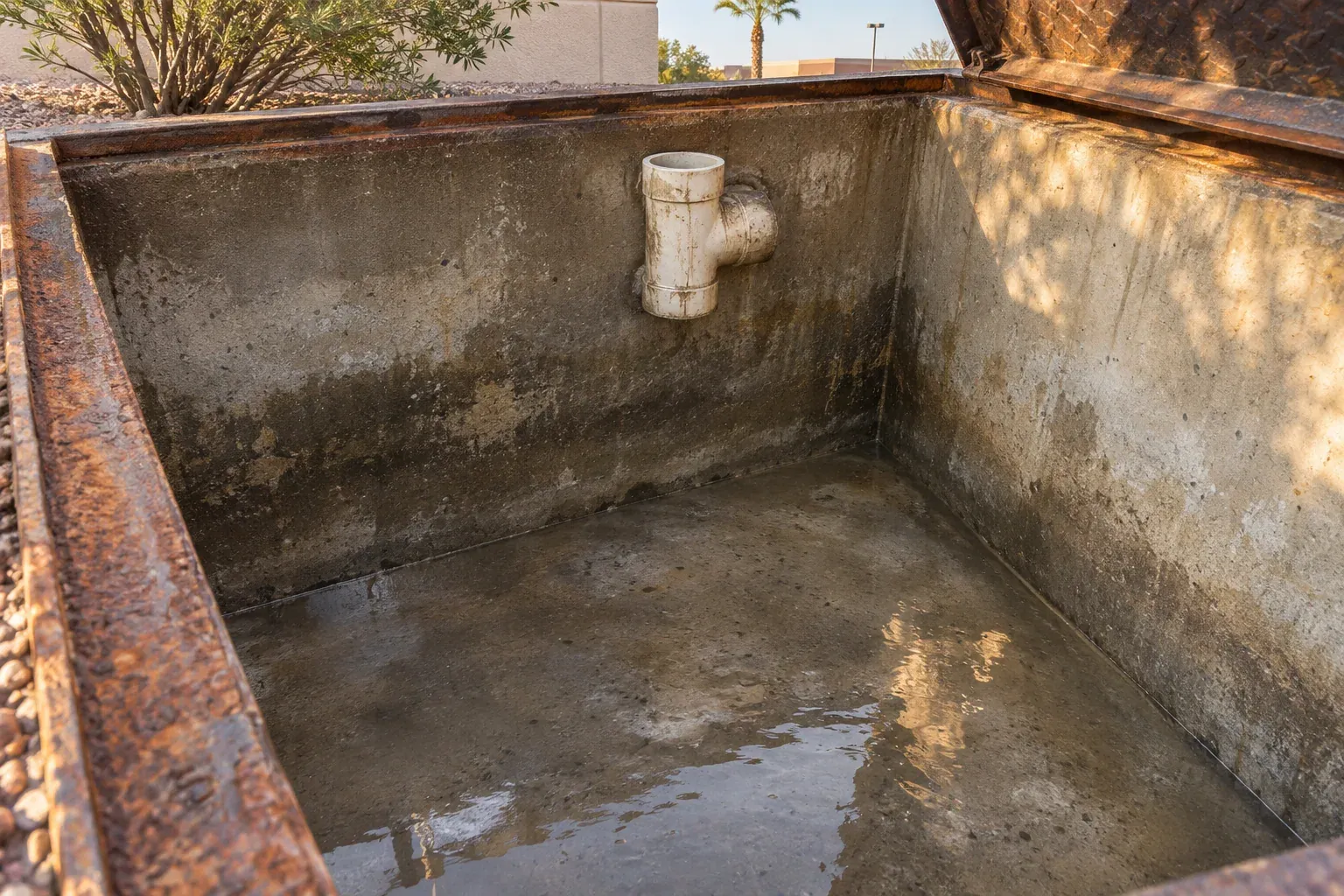
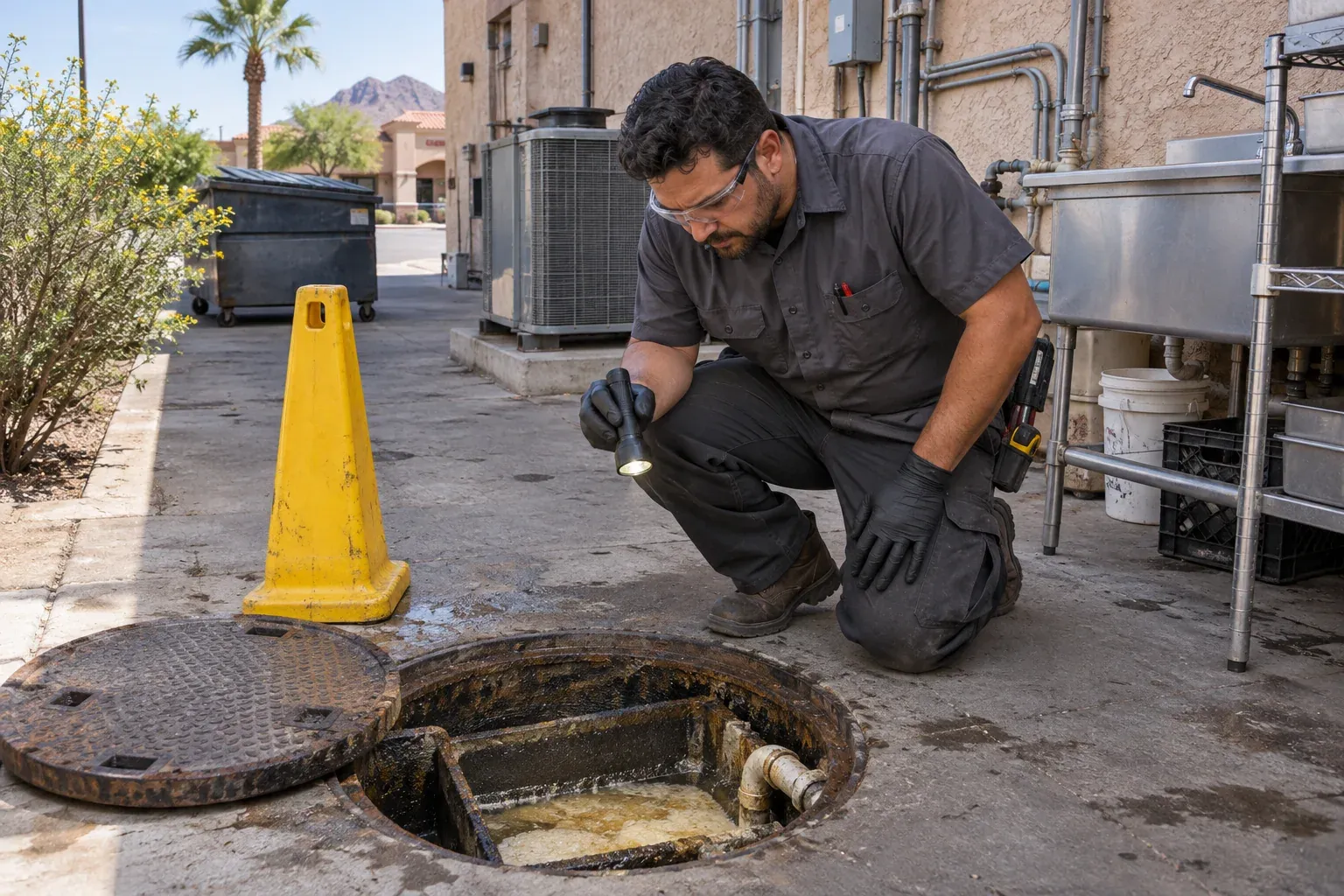
Arizona rule requires the fix. Under A.A.C. R18-9-A309, if the sewage contains a nonresidential component such as food preparation, it must be pretreated by an interceptor that meets R18-9-A315. That rule sets 2 or more compartments, access openings at grade, and a size calculated from the meals per peak hour, the flow rate, 2.5 hours of retention time for a commercial kitchen and a storage factor of 1.0 to 3.0 by hours of operation. An interceptor may not accept toilet wastewater.
The order matters. Kitchen drains go to the interceptor, and the interceptor outlet goes to the septic tank. Nebraska's state fact sheet, as an example from another state, spells out the layout: a separate kitchen line, a watertight grease tank sized for 24 hours of detention, at least 750 gallons, located ahead of the septic tank. Arizona sizes the device by formula, but the sequence is the same.
Maricopa County's code also defines "typical sewage" as having fats, oils and grease that do not exceed 75 mg/l, the yardstick for what a standard onsite system is built to treat.
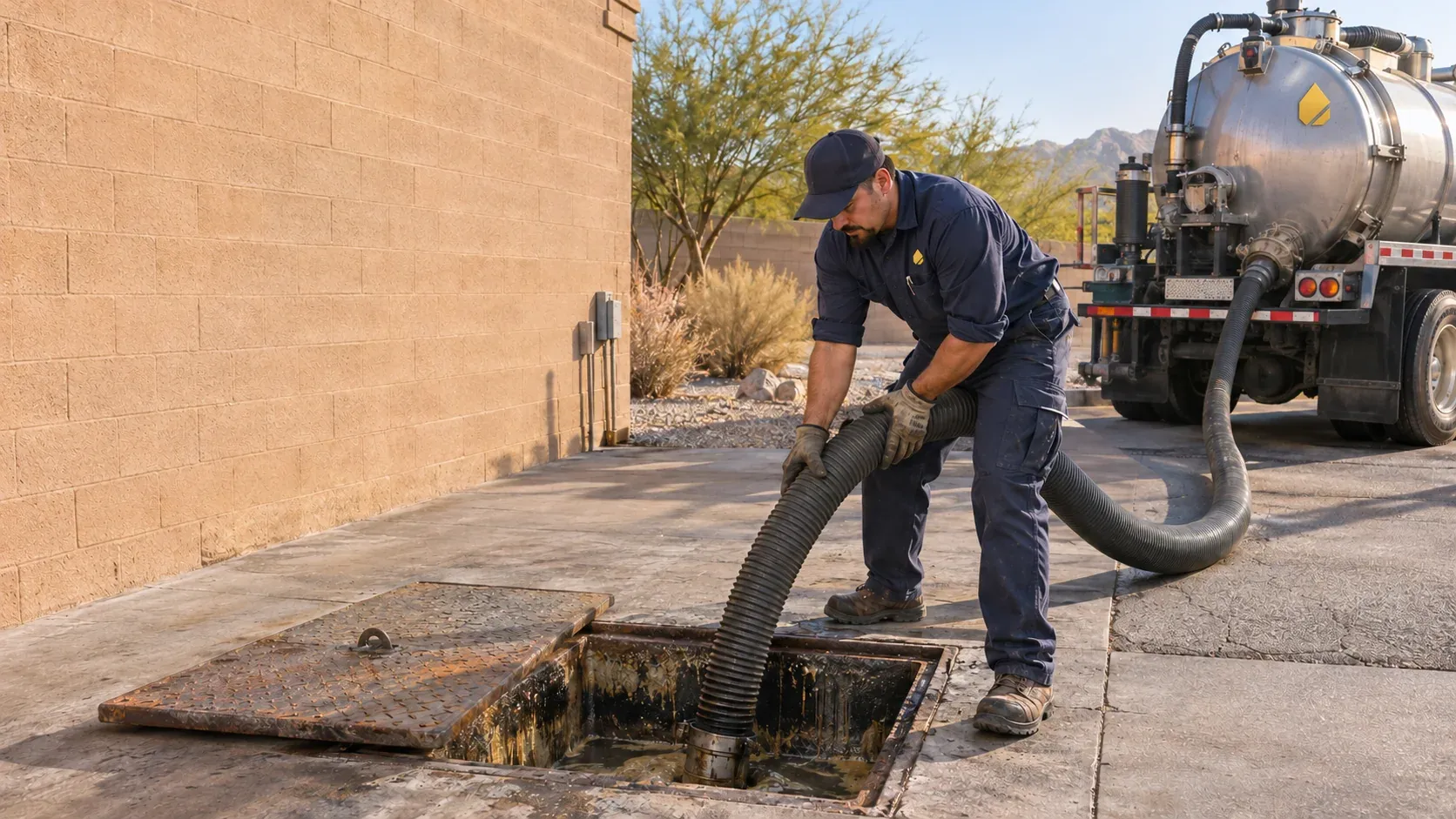
Two schedules run side by side: the grease device on its own interval, set by the 25 percent rule and the pumping schedule, and the septic tank on the longer interval above. Skipping the first shortens the second. A restaurant with a trap in the kitchen adds grease trap cleaning to the same calendar.