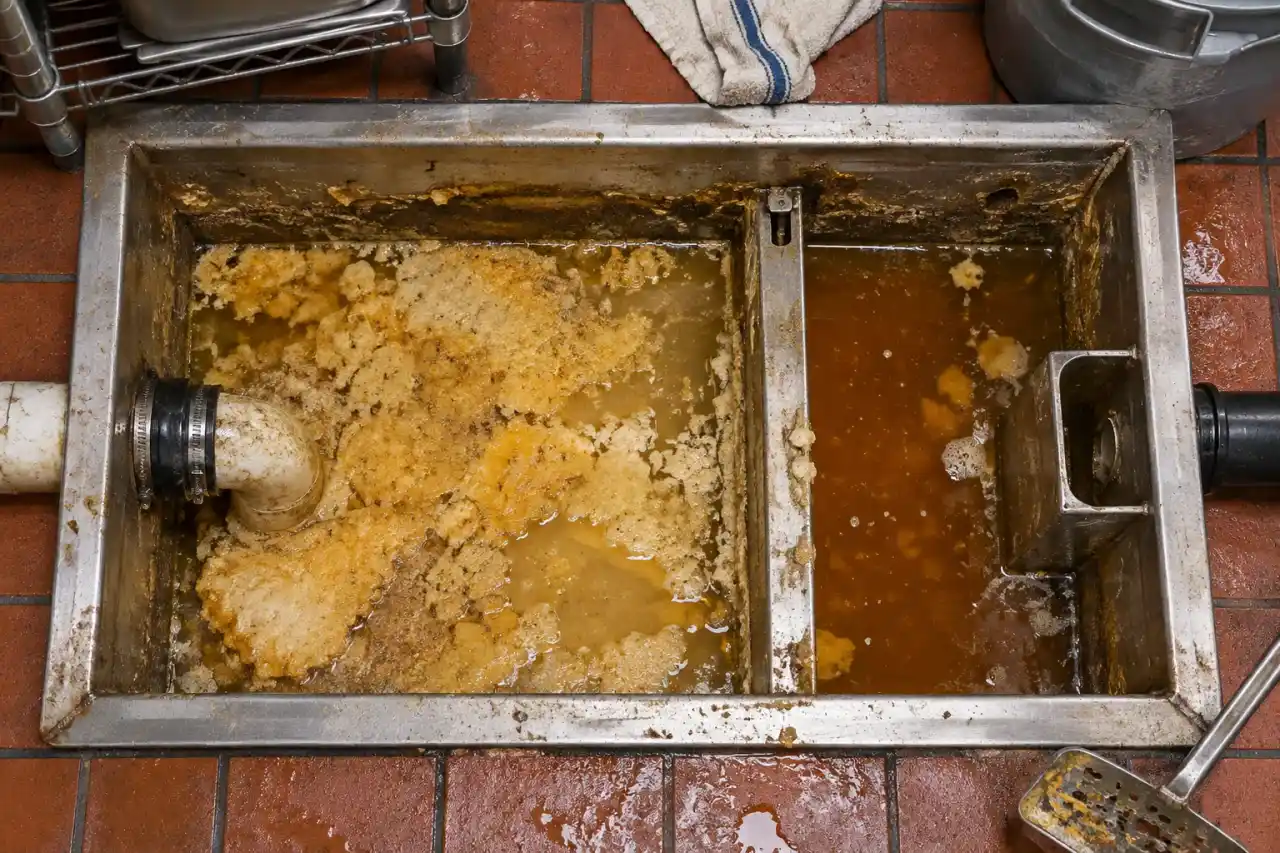
Overhead view into a stainless steel grease trap with a baffle, pale congealed fat on one side and amber water on the other

Sourced ranges · named sources

Grease Trap Cleaning Cost Phoenix, AZ

You want the grease trap cleaning cost in Phoenix: a scheduled pump-out of a 50 gallon indoor trap runs $125 to $200 in national ranges. When you are ready, someone from our team will call you back.

Grease trap cleaning cost and grease trap pumping cost in Phoenix depend on 4 things: the device, the gallons, the access and the schedule. A scheduled visit to a 50 gallon indoor trap (commercial grease trap cleaning) is a $125 to $200 line. Interceptor pumping cost for a 1,000 gallon outdoor tank on a 90 day plan is a $225 to $400 line. A 2,000 gallon tank that has not been opened in 2 years can be $630 or more, and an emergency at 10 pm on a Saturday can cost more than the scheduled price.

Every number below is a national range or a public contract result, labeled as such. Phoenix does not publish a price schedule for private pumping. The sections below show the shape of the market, what moves the number and how two quotes line up.

01 / Price ranges

Price by device size

  • 01Under-sink trap$125 to $200Capacity20 to 50 gallonsOne-off or overdue$150 to $250Annual at the stated cycle$1,500 to $2,400 at 30 days
  • 02Commercial trap$150 to $325Capacity50 to 100 gallonsOne-off or overdue$200 to $400Annual at the stated cycle$1,800 to $3,900 at 30 days
  • 03Small interceptor$225 to $400Capacity500 to 1,000 gallonsOne-off or overdue$300 to $500Annual at the stated cycle$900 to $1,600 at 90 days
  • 04Mid interceptor$225 to $315Capacity1,000 to 1,500 gallonsOne-off or overdue$320 to $630Annual at the stated cycle$900 to $1,260 at 90 days
  • 05Large interceptor$400 to $700Capacity2,000 gallonsOne-off or overdue$630 to $1,000Annual at the stated cycle$1,600 to $2,800 at 90 days
  • 06Very large or multi-tank$800 to $2,000Capacity3,000 gallons and upOne-off or overdue$1,000 to $2,000Annual at the stated cycle$3,200 to $8,000 at 90 days

The annual column assumes the city minimum and no extra visits. A high-volume kitchen that hits 25 percent early will pay more, and the annual number is the one to budget, not the per-visit number.

02 / Why it matters

Per-gallon pricing, and why it matters

Haulers price two ways: a flat rate per visit, or a rate per gallon removed. The per-gallon method is common on commercial contracts and on tanks above 1,000 gallons, because the hauler's cost is mostly disposal and truck time.

Public bids for grease trap waste hauling and disposal have landed between $0.14 and $1.95 per gallon. The spread shows how much the disposal market and the region matter. Most of the published bids sit between $0.20 and $0.85 per gallon.

A worked comparison. Two quotes for a 1,000 gallon tank:

  • Quote A: $450 flat, includes pump, scrape, manifest, disposal.
  • Quote B: $0.40 per gallon, minimum 1,000 gallons, plus a $60 disposal fee.

Quote B is $460 at exactly 1,000 gallons and more if the tank is fuller. They are about 2 percent apart, which means the decision should be made on access, timing and the manifest, not on price. That is the useful outcome of a per-gallon quote: it tells you what the hauler thinks the volume will be.

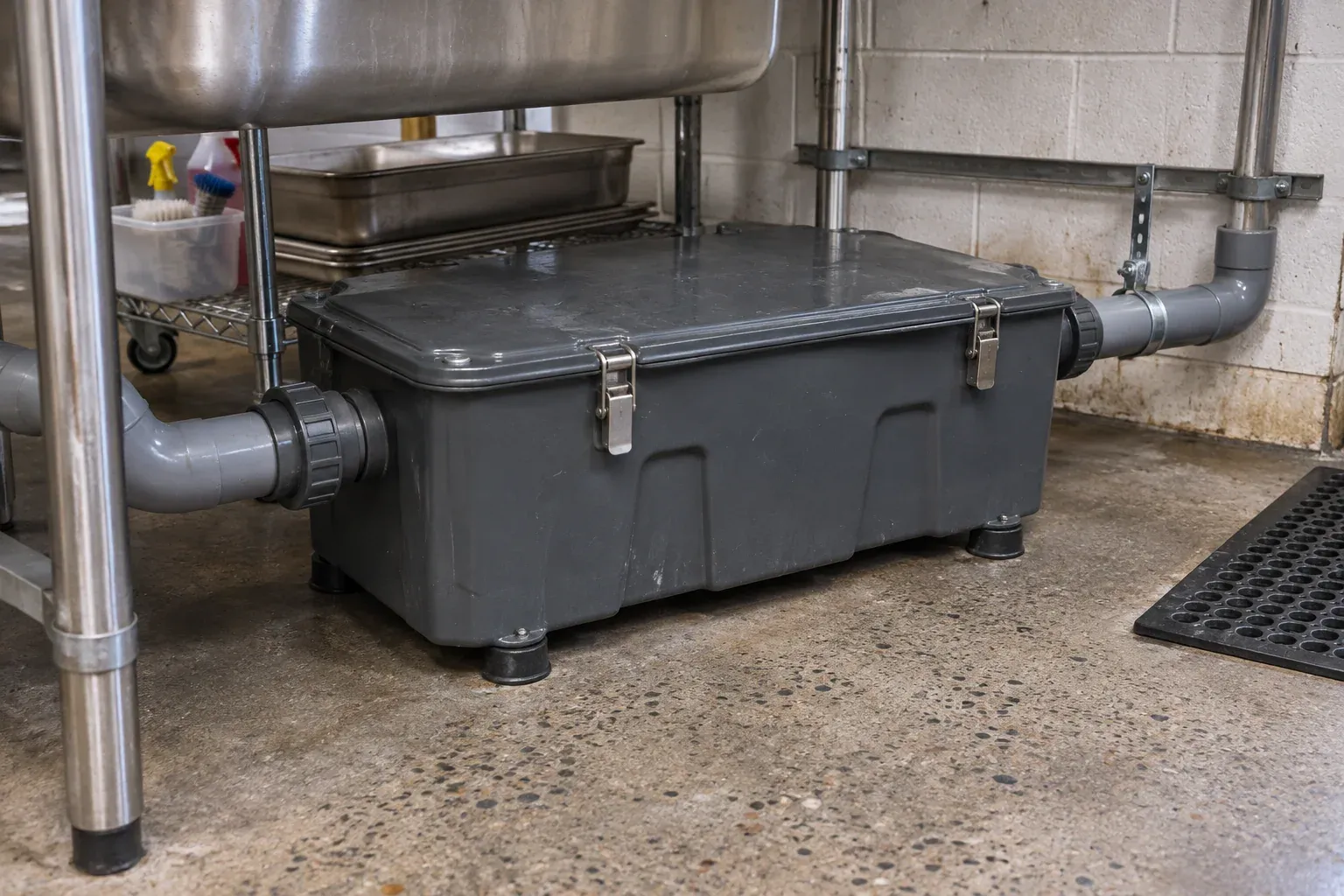
Gray polyethylene grease interceptor with latched lid sitting on a concrete floor beside a stainless sink leg, gray pipes at the wall

03 / Costs

What does a grease trap pump-out price include?

  • The device type and the rated capacity in gallons or GPM.
  • The volume to be removed, or the per-gallon rate and the estimated gallons.
  • Whether the walls, baffles and compartments are included, or whether that is an extra.
  • The disposal fee and the disposal site.
  • Whether the manifest is provided, and whether it lists the gallons.
  • The service window and whether after-hours is a premium.
  • Any charge for a lid that has to be dug out, a car that has to be moved or a trap in a cabinet.

A price that leaves out 3 or more of those items is a starting number, not a full quote. A low line item can leave out wall scraping, which is the part that helps keep the device from filling early.

04 / Costs

What moves the grease trap cleaning price in Phoenix?

  • 01

    Tank size

    Doubling the gallons roughly doubles the disposal cost and adds a load. Above 2,500 gallons, a standard vacuum truck cannot take the whole tank in one trip, so the price steps up.

  • 02

    How full it is

    A device at 60 percent takes longer than the same device at 20 percent, and a tank with hardened solids takes longer again. A first visit after years of neglect is a different job than a maintenance visit.

  • 03

    Access

    Lids under a parked car, behind a locked gate, inside a cabinet or under a mat all add labor. A hose run over 100 feet adds time and, on some jobs, a second person.

  • 04

    Time of day

    Nights, weekends and service-hour emergencies carry a premium. National cost guides put the after-hours premium at $100 to $250, and the number can be higher when the visit turns into a cleanup.

  • 05

    Frequency

    The price guides reviewed show scheduled service cheaper per visit than one-off pumping. A 90 day plan also makes the 25 percent rule easier to satisfy, because the device is never close to full.

  • 06

    Condition

    A broken baffle, a cracked lid, a collapsed tank wall or a missing outlet turns a pump-out into a repair. That is a separate scope and a separate price, because grease trap repair is plumbing work.

05 / Good to know

What does the city of Phoenix charge for pumping?

Phoenix publishes the schedule, the inspection program and the record requirements, not a price for private pumping. After a violation, a city can require extra pumping, a repair or a device replacement, and those requirements cost money.

Maricopa County permits non-hazardous liquid waste vehicles, and the permit is tied to the vehicle, not to the restaurant.

06 / Costs

How to compare 2 quotes in 5 minutes

Two quotes line up when they use the same fields: device size, gallons, wall scraping, baffles, manifest, disposal site, service window and total. With the same scope and the same gallons, the comparison comes down to price and service window. A gap of more than 30 percent between two quotes with the same gallons often comes from a scope line such as the wall scraping or the disposal fee. The guide to comparing quotes lays out the same fields.

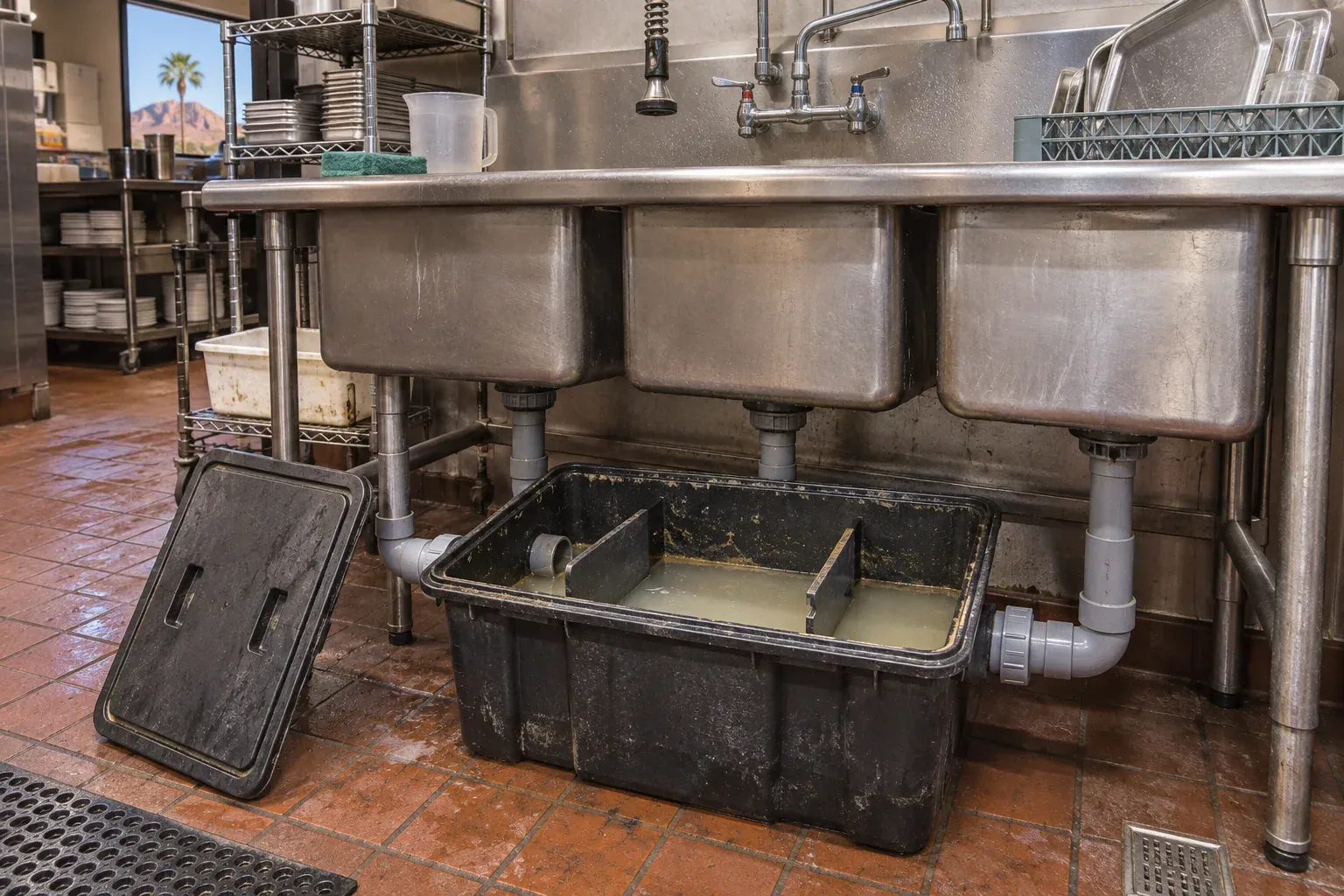
Black plastic grease trap with its lid set aside beneath a three-compartment stainless steel sink, gray drain pipes running up the wall

07 / Price ranges

Three Phoenix scenarios, priced

A cafe with a 50 gallon under-sink trap. The trap is on a 30 day schedule, so 12 visits a year. At $125 to $200 per scheduled visit, the annual pump-out line is $1,500 to $2,400. Add one kitchen line jetting visit at $300 to $600 if the line has never been cleaned, and the first year is $1,800 to $3,000.

A full-service restaurant with a 1,000 gallon interceptor. The tank is on a 90 day schedule, so 4 visits a year. At $225 to $400 per scheduled visit, the annual line is $900 to $1,600. If the kitchen is high volume and the tank hits 25 percent at 60 days, the schedule becomes 6 visits, and the line becomes $1,350 to $2,400.

A hotel kitchen with a 2,000 gallon interceptor. Four visits at $400 to $700 each is $1,600 to $2,800 a year. If the tank is over 2,500 gallons or there are 2 tanks, the per-visit price steps up to $800 to $2,000, and the annual line can reach $3,200 to $8,000.

  • 01Cafe$1,500 to $2,400Device50 gallon trapVisits a year12
  • 02Full service$900 to $2,400Device1,000 gallon interceptorVisits a year4 to 6
  • 03Hotel or commissary$1,600 to $2,800Device2,000 gallon interceptorVisits a year4
  • 04Large or multi-tank$3,200 to $8,000Device3,000 gallons and upVisits a year4

The table is a budget tool, not a quote. Two restaurants with the same device can pay different prices because of access, disposal distance and the condition of the lids. The value of the table is that it tells you when a quote is outside the normal range in either direction.

08 / Price ranges

Cost by service type

  • 01Scheduled pump-out$125 to $700 by device sizeWhen it appliesOn the city calendar
  • 02Emergency pump-out$400 to $800When it appliesOverflow during service, after hours
  • 03Kitchen line jetting$300 to $600When it appliesSlow or blocked line after a pump-out
  • 04Camera inspection$200 to $500When it appliesRepeat blockages, older lines
  • 05Baffle or lid repair$300 to $800When it appliesBroken baffle, cracked lid, failed gasket
  • 06Device replacementThousands, plus permitWhen it appliesCracked tank, undersized device

A camera inspection can cost less than a second emergency visit, and a baffle repair can cost less than the extra pump-outs a missing baffle causes.

09 / Good to know

Year one versus the ongoing year

Year one costs more than the years after it, for 3 reasons. The line may never have been jetted, so the first jetting is part of the year. The device may be overdue, so the first pump-out is priced as an overdue visit. And the records may not exist, so the first inspection can turn into a correction project.

A year one budget for a 1,000 gallon interceptor is $1,500 to $3,000 including one jetting and one repair. The ongoing year is $900 to $1,600 for the pump-outs plus whatever the device needs. A restaurant that plans the first year as a catch-up year and the second year as a maintenance year usually spends less than one that treats every visit as an emergency.

10 / Good to know

When a repair is cheaper than a replacement

The repair versus replacement decision is mostly about the tank body. A sound tank with a broken baffle, a cracked lid or a failed gasket is a repair, and the cost is a few hundred dollars plus the pump-out. A tank that is cracked, rusted through or taking in groundwater is a replacement, and the cost is a project.

The middle case is the one that needs a number. A 500 gallon tank that is sound but undersized for a growing kitchen is a replacement in slow motion: it will pump more often, hit 25 percent earlier and eventually fail an inspection on the 25 percent rule. Adding up 6 visits a year instead of 4, plus the risk of an emergency, can show the replacement paying back within a few years.

Two questions decide either path: is the tank structurally sound, and is the size still right for the fixture count? The first is a visual and, if needed, a camera check. The second is a plumbing calculation based on the fixture count.
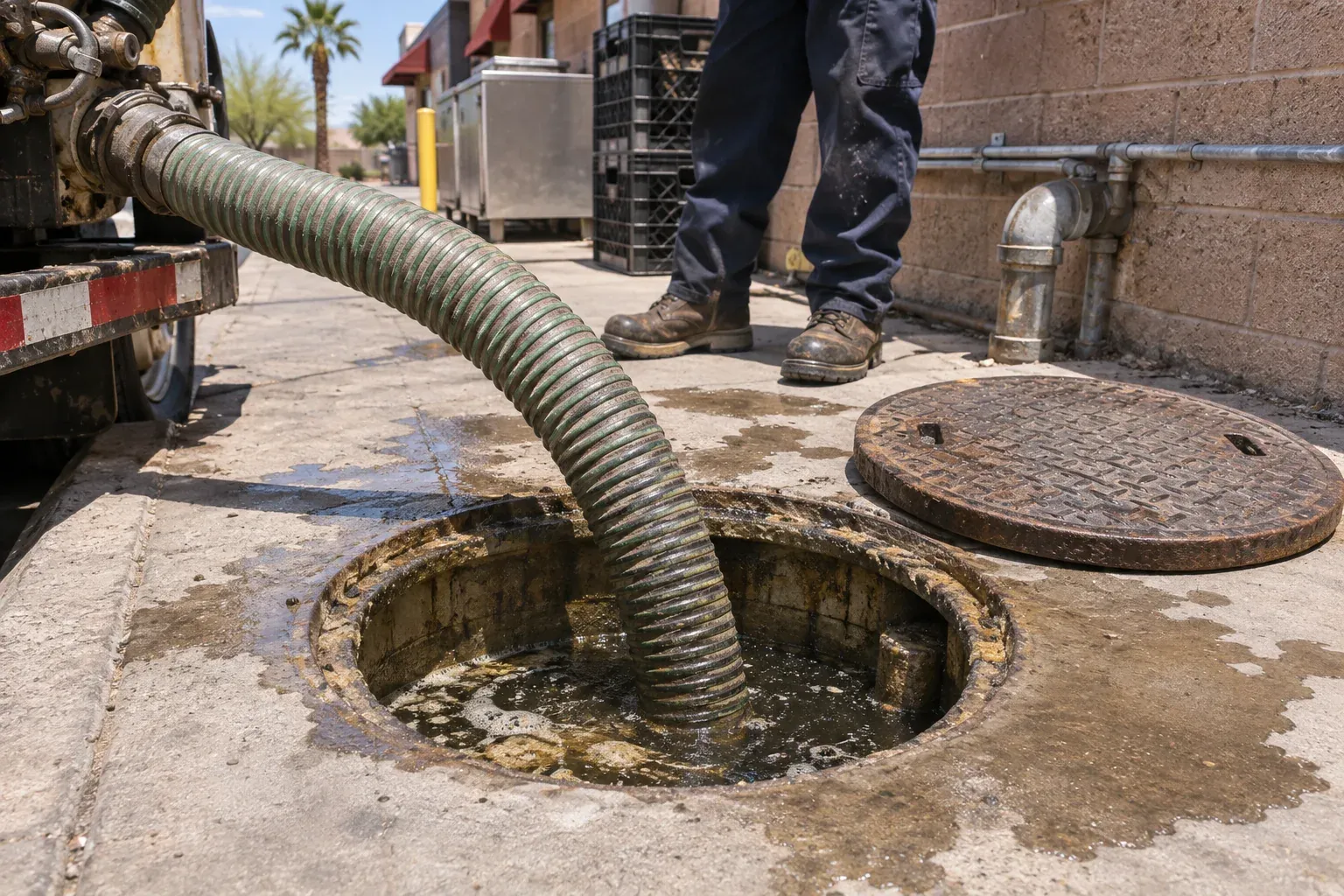
Corrugated hose running into an open in-ground interceptor opening on wet concrete, a second round cover lying beside it and a person standing behind

11 / 2 questions

Two more questions about cost

Still have a question?

Send the form with a short note. Someone from our team will call you back soon.

Get a call back

Q.01

Is a service plan cheaper than calling each time?

Often per visit, and in admin time. The plan fixes the rate and the calendar, and it removes the risk of forgetting a date. The discount is smaller for a 90 day interceptor than for a 30 day trap, because there are fewer visits to bundle.

Q.02

What is the cheapest way to stay compliant?

Pump on the city interval, keep the device sealed, keep fryer oil out of the drain and keep the manifests in one binder. The cheapest visit is the scheduled one, and the cheapest schedule is the one that never turns into an emergency.

12 / 2 questions

Service plan and overdue questions

Still have a question?

Send the form with a short note. Someone from our team will call you back soon.

Get a call back

Q.01

Should I pay for a monthly service plan?

A plan makes sense when the city interval is 30 days, because 12 visits a year is a predictable number and a plan usually fixes the rate. For a 90 day interceptor, a plan is convenient but not necessary, and the savings are smaller.

Q.02

Why is an overdue tank more expensive than a scheduled one?

Because it takes longer. A tank at 60 percent has more liquid, more grease and often harder solids than a tank at 20 percent, and the visit takes more time scraping and breaking up the bottom layer. The disposal fee is also higher because there are more gallons.

13 / 6 questions

Questions about grease trap cleaning cost

Still have a question?

Send the form with a short note. Someone from our team will call you back soon.

Get a call back

Q.01

How much does it cost to clean a grease trap in Phoenix?

$125 to $325 for a scheduled indoor trap, depending on size and access. A 50 gallon under-sink trap is usually at the low end, a 100 gallon commercial trap at the high end.

Q.02

How much does it cost to pump a 1,000 gallon interceptor?

$225 to $400 on a scheduled visit. Per-gallon bids on public contracts have landed between $0.14 and $1.95.

Q.03

Is it cheaper to pump more often?

Per visit, scheduled service usually costs less than a one-off or overdue visit. Per year, the total depends on the number of visits, and a device that never approaches 25 percent is faster to pump and less likely to need a repair. The annual cost of a 30 day trap schedule is higher than a 90 day interceptor schedule because there are 3 times as many visits.

Q.04

Do I pay extra for a manifest?

The manifest should be part of the service, not an add-on. The manifest is the record of the disposal, and the record is what the city asks for.

Q.05

Are there emergency rates?

Yes. After-hours, weekend and service-hour emergency calls carry a premium, quoted nationally at $100 to $250 above a scheduled visit. A backup that requires cleanup and jetting is a separate scope on top of that.

Q.06

Does the city set the price?

No. Phoenix does not publish a price for private pumping. The city sets the schedule and the record requirements, and the market sets the price.

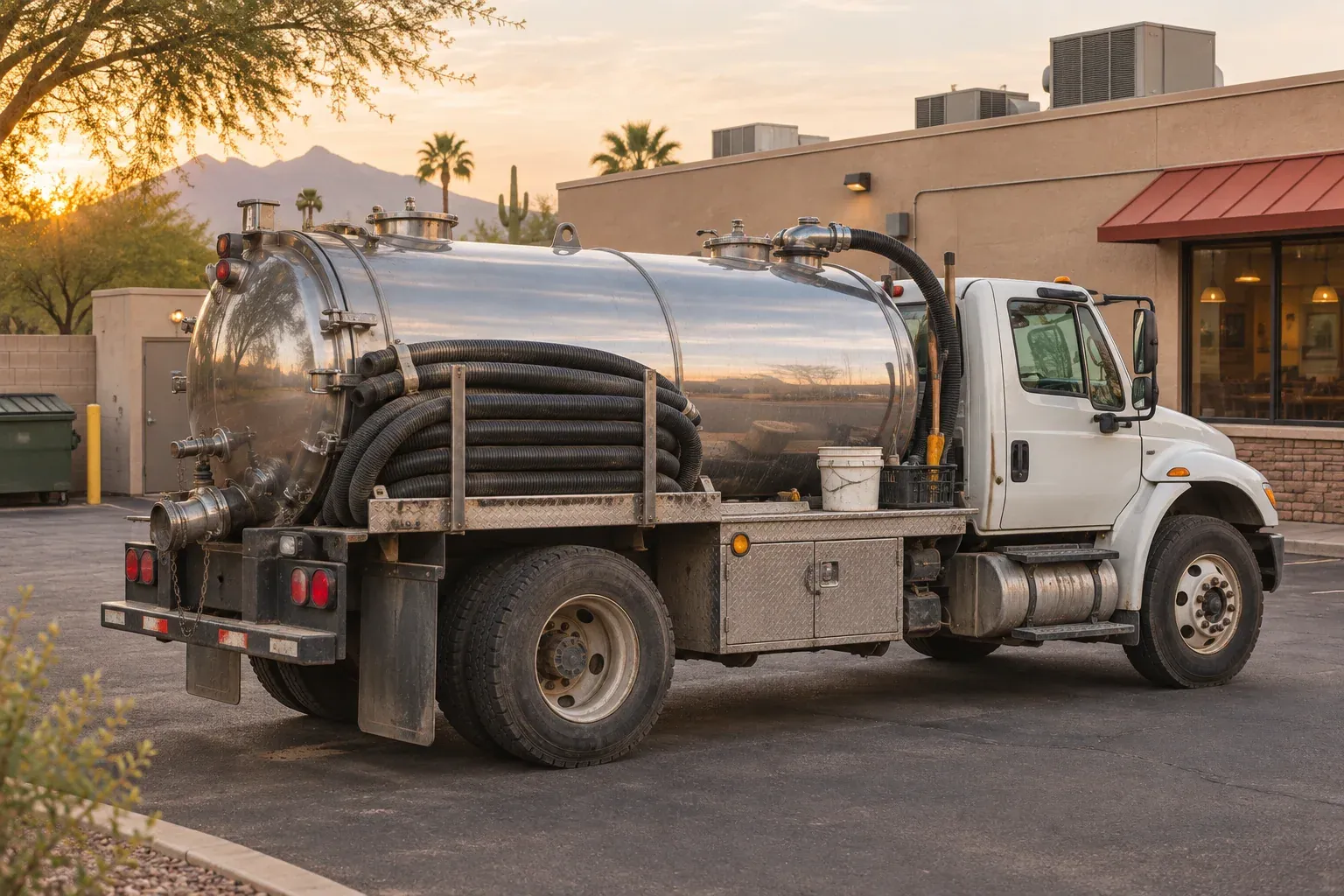
White vacuum service truck with a polished cylindrical stainless tank and coiled hoses parked behind a restaurant at sunset

Form open 24/7

Ask for a call back about your grease trap

Tell us which device and which kitchen. We will call you back shortly.

Thank you. You will be called back soon.

Grease backing up?Get a call back

Before you go: want a call back?

Give your name, phone number, ZIP code and the service you need. Someone will call you back about your grease trap.

Thank you. You will be called back soon.

Get a call back

Send it, and someone calls you back soon

Add details (optional)
How urgent is it?

The form is open day and night, and we will call you back shortly.

Get a call back

Send the form and someone calls you back soon.

Thank you. You will be called back soon.