Q.01
How often does Phoenix inspect a restaurant?
Phoenix commercial inspections are unannounced, so the practical answer is to be ready at any service. A complete binder keeps an unannounced visit short.

Service 05 of 09 · Phoenix, AZ
You need FOG compliance records in Phoenix, and Phoenix requires them kept at the facility for 3 years. Tell us the city and the device, and someone from our team will call you back.
Form open 24/7
Get a call back
Phoenix + 15 Valley cities
01 / What you get
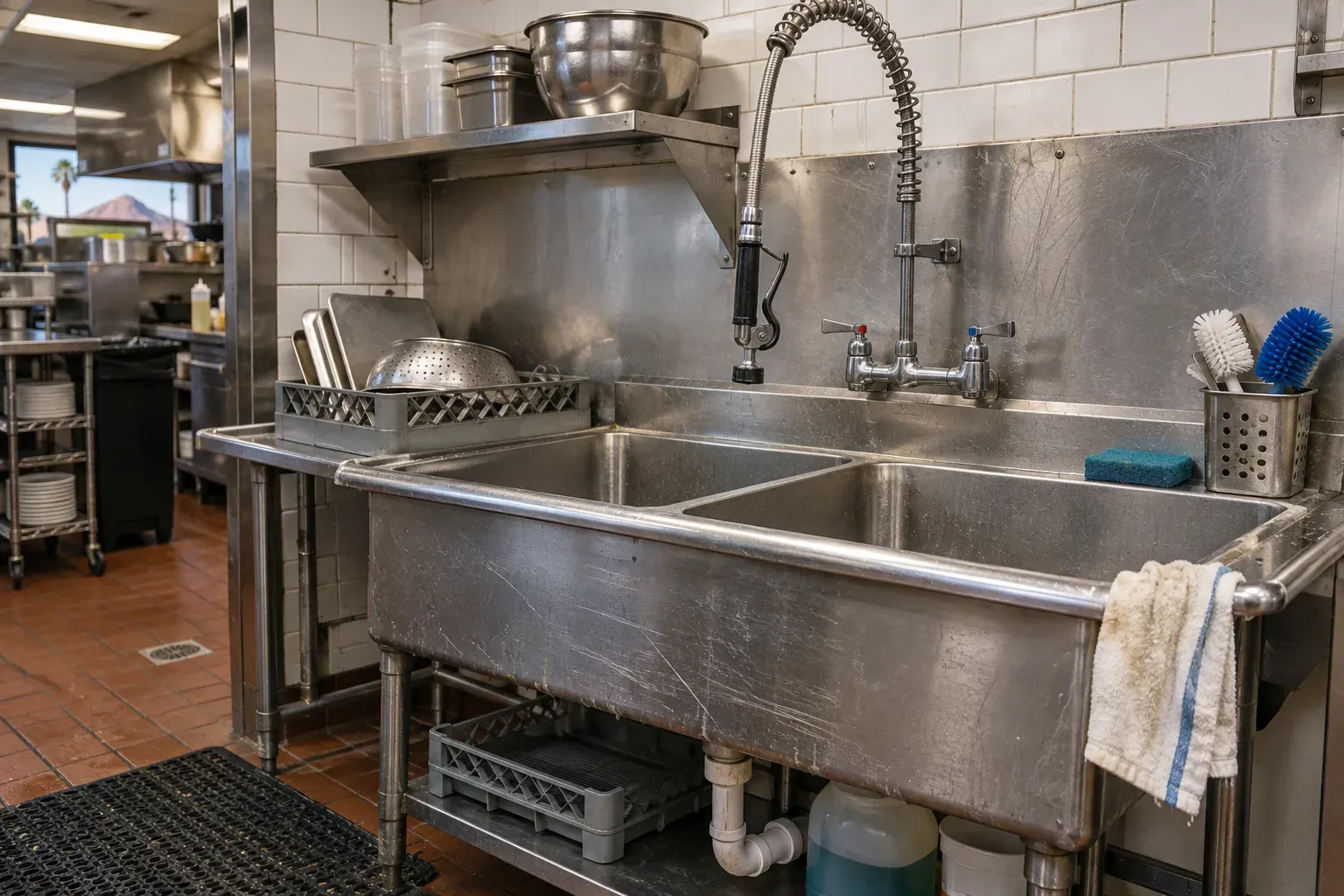
FOG compliance in Phoenix is a paper trail with a device attached. The inspector checks that the interceptor or trap is the right size, that it is being maintained, and that the restaurant can prove it with records. Phoenix City Code 28-15 F is specific: records of all cleaning, volume of waste removed, device capacity, waste disposal, repair, replacement and maintenance must be at the facility for a minimum of 3 years and available to the Director on request.
A common problem is a restaurant that pumps and cannot prove it, because the manifests are in a truck, a shoebox or a manager's email. Building the file takes about an hour.
02 / The signs
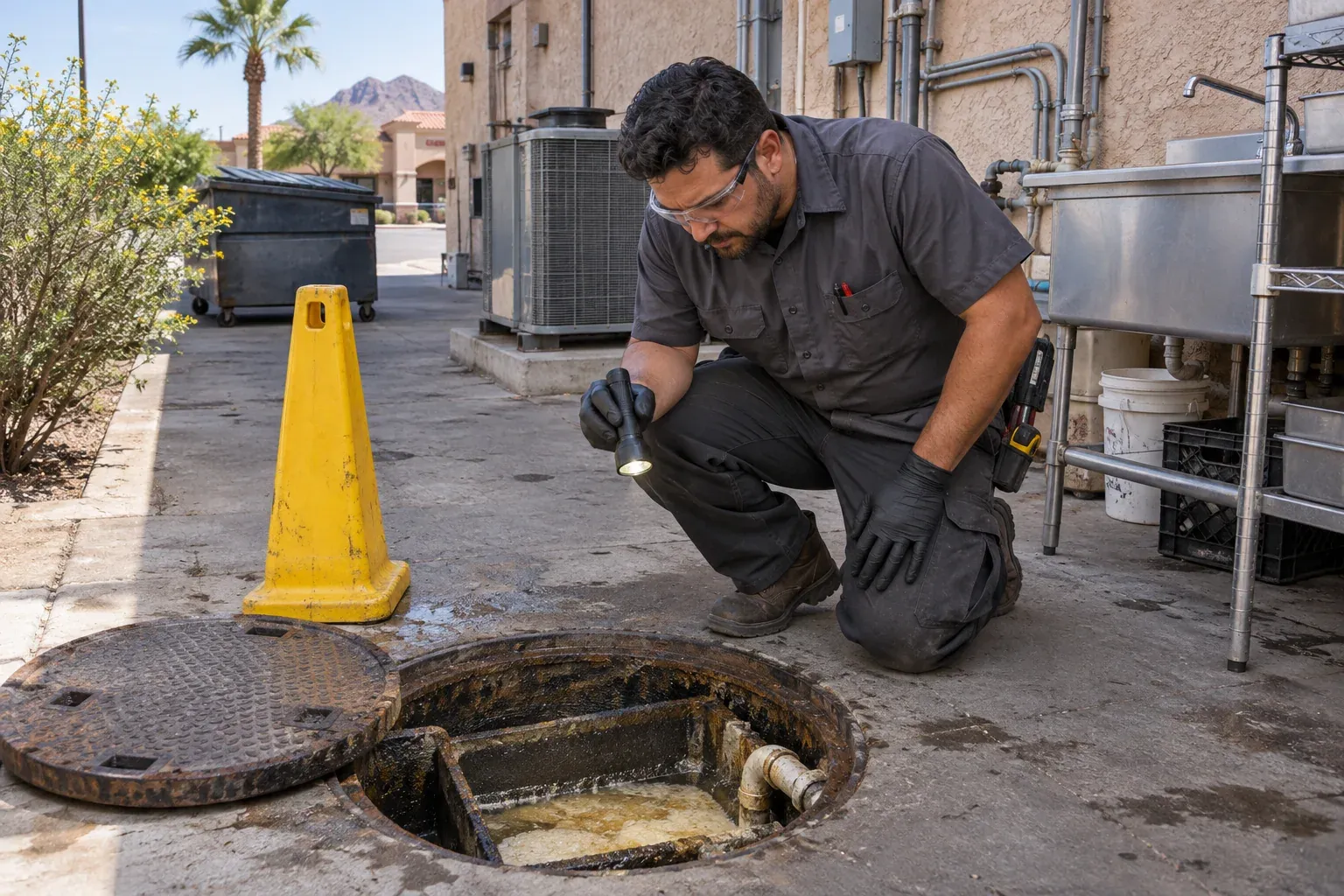
The visit starts at the device. The inspector checks whether any parts are missing, whether the body has rotted out and whether the lids are accessible. Then the inspector checks how much grease is in the device to see whether the current grease trap pumping schedule is adequate.
Then the paperwork. The inspector asks for the service records for the last 3 years, the manifests, the hauler's name and the disposal site. Phoenix's FOG manual tells kitchens to document employee training on grease practices, and the inspector counts the grease-bearing fixtures to check that the device is the right size.
Then the practice. Is there a chemical or enzyme product in use as a substitute for pumping? In Phoenix, that question has a specific answer in code: the practice is prohibited. Outside, the inspector looks at the tallow bin and the trash area for oil on the ground.
03 / How it works
Your request starts a fixed sequence.
04 / Records
| Record | What it proves | Who provides it |
|---|---|---|
| Service manifest | Date, gallons removed, disposal site | The hauler, every visit |
| Service log | The running history in one place | The restaurant, updated every visit |
| Device capacity | The rated gallons or GPM, and the location | The plans, the permit or the manufacturer label |
| Disposal documentation | Where the waste went | The hauler, on the manifest or a separate receipt |
| Repair records | Baffle, lid, gasket and body repairs | The service company, kept with the log |
| Inspection notices | Any city notice and the correction | The restaurant, kept with the proof of correction |
The service log is the piece most restaurants are missing. It is a single sheet or a binder page with one row per service: date, hauler, gallons, disposal site, repairs, initials. It takes 2 minutes to fill in and it turns a pile of invoices into a compliance file.
05 / Records
Phoenix requires 3 years. Chandler requires 3 years and lists 5 required items. Tempe requires records on site and available for review. Mesa requires service records on site for a minimum of 3 years. Gilbert requires written records at the facility for a minimum of 3 years. Scottsdale and Peoria require 3 years at the facility.
Three years is the most common period in the Valley. Keep 3 years plus the current year, and keep the records at the restaurant. A file in a corporate office or a manager's car does not satisfy "at the facility" during an unannounced visit.
06 / 7 steps
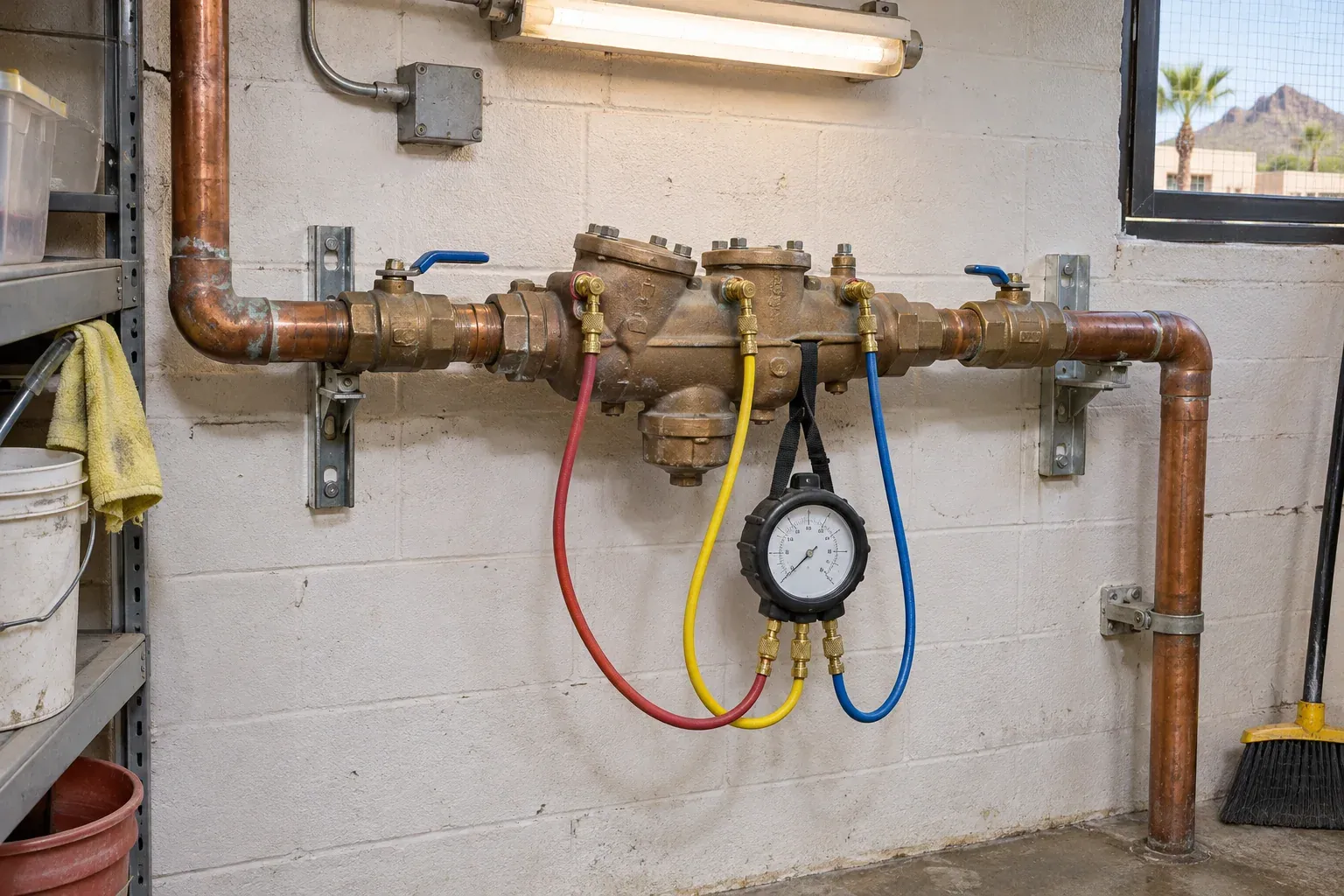
The binder lives in the office or at the host stand, not in a closet behind a lock that nobody has a key to. During an inspection the manager should be able to put it on the counter in under 60 seconds.
07 / Inspections
The usual sequence is a notice of violation with a correction deadline, a requirement to clean, repair or replace within a set time frame, and a re-inspection. The city may also require additional pumping, a repair or a device replacement. Chandler's program states that the cleaning frequency must increase if grease is seen leaving the device. Phoenix lets the Director grant a variance to the pumping interval.
The response is procedural, not emotional. Pump the device, get the manifest, fix the record gap, correct any device defect, and send the proof by the deadline. The failed inspection page lists the steps in order.
08 / City rules
Phoenix City Code 28-15 G prohibits chemicals, enzymes, proteins, bacteria, grease solvents, emulsifiers and similar substances used to dissolve FOG in place of physical cleaning. Chandler's code 51-24 prohibits additives that cut pumping. Gilbert allows additives as a supplement with notice and safety data sheets, and bans emulsifiers. Peoria allows them only as a supplement, with the Director's written approval.
The practical rule for a Valley restaurant: a product can be part of a maintenance routine, but it cannot replace the pump-out, and in Phoenix it cannot be used instead of physical cleaning at all. If a vendor sells a product on the promise that it eliminates pumping, the promise is the problem. Keep the pump-out schedule and keep the records.
09 / Good to know
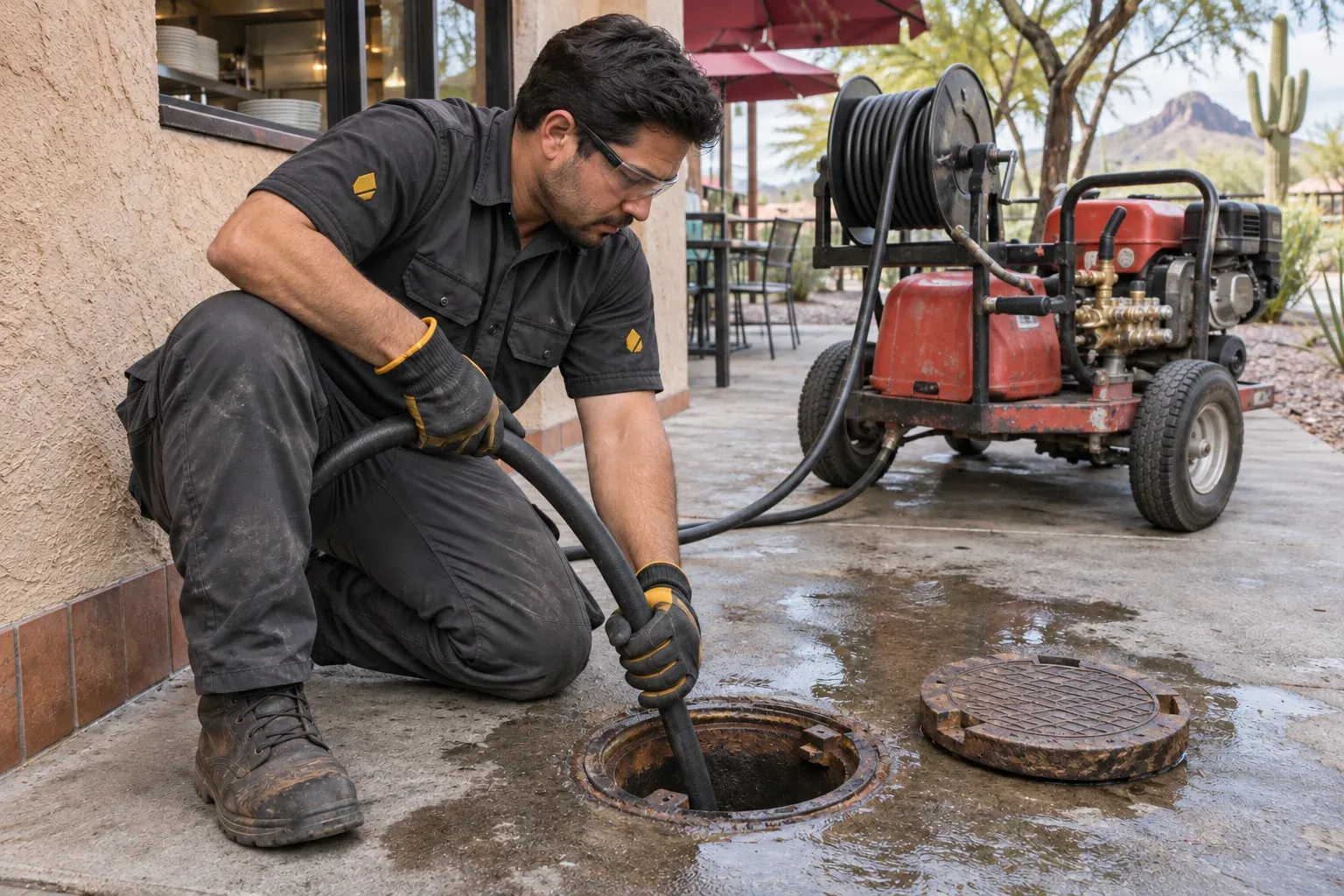
Compliance is easier to keep than to rebuild. Thirty minutes on the first Monday of the month covers it.
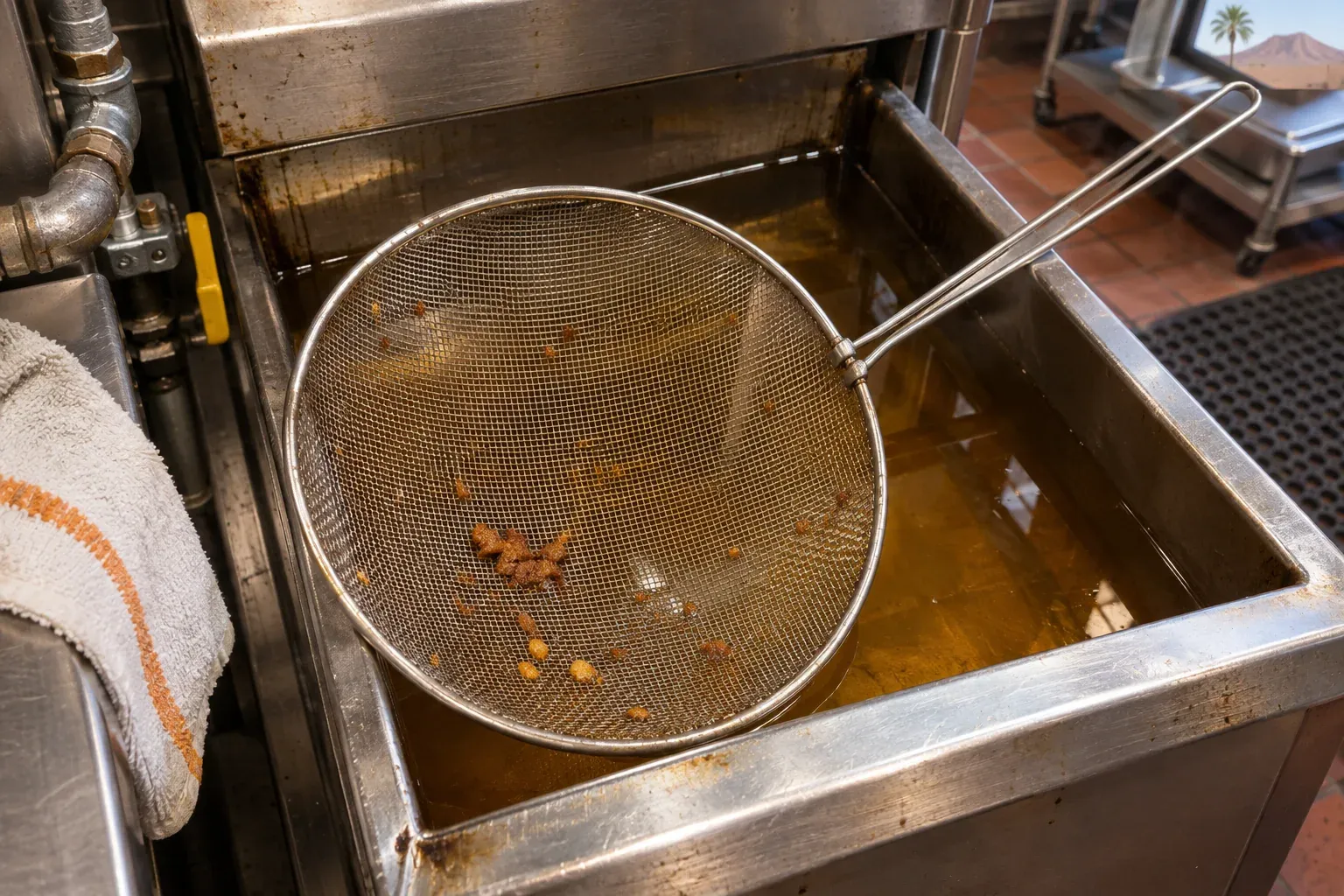
That routine produces 3 things an inspector values: a complete history, an early warning on the device and a manager who can answer questions without guessing. It also produces the trend line that can support a variance request if the device is consistently well under the 25 percent limit.
10 / Records
A common compliance failure is a management change. The new manager does not know where the binder is, the old manager took the invoices, and the file restarts from zero 2 weeks before an inspection.
The fix is boring and it works: the binder has a cover page with the device size, the hauler's phone number, the city program's phone number and the next 4 service dates. The general manager's onboarding checklist includes one line: locate the FOG binder and read the last page. A 5 minute task at hire saves a long reconstruction later.
11 / 6 questions
Still have a question?
Send the form with a short note. Someone from our team will call you back soon.
Get a call backQ.01
Phoenix commercial inspections are unannounced, so the practical answer is to be ready at any service. A complete binder keeps an unannounced visit short.
Q.02
The city can treat missing records as a violation even if the device was pumped. Reconstruct what you can from hauler invoices, bank statements and the service tags on the lids, and start the log immediately. Then keep it current.
Q.03
Yes. The requirement is on the user of the device, not the hauler. The restaurant is the one that has to produce the record during an inspection.
Q.04
No. A tag proves one visit. The code asks for the volume removed, the disposal and the maintenance history. The tag is a useful backup, not the record.
Q.05
Not in place of it. Phoenix prohibits chemicals and enzymes used instead of physical cleaning. Gilbert and Peoria allow supplements with conditions and paperwork. The pump-out remains the compliance event.
Q.06
Phoenix puts maintenance of a shared interceptor on the property owner, and the user of the device is responsible otherwise, so the owner of a multi-tenant building has a stake in the file. That is one more reason to keep the file complete and the device in good condition.
Form open 24/7
Ask for a call back about your grease trap
Tell us which device and which kitchen. We will call you back shortly.
Thank you. You will be called back soon.