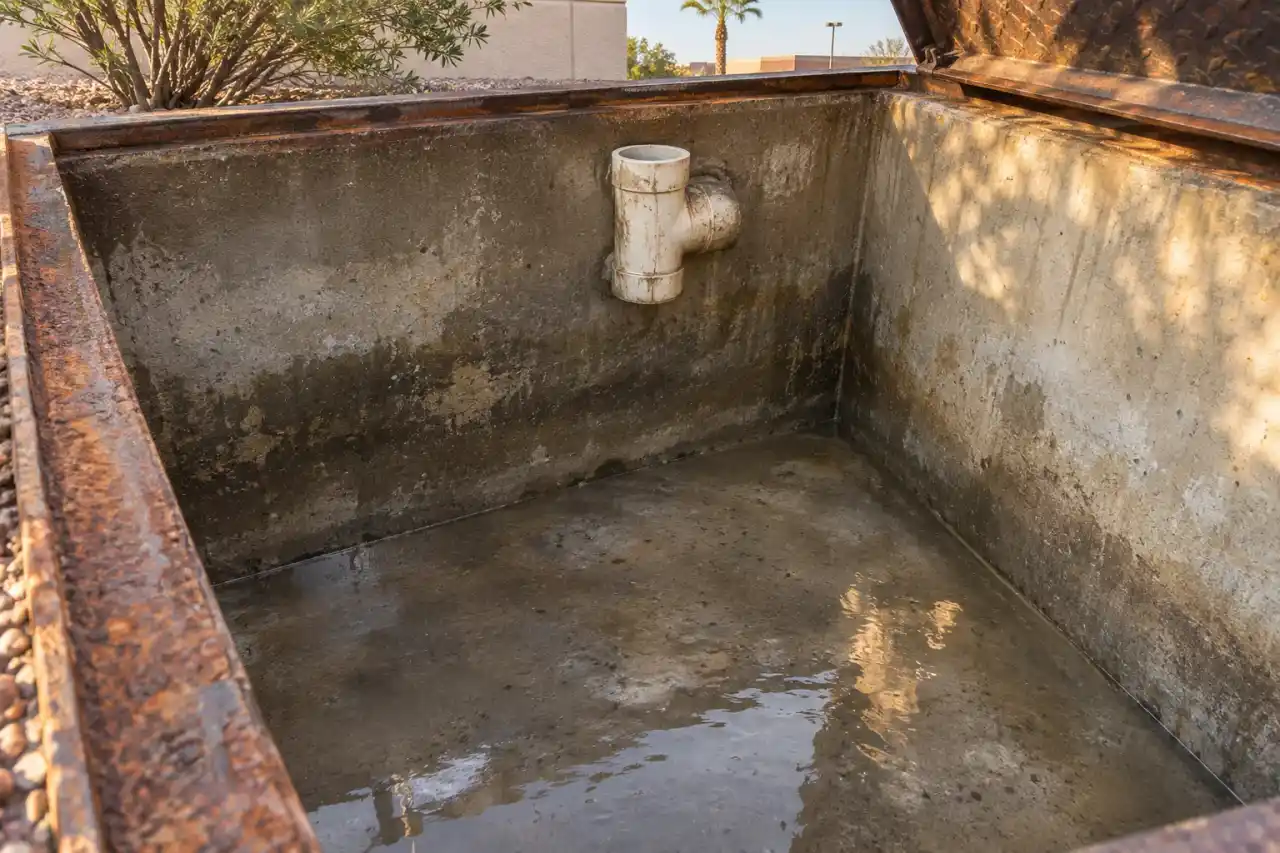
Rust-edged concrete interceptor chamber seen from above with a white tee fitting on the far wall and shallow water in the bottom

Service area · Fountain Hills, AZ

Grease Trap Cleaning Fountain Hills, AZ

You run a kitchen in Fountain Hills. Tell us the device and the last pump-out date. We will call you back shortly.

Form open 24/7

Get a call back

Phoenix + 15 Valley cities

Fountain Hills is a small town on the northeast edge of the Valley, built around the fountain at Fountain Park and the corridors along Shea Boulevard, Palisades Boulevard and Saguaro Boulevard. The restaurant base is small and serves a local and visitor market, with a handful of kitchens in the town center and a few destination properties.

Grease trap rules in Fountain Hills run through the Fountain Hills Sanitary District, which inspects grease traps and interceptors at commercial kitchens at least once a year and requires regular grease pumping. Some properties may use onsite septic systems instead, and a restaurant that assumes one without checking can end up maintaining the wrong thing. The first call for a new owner is to the Sanitary District or the property manager: which system does this building use?

01 / Good to know

The grease device is the constant

Whichever system the building uses, the grease device does the same job: it keeps fats, oils and grease out of what comes next. On a sewer connection, that protects the town's collection system. On an onsite system, it protects the septic tank and the drainfield.

A common physical test is the 25 percent capacity limit. A device at a quarter full is not separating, and the downstream cost is much higher than a pump-out.

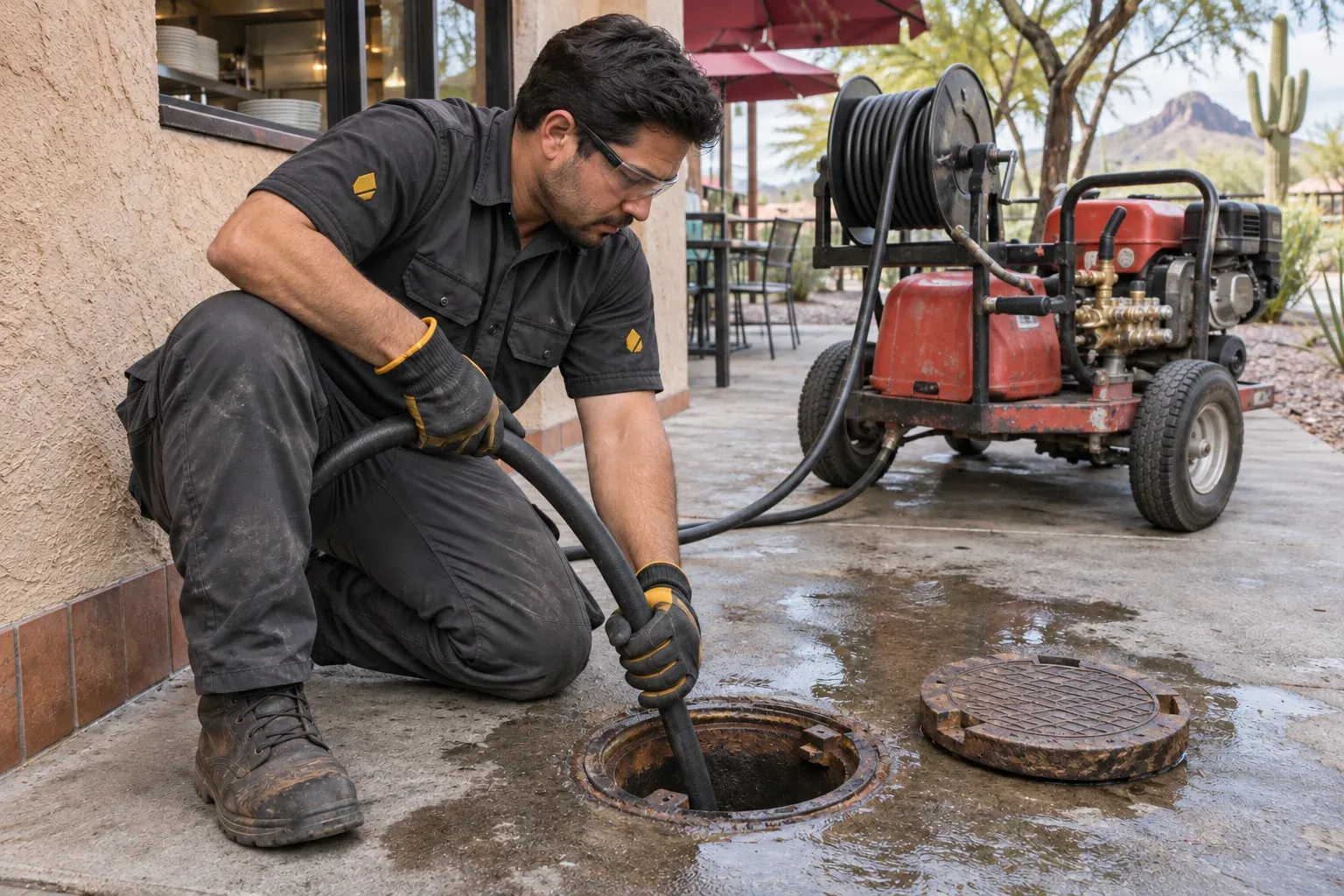
Technician kneeling at an open drain access holding a jetting hose, a red pressure washer unit on wheels behind him

02 / Service area

Small-town volume, seasonal spikes

Fountain Hills has a winter visitor season and a summer lull, and the difference in covers is large. A restaurant that is quiet in July can be at capacity in February, and a schedule set in the quiet month will be too long in the busy one.

The practical approach is to measure at the start of the season, set the interval for the busy months, and keep the same interval through the summer rather than stretching it. The cost of one extra visit is small compared with the cost of a backup during the season.

03 / How it works

What a pump-out includes

A pump-out starts with a depth reading, because the reading matters more than the calendar. The pump-out itself is the standard one, with the depths logged and the manifest written before the truck leaves.

On a property with an onsite system, the pumper should also be able to tell the restaurant where the effluent goes and whether the grease device is the only pretreatment. A restaurant that has a grease device and a septic tank needs both services on a schedule, and the 2 records belong together.

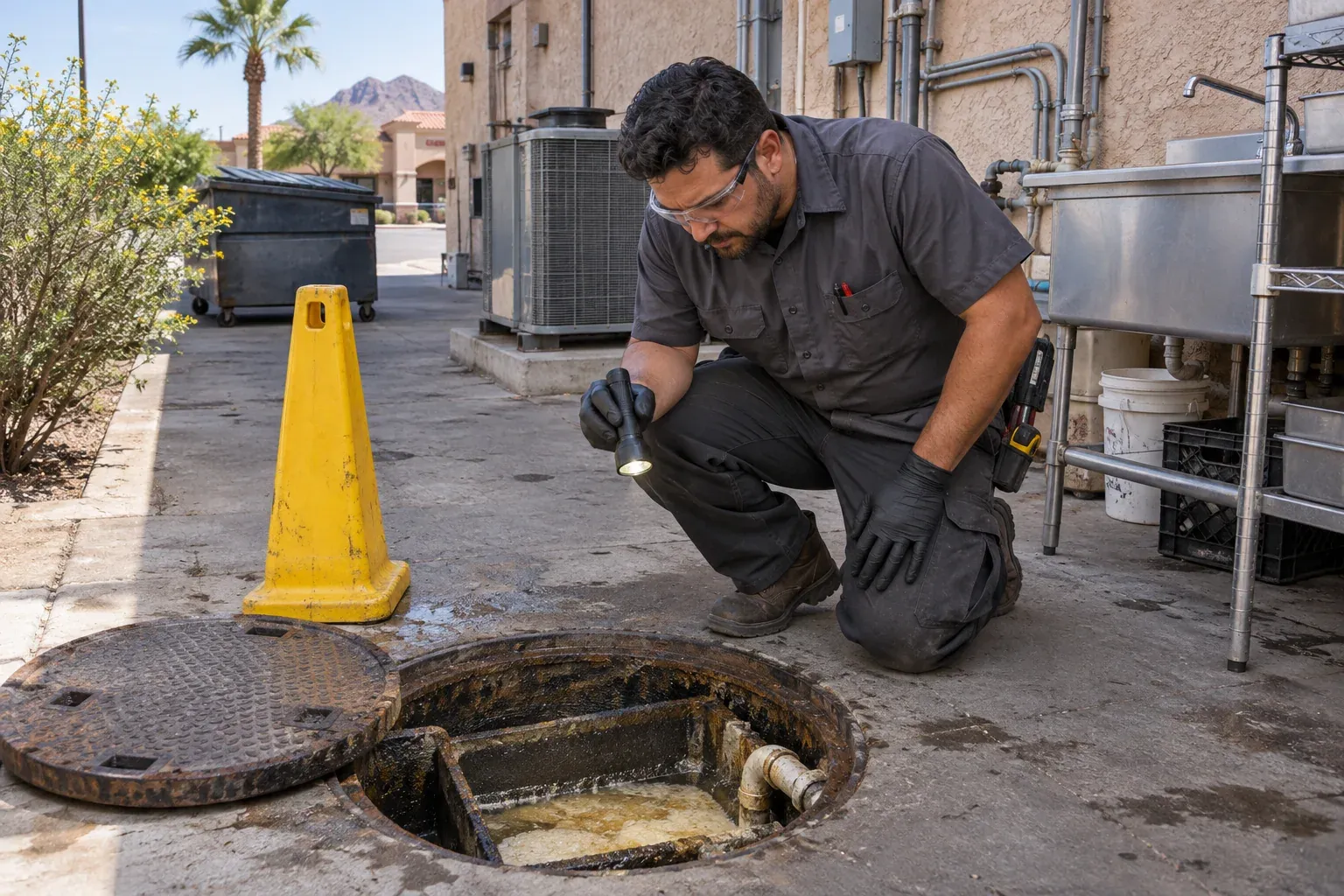
Technician crouching beside an open interceptor access with a yellow safety cone, the cover set on the concrete next to it

04 / Records

Records

Keep 3 years of manifests, the service log with depths, the device capacity and any repair record. If the property is on an onsite system, keep the county permit and the septic service records with them. An inspector who asks for the grease file may also ask for the wastewater paperwork.

05 / Costs

What it costs

Pricing follows the national ranges on the cost page, with a distance premium for the northeast location. A 1,000 gallon interceptor at 4 visits is $900 to $1,600 a year. A trap on a monthly habit is $1,500 to $2,400. A septic pump-out, where a building has a tank, is covered on the septic tank pumping page.

06 / Good to know

The visitor season

The winter visitor season raises covers without raising the device size. A kitchen that is comfortable in July can be at 25 percent by February, and the schedule that worked in the quiet months is the schedule that fails in the busy ones. Measure at the start of the season and set the interval for the peak, not for the average.

07 / Septic

Does the Fountain Hills sewer district cover septic?

Fountain Hills is the Valley town where septic is mostly history. The Fountain Hills Sanitary District states that it collects, treats and recycles all the wastewater in the Town. It serves about 12,000 acres, and its first treatment plant phase opened in 1974. Before that, homes used individual or community septic tank and leach field systems. New residential or commercial construction must connect to the district's sanitary sewer.

For a restaurant on Shea Boulevard or around the fountain, that means the grease device and the sewer are the working pair, and a septic tank pump-out is not the routine call. Grease trap cleaning in Fountain Hills is the page to start on.

One boundary is worth checking. The district's boundaries exclude former State Trust Land that the Town annexed in 2006. A building on that land should confirm with the district and the Town how it is served before assuming either answer. If it turns out to run on a tank, the septic tank pumping guide applies in full, including the Maricopa County permit and the sale inspection.
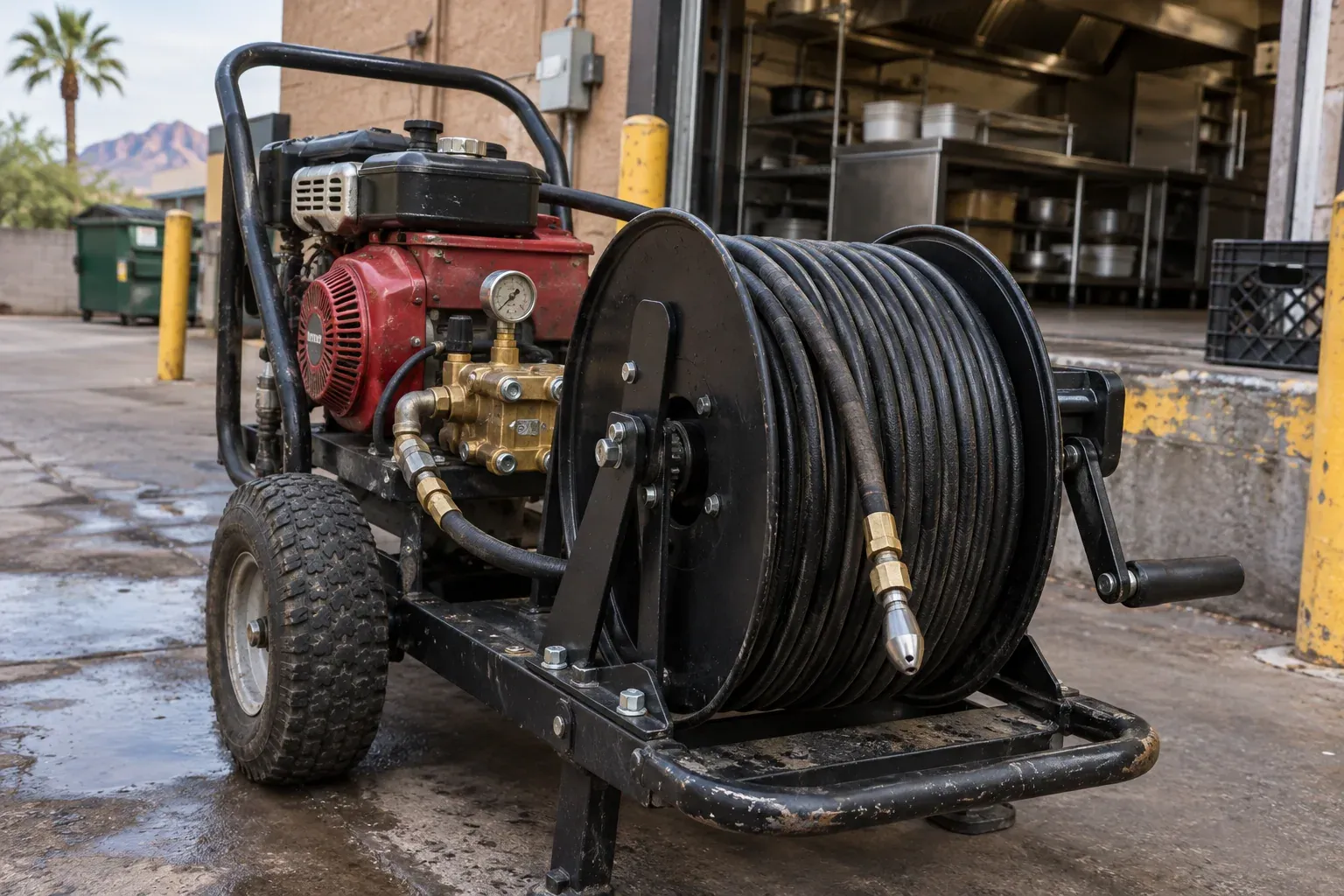
Hose reel with coiled black hose mounted on a wheeled frame with a red engine and a brass pump, beside a loading area

Rule card · Maricopa County and the local pretreatment program

Another city grease trap rules

01Indoor grease trap
No published city interval. Confirm it with the city or sewer provider for the address.
02Outdoor interceptor
No published city interval. Confirm it with the city or sewer provider for the address.
0325 percent rule
Several Valley programs, including Phoenix, Chandler and the Salt River Community, use the same physical rule: grease, oil, sand, sludge and solids may not exceed 25 percent of the device's liquid volume, measured at the static water level.
04Records to keep
Keep 3 years of manifests and the service log, and confirm the period with the program
05Additives
The pack lists no additive rule for these cities. Keep the pump-out; an additive does not replace it.

Service area map

Fountain Hills and the areas around Phoenix

The map shows Fountain Hills and the address in Phoenix. Use the buttons below it to open any area page.

All areas
Open in Google Maps (opens in a new tab)

08 / 4 questions

Questions from Fountain Hills kitchens

Still have a question?

Send the form with a short note. Someone from our team will call you back soon.

Get a call back

Q.01

Does Fountain Hills have a grease trap ordinance?

The Fountain Hills Sanitary District runs the grease program, inspects grease devices at commercial kitchens at least once a year and requires regular pumping. Confirm the interval for the building with the District before setting a schedule.

Q.02

How often should the grease device be pumped?

Often enough to stay well under a quarter full, with a shorter interval in the winter visitor season.

Q.03

Who regulates the septic system?

Maricopa County Environmental Services, which permits and inspects onsite wastewater treatment facilities.

Q.04

Do I need records if the property is on septic?

Yes. Keep the grease records and the septic records together for 3 years.

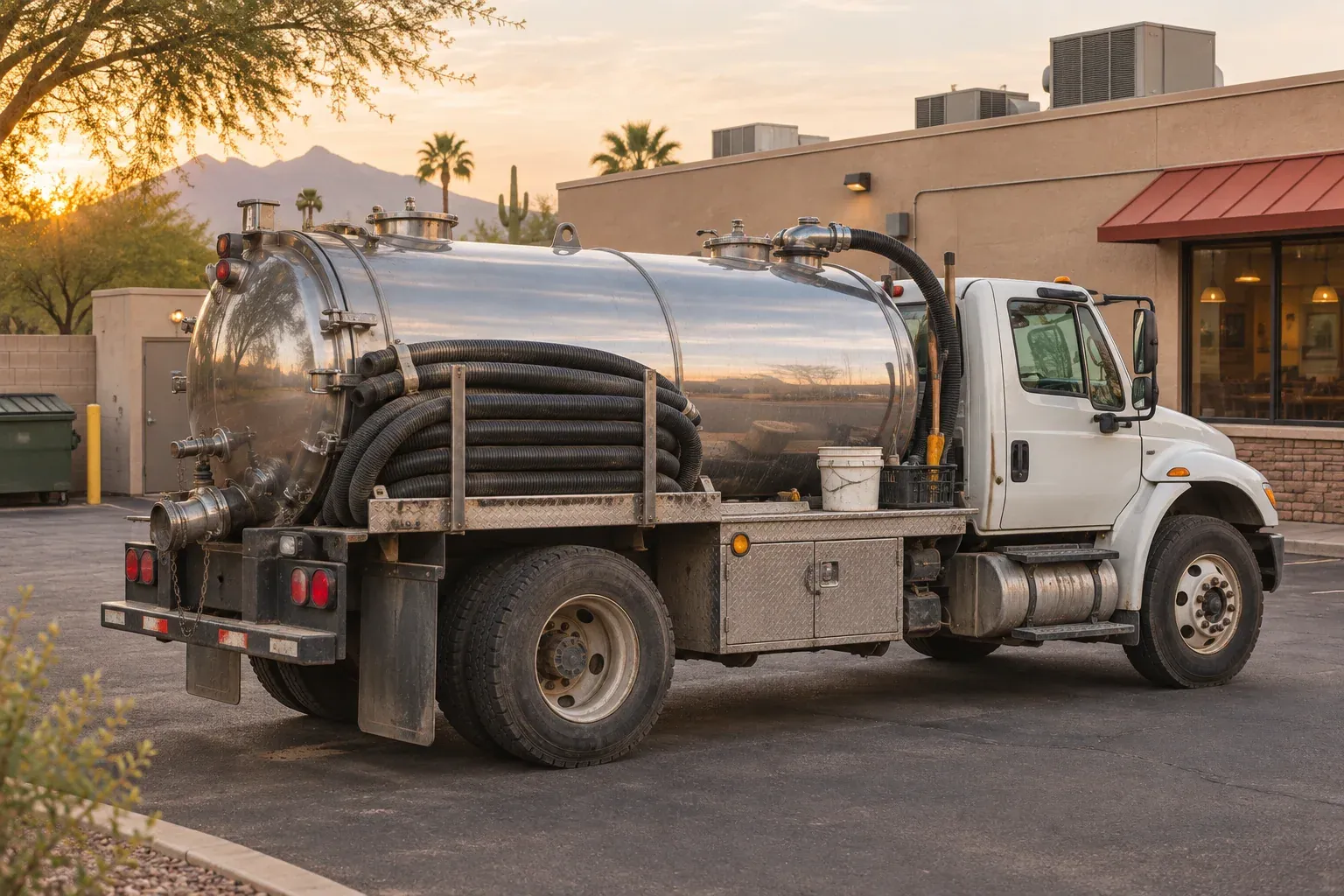
White vacuum service truck with a polished cylindrical stainless tank and coiled hoses parked behind a restaurant at sunset

Form open 24/7

Ask for a call back about your grease trap

Tell us which device and which kitchen. We will call you back shortly.

Thank you. You will be called back soon.

Grease backing up?Get a call back

Before you go: want a call back?

Give your name, phone number, ZIP code and the service you need. Someone will call you back about your grease trap.

Thank you. You will be called back soon.

Get a call back

Send it, and someone calls you back soon

Add details (optional)
How urgent is it?

The form is open day and night, and we will call you back shortly.

Get a call back

Send the form and someone calls you back soon.

Thank you. You will be called back soon.