Q.01
Does Tolleson have a fixed grease trap interval?
Confirm the specific requirement for the address with the city's pretreatment department.
Service area · Tolleson, AZ
You run a kitchen in Tolleson. Tell us the device and the last pump-out date. We will call you back shortly.
Form open 24/7
Get a call back
Phoenix + 15 Valley cities
Tolleson is a small city with an outsized industrial base. The food processing plants in the city produce wastewater with a much higher organic and grease load than a restaurant, and they operate under pretreatment permits that set their own monitoring and discharge limits. The restaurants in the city are a smaller share of the load, but they follow the same city program.
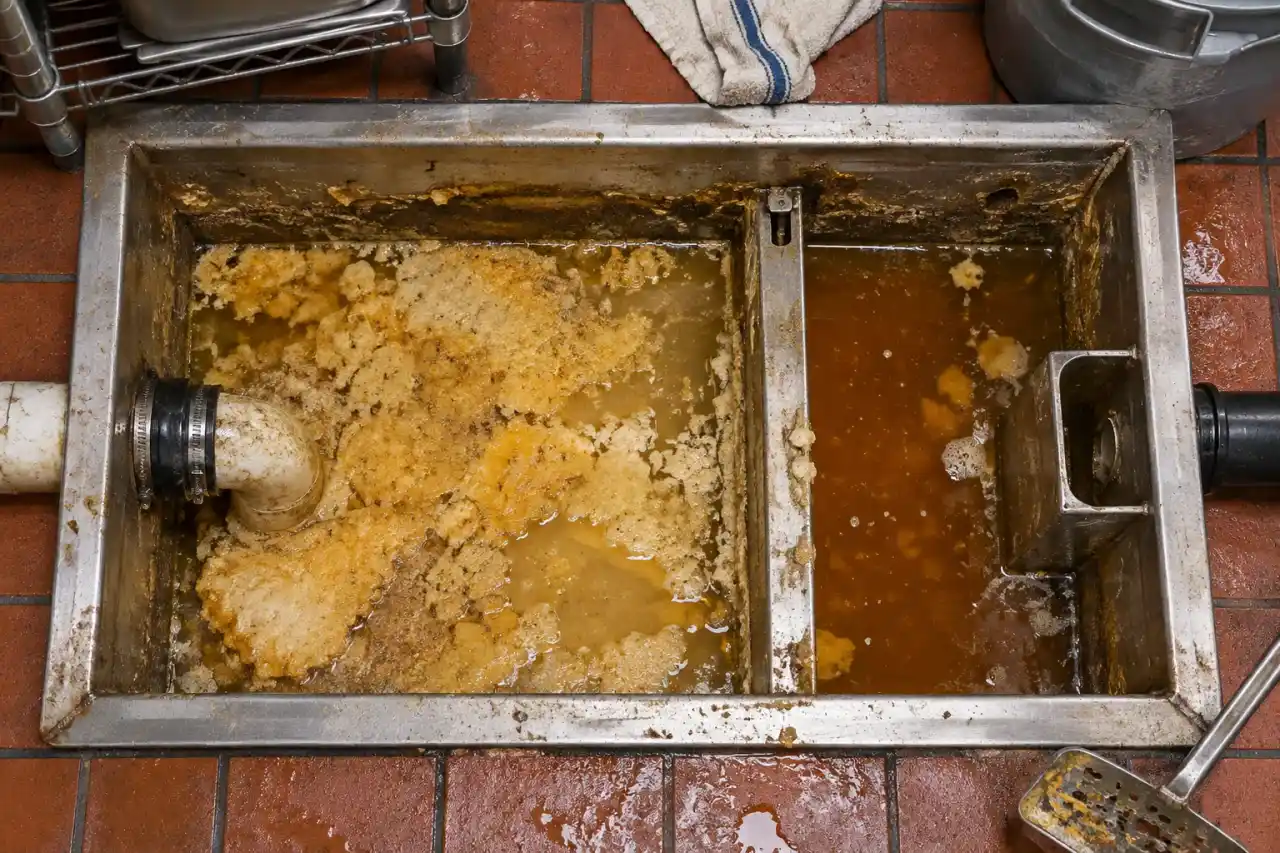
For a restaurant, the practical rules are the ones that apply everywhere in the Valley: a grease device that works, a schedule that keeps it under a quarter full, and records that prove it. For a food plant, the permit is the document that matters, and the grease device is one part of a larger pretreatment system. A restaurant in the city runs on grease trap cleaning or grease interceptor pumping like any other Valley kitchen.
01 / Good to know
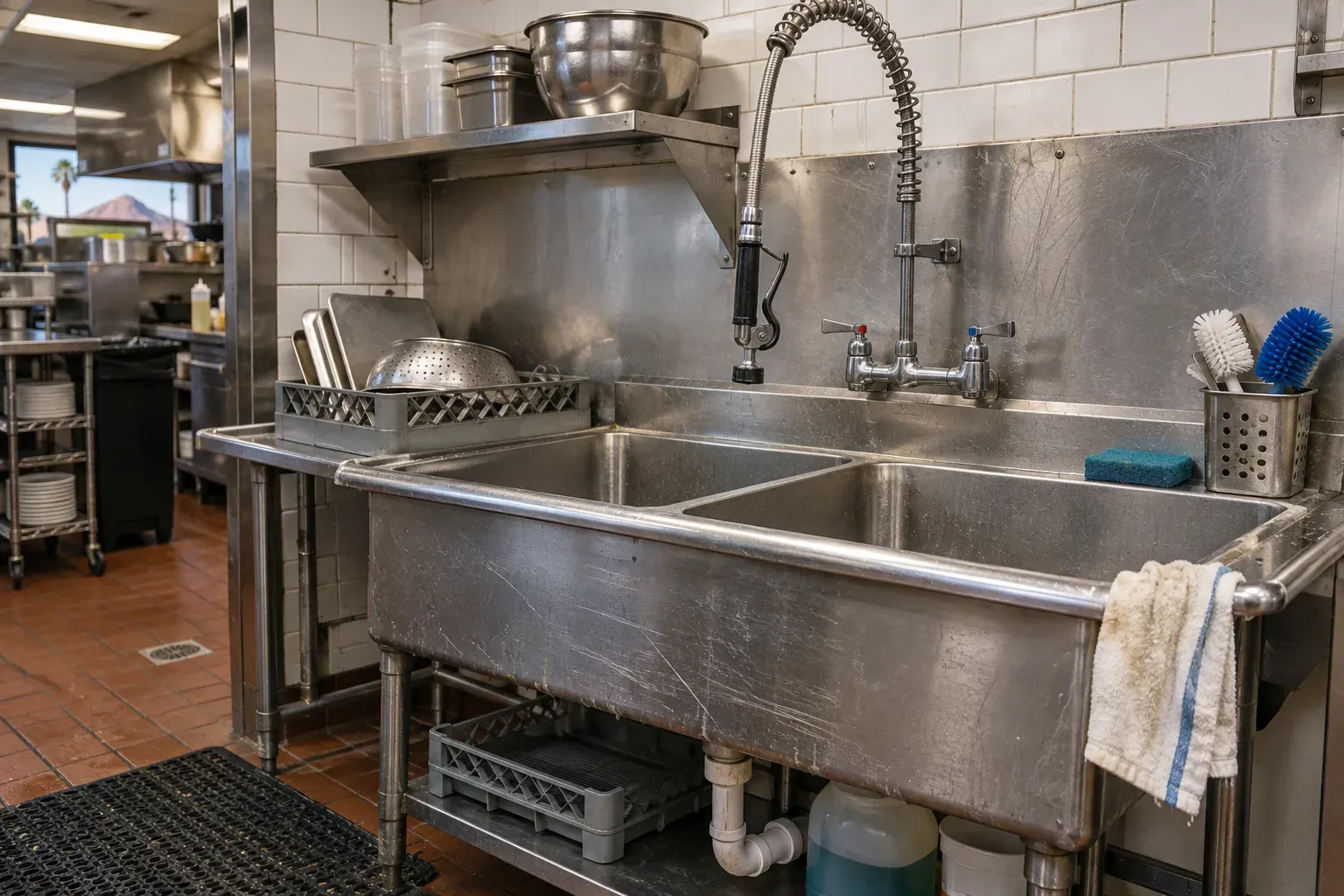
The restaurant base is concentrated along Van Buren Street and the older commercial corridors, with small buildings and small devices. A kitchen that serves a breakfast and lunch trade can have a 50 gallon trap and a steady, predictable load, which is the easiest case there is.
The hard case is the kitchen that adds a fryer or a catering program without changing the device. That kitchen hits 25 percent in weeks, and the first sign is a floor drain that backs up on a Friday.
02 / New kitchens
A food processing plant in Tolleson operates under a pretreatment permit that sets the discharge limits, the monitoring and the reporting. The grease device is designed as part of that system, and the maintenance record is part of the permit file.
The 2 systems share a failure mode: a device that is not maintained sends grease and solids downstream, and the downstream is either the city main or the plant's own treatment. The fix is the same in both cases, which is a measured schedule and a record.
03 / How it works
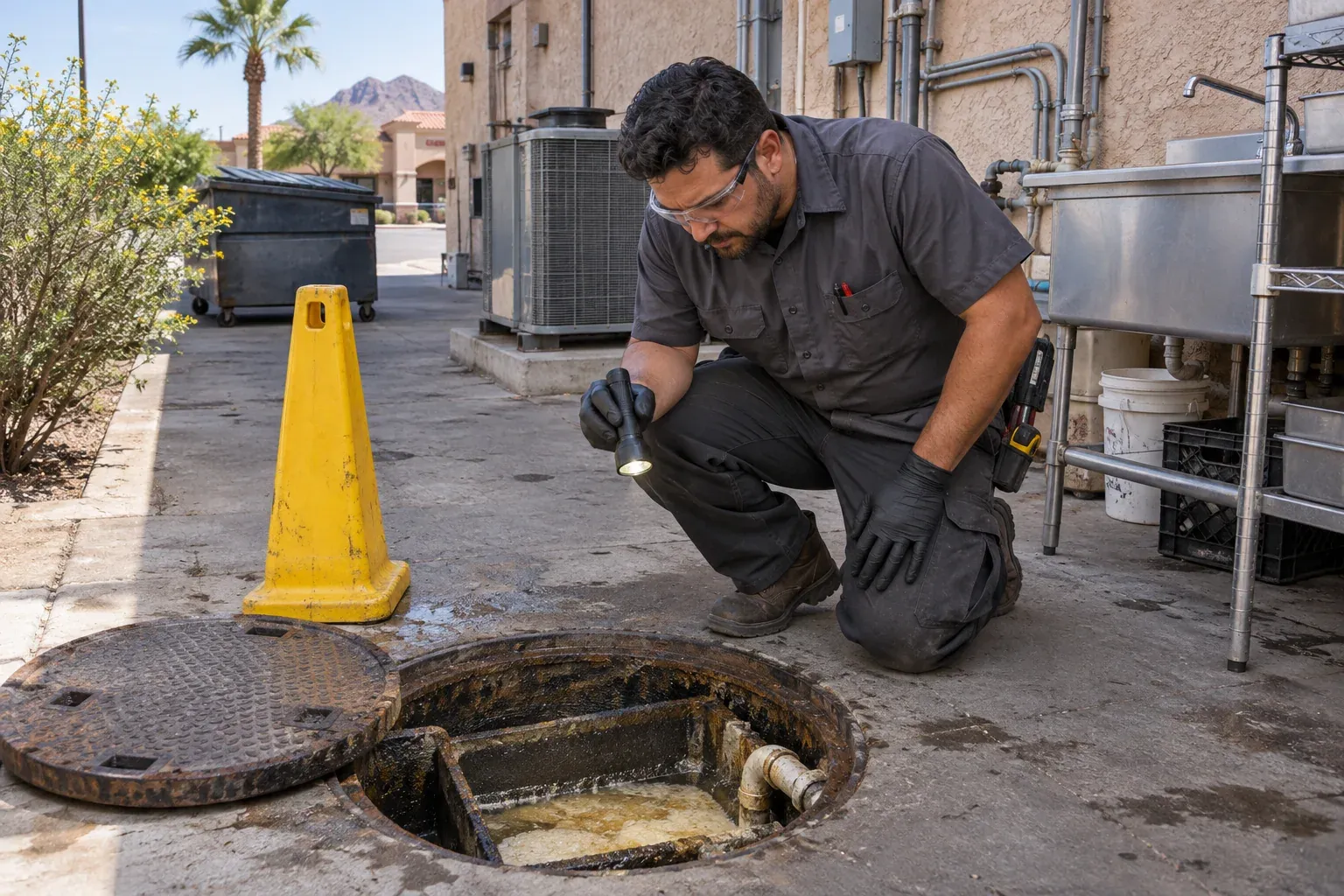
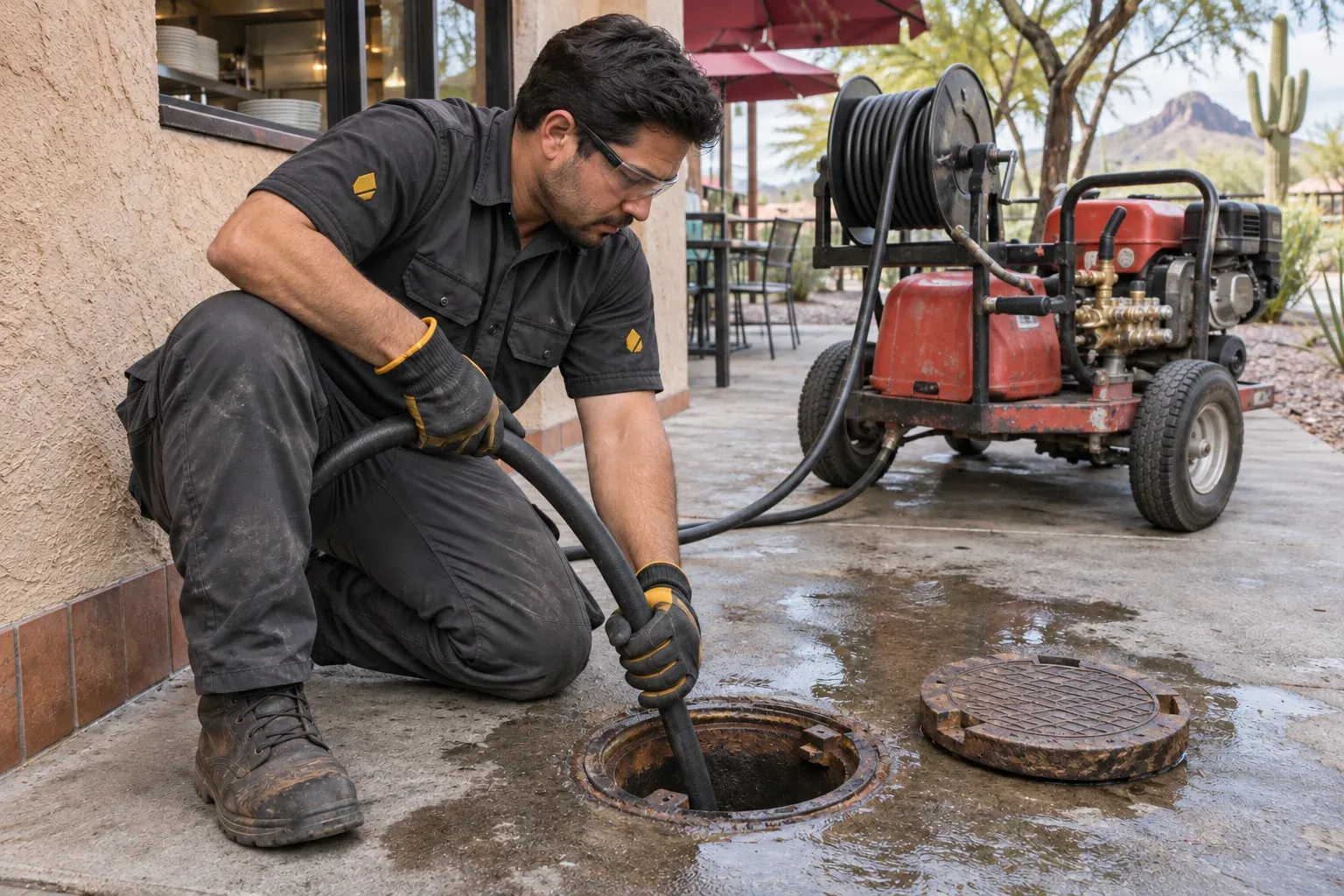
On a Tolleson food plant the visit is scheduled around production, and the reading is logged before the pump starts so the plant has a before-and-after number for its own file. The tank comes out the same way it does anywhere: every compartment, walls scraped, baffles cleared, manifest written on site.
On an industrial site the volume is larger and the access is usually better, with service roads and dedicated pads. The manifest matters more, because the permit file and the city file may both ask for it.
04 / Records
Keep 3 years of manifests, the service log with depths, the device capacity and any repair record. A food plant should keep the grease records with the pretreatment permit file, because an inspection of one is often an inspection of the other.
05 / Costs
Pricing follows the national ranges on the cost page. A restaurant interceptor at 1,000 gallons on a quarterly schedule is $900 to $1,600 a year. An industrial device at 3,000 gallons or more is $3,200 to $8,000 a year, and the per-gallon rate is the number to negotiate on.
06 / Good to know
A plant under a pretreatment permit may have to sample its discharge on a schedule and report the results. That work sits alongside the grease service, and the two records belong in the same file, because an inspector who sees one will ask for the other.
07 / Septic
Tolleson's utilities page offers a commercial application for water and sewer service, plus an industrial one. A business that applied for sewer service is on the city line, and for it the grease device is the whole story. A warehouse kitchen, a commissary or a restaurant with no sewer account has a question to answer before anything else.
The answer is a call to the city's Finance Department, which handles utility setup, or to Maricopa County Environmental Services, which holds the rules for onsite systems. If the building is on a tank, the county's code applies: written approval to operate, no cesspools and no sharing a system across commercial units.
Any kitchen on a tank is a non-residential load that Arizona rule says must be pretreated by an interceptor. The septic tank pumping guide explains the pretreatment rule, and grease trap cleaning in Tolleson covers the device itself.
Rule card · Maricopa County and the local pretreatment program
Service area map
Tolleson and the areas around Phoenix
The map shows Tolleson and the address in Phoenix. Use the buttons below it to open any area page.
All areas08 / 4 questions
Still have a question?
Send the form with a short note. Someone from our team will call you back soon.
Get a call backQ.01
Confirm the specific requirement for the address with the city's pretreatment department.
Q.02
No. A plant operates under a pretreatment permit with its own limits, monitoring and reporting. The grease device is part of that system.
Q.03
3 years is the period Phoenix, Scottsdale, Mesa and Chandler use, and a plant should keep the grease records with the permit file.
Q.04
The equipment is the same at a larger scale, but the plant's permit may require sampling and reporting that a restaurant does not. The permit sets what the service file has to include.
Form open 24/7
Ask for a call back about your grease trap
Tell us which device and which kitchen. We will call you back shortly.
Thank you. You will be called back soon.