Q.01
Are enzymes illegal?
No. Using them instead of physical cleaning is what the codes prohibit.
Phoenix guide · 3 min read
You have a question about a grease trap in your Phoenix kitchen. The answer is below. When you want a pump-out, ask for a call back.
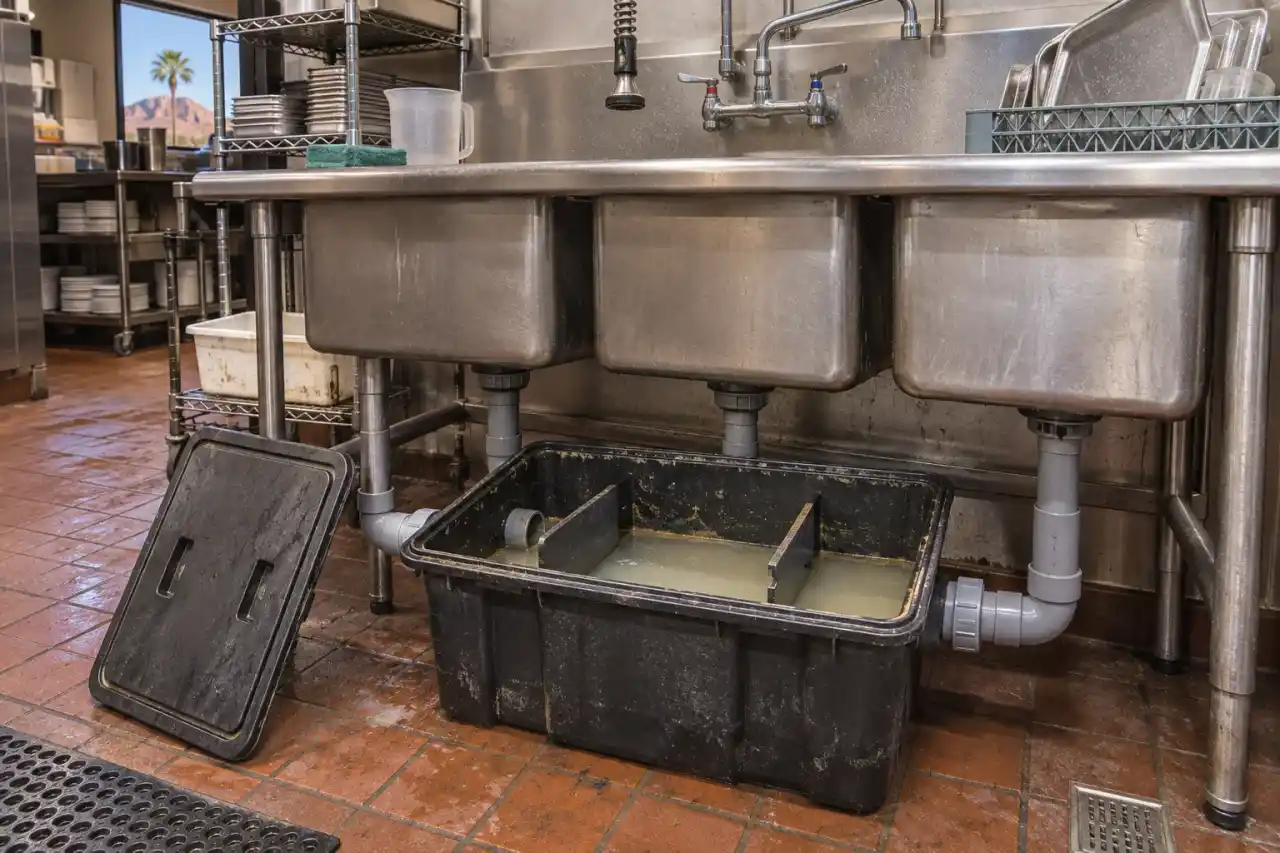
A vendor sells a bottle that claims to eat the grease, and the pitch is attractive because it promises to cut the pump-out. The claim holds only in part. Bacteria and enzymes can break down some fats, slowly and only in the right conditions, and they do not remove the solids, the wall film or the accumulated mat.
The regulatory answer is simpler than the science. In Phoenix, an additive used instead of physical cleaning is prohibited. In Chandler, an additive that reduces pumping is prohibited. In Gilbert, an additive is allowed only as a supplement, with notice to the town and safety data sheets. An inspector checks for additive use during FOG compliance work, and the interval that applies instead comes from the grease trap pumping schedule.
01 / Good to know
An enzyme product contains proteins that break fat molecules into smaller pieces. A bacteria product contains live cultures that consume organic material. Both work on the surface they can reach, and both are slowed by the conditions inside a grease trap: no oxygen, low pH, cold water and a thick mat that the product cannot penetrate.
The practical result is a partial breakdown at the top of the mat and a large amount of untouched material underneath. The product may reduce the odor, which is why some managers believe it is working, while the volume in the tank keeps growing.
02 / City rules
| City | Position on additives |
|---|---|
| Phoenix | Prohibited in place of physical cleaning |
| Chandler | Prohibited if they reduce the need for pumping |
| Gilbert | Allowed as a supplement, with notice and safety data sheets, emulsifiers banned |
| Glendale | Allowed only as a supplement, with written approval |
| Peoria | Allowed only as a supplement |
| Tempe | Physical cleaning required; additive use not a substitute |
| Scottsdale | Written additive policy |
The pattern is consistent: a product can be part of a program, and the program still has to include the pump-out.
03 / Good to know
An emulsifier breaks grease into tiny droplets that stay suspended in water. That makes the grease invisible and sends it down the drain, where it re-coagulates in the sewer line or at the treatment plant. It is the one additive that actively moves the problem from the restaurant to the collection system, which is why some cities ban it by name.
A product that makes the trap look clean is not solving the problem. It is relocating it.
04 / Good to know
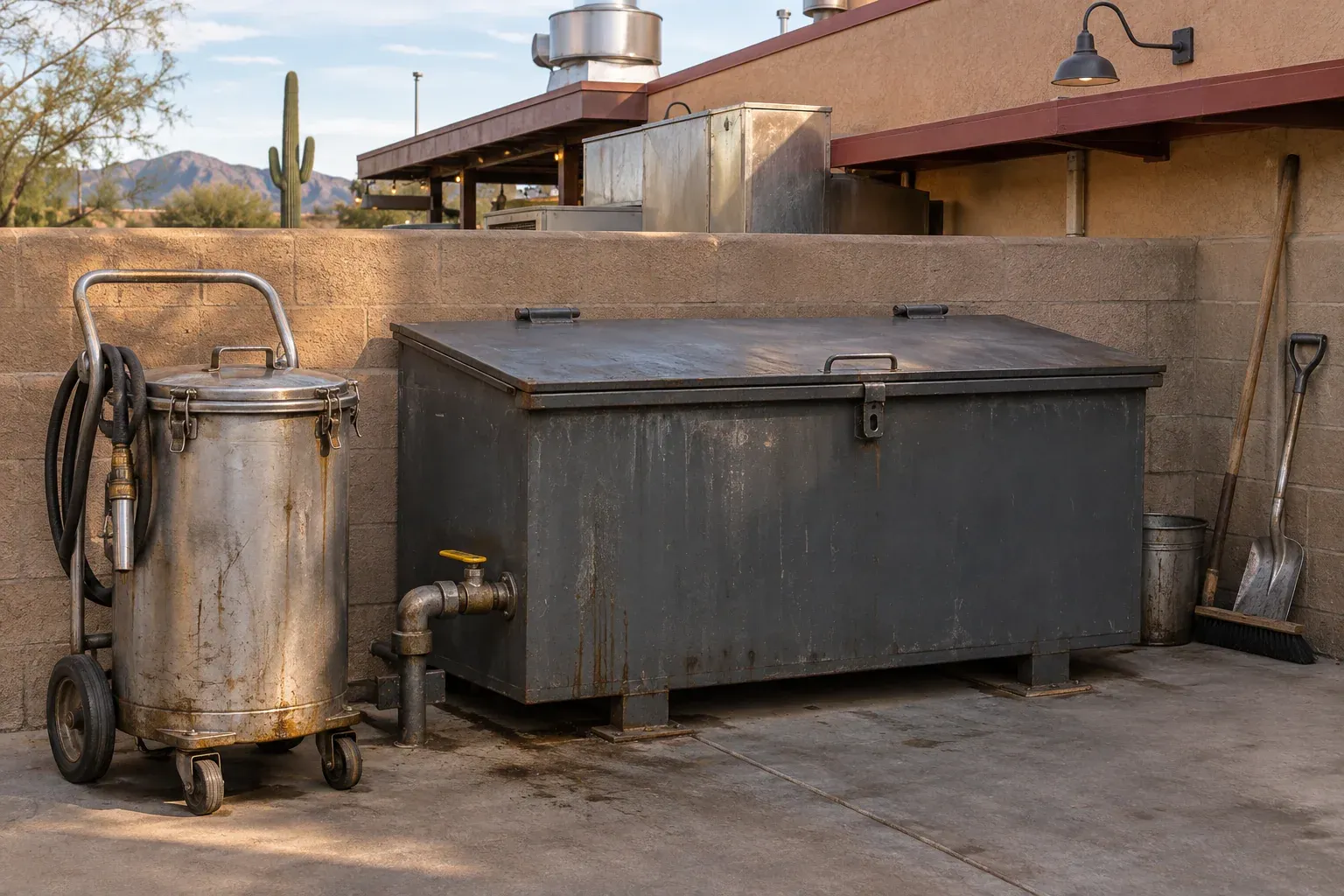
Three facts decide where a product fits. It does not remove solids. The pump-out stays on the same schedule. And a city has to accept it as a supplement rather than a substitute.
A product that meets all three is a supplement at best. One that claims to replace the pump-out is a compliance risk.
05 / Good to know
Those 5 reduce the volume and the frequency more than any bottle.
06 / Good to know
Gilbert asks additive users for a safety data sheet, and the city's written position is what settles whether a product counts as a supplement. The pump-out schedule is the thing that keeps a device in compliance, whatever product is added.
A supplement that is written into the maintenance plan, with the pump-out still on the calendar, is a different product from a replacement sold as a shortcut.
08 / 4 questions
Still have a question?
Send the form with a short note. Someone from our team will call you back soon.
Get a call backQ.01
No. Using them instead of physical cleaning is what the codes prohibit.
Q.02
In Phoenix and Chandler, no. In Gilbert and Glendale, only as a supplement with approval and paperwork.
Q.03
Not usually. The risk is compliance and the false confidence that the device is being maintained.
Q.04
The pump-out schedule stays the same. A product that claims to change it conflicts with the code in Phoenix and Chandler.
Form open 24/7
Ask for a call back about your grease trap
Tell us which device and which kitchen. We will call you back shortly.
Thank you. You will be called back soon.