Q.01
Can I just wait for it to drain?
It will drain slowly if the blockage is partial, and it will back up again the next time the dish pit runs. Waiting turns a service call into a bigger cleanup.
Phoenix guide · 3 min read
You have a question about a grease trap in your Phoenix kitchen. The answer is below. When you want a pump-out, ask for a call back.
The water comes up through the floor drain because it is the lowest point in the kitchen drainage system. It is grey, warm and greasy, and it smells like the trap. Behind it there are 3 possible causes, and the difference between them decides whether the fix is a pump-out, a jetting visit or a repair.
01 / Good to know
Stop using water. Every sink, the dishwasher, the mop sink and the ice machine drain adds to the flow. Shut down the dish pit first, because it is usually the biggest single source.
Barrier the area. Grey water is a slip hazard, and a customer who sees it in the dining room is a different kind of problem. Move food and clean equipment out of splash range.
Photograph the water level before anything is done. It helps with the landlord, the insurer and the service company.
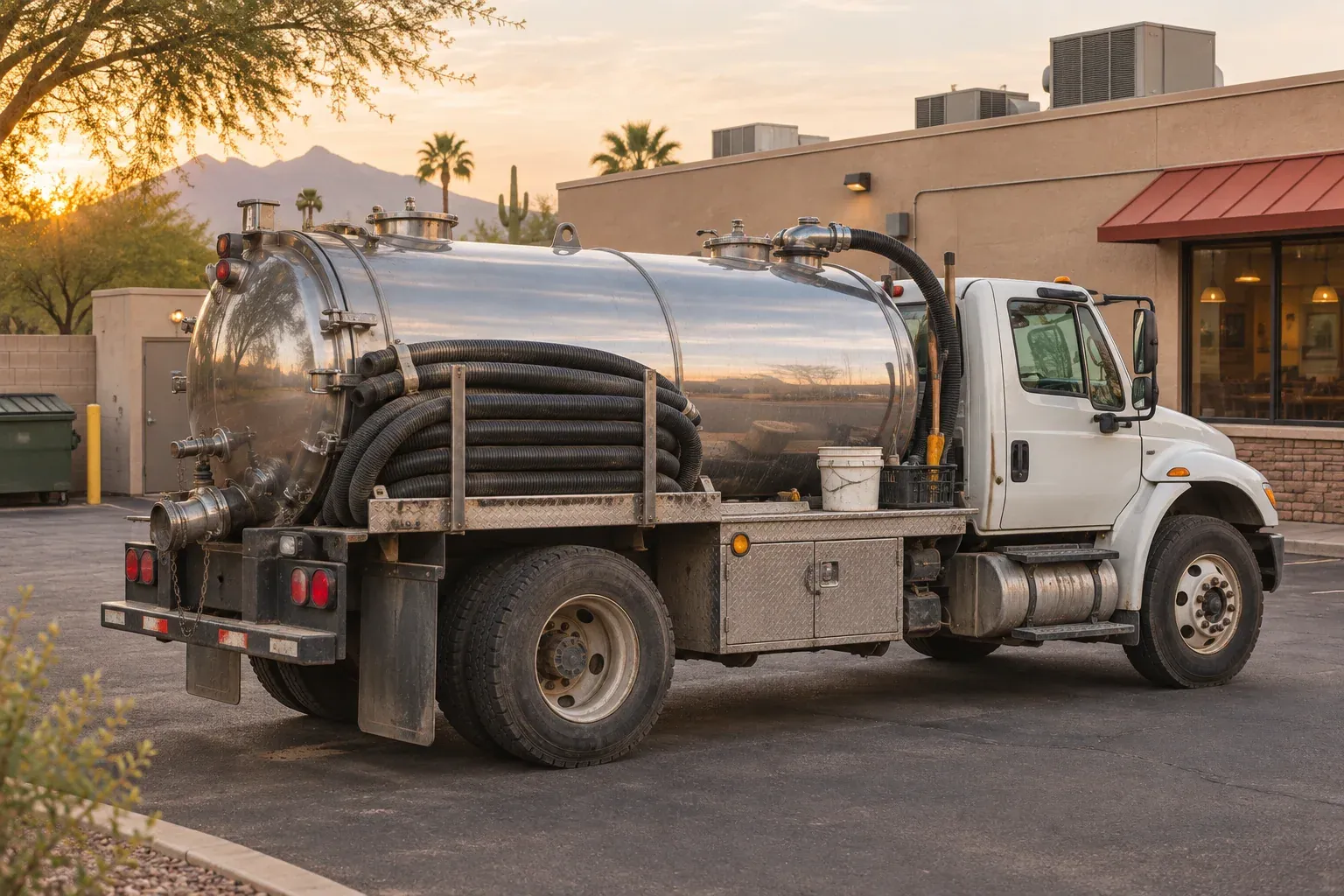
Grease is removed by a vacuum truck, and the pipe wall is cleaned with a jetter. For a backup during service, grease backup emergency covers the steps.
02 / Why it matters
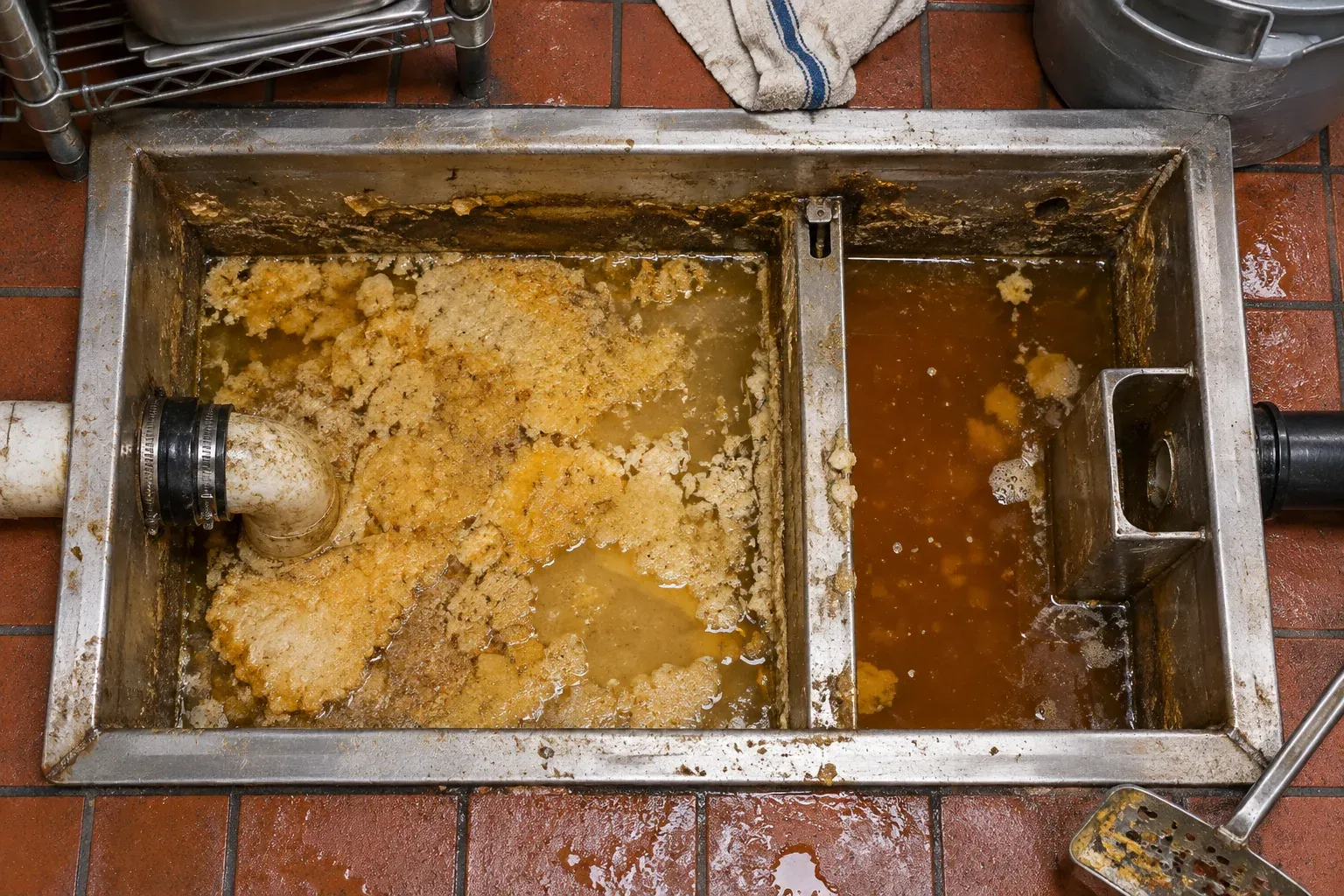
An interceptor over 25 percent cannot separate, and the grease and solids go out the outlet. The fix is grease interceptor pumping. The cause is a schedule that was too long or a device that is undersized.
Grease has coated the pipe until the diameter is gone. The fix is jetting. Pumping alone will not clear it, and a snake opens only a channel through the middle.
An offset joint, a crack or roots in an older line. The fix is a repair, and the evidence is a camera inspection.
03 / Good to know
Look at the device first. If the trap or interceptor is over 25 percent, the pump-out comes first. If the device is clean and the drain is still backing up, the line is the problem.
Then look at the water. Clear water that backs up slowly suggests a partial blockage. Grey water with solids suggests the device. Water that backs up and drains away completely, then backs up again, suggests a vent or a partial blockage downstream.
04 / Lines
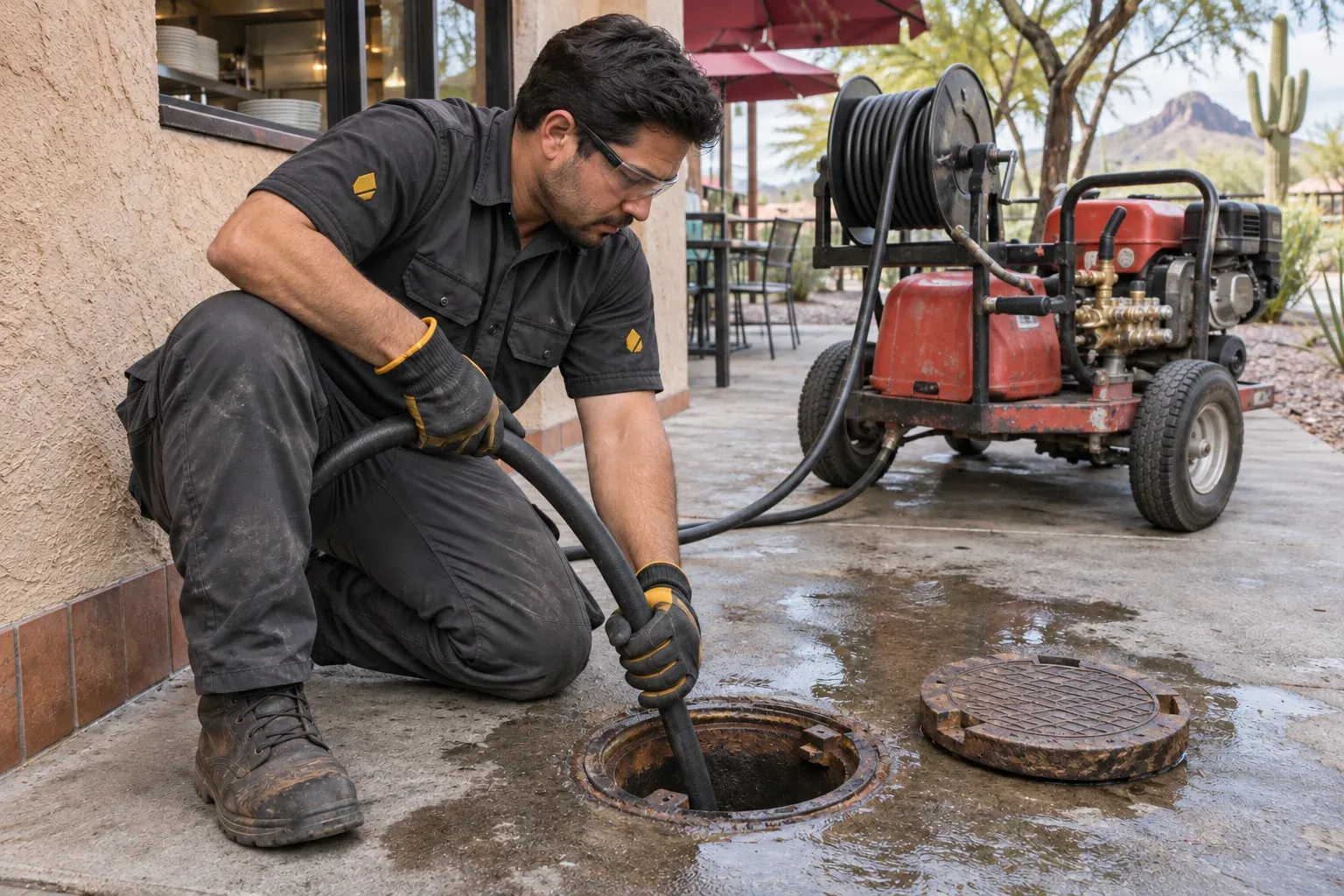
In a kitchen, the blockage is often grease on the pipe wall. A jetter, as in kitchen line jetting, cleans the full circumference with high pressure water, and the rear jets carry the debris back to the access point. A snake opens a channel through the middle and leaves the coating in place, which is why the drain can slow again within weeks.
The order matters: pump the device, jet the line, then run water to confirm. If the water still backs up, camera the line.
05 / Costs
An emergency pump-out with a line jet runs $400 to $800 nationally, and more after hours or with a cleanup. A scheduled pump-out is $225 to $400 for a 1,000 gallon tank, and a jetting visit is $300 to $600. The emergency premium is the cost of not having a calendar.
06 / Warning signs
Write down what happened: the time, the water level, the device reading, the work done and the cause. Put it in the FOG binder with the manifest. A second backup within 30 days is a signal for a camera inspection or a closer look at the device, not another pump-out.
08 / 4 questions
Still have a question?
Send the form with a short note. Someone from our team will call you back soon.
Get a call backQ.01
It will drain slowly if the blockage is partial, and it will back up again the next time the dish pit runs. Waiting turns a service call into a bigger cleanup.
Q.02
The floor has to be cleaned and sanitized before service resumes, and any food that was in contact with the water has to be discarded.
Q.03
If the water reached a storm drain, a sidewalk or a neighboring property, report it to the city program. A backup inside the building is between the restaurant and its service company.
Q.04
That depends on the lease and on where the blockage is. A blockage in the building's line may be the landlord's, and a blockage caused by the tenant's grease may be the tenant's. Document everything.
Form open 24/7
Ask for a call back about your grease trap
Tell us which device and which kitchen. We will call you back shortly.
Thank you. You will be called back soon.