Q.01
Is 25 percent measured by volume or by depth?
By volume, calculated from the depths and the tank dimensions. The depth is the field measurement.
Phoenix guide · 4 min read
You have a question about a grease trap in your Phoenix kitchen. The answer is below. When you want a pump-out, ask for a call back.
A grease device works by giving grease time to rise and solids time to settle. Both of those need volume. When a quarter of the volume is already taken up by grease and solids, the device has lost the space it needs, and the separation gets worse with every gallon that follows. That is why the 25 percent rule exists, and why it overrides a calendar that says the next visit is 3 weeks away. When a trap is at the limit, commercial grease trap cleaning is the fix, not a wait for the date.
01 / Good to know
Phoenix City Code 28-15 B sets the limit: FOG, lint, oil, sand, sludge and solids may not exceed 25 percent of the total liquid volume, measured at the static water level. Chandler's food service page describes the same 25 percent as the rule of thumb and requires the cleaning frequency to increase if grease is seen leaving the device.
The wording differs, the physics does not. A device at 25 percent is at the end of its working capacity. For a buried tank, grease interceptor pumping brings it back under the limit.
02 / How it works
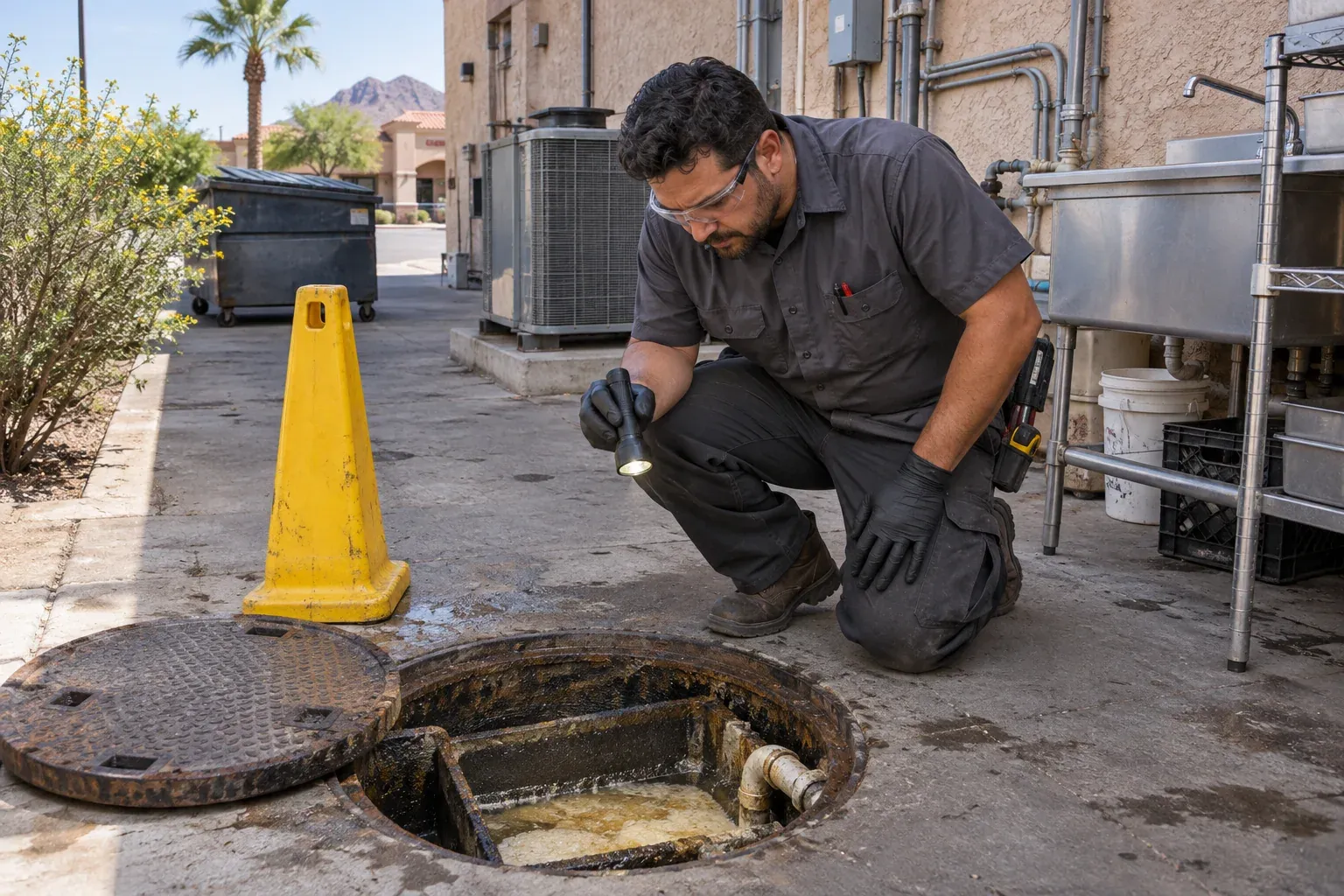
The tool is a sludge judge, which is a clear tube with a valve at the bottom, or a weighted tape. The pumper lowers it through the grease mat until it touches the solids, then closes the valve and pulls it up. The tube shows the layers: grease at the top, water in the middle, solids at the bottom.
The depths are converted to volume with the tank dimensions. A 6 foot by 6 foot compartment with 8 inches of combined grease and solids holds about 180 gallons in those 2 layers. In a 1,000 gallon tank with 2 compartments, the percentage depends on which compartment and how the volume is distributed.
For a restaurant, the exact math matters less than the number the pumper writes down. The number belongs on the manifest or the log at every visit, and the trend is worth watching.
03 / Good to know
| Device | Capacity | 25 percent | Rough depth in a square tank |
|---|---|---|---|
| Trap | 50 gallons | 12.5 gallons | 3 to 5 inches |
| Trap | 100 gallons | 25 gallons | 6 to 9 inches |
| Interceptor | 500 gallons | 125 gallons | 12 to 18 inches |
| Interceptor | 1,000 gallons | 250 gallons | 18 to 24 inches |
| Interceptor | 2,000 gallons | 500 gallons | 2 feet or more |
A trap at 5 inches of combined depth is close to the limit. An interceptor at 5 inches is nowhere near it. Same depth, different device, different urgency. That is why the percentage is the useful number and the depth is the input.
04 / Schedule
The calendar is a population-level estimate. It assumes a typical kitchen with a typical menu in a typical building. The 25 percent rule is the individual measurement. When the 2 disagree, the measurement wins, because the code sets the limit as a ceiling.
A restaurant that has a 90 day interval and hits 25 percent at day 60 is out of compliance from day 60, even though the calendar says it is fine. The record of the depth is the evidence, and a restaurant that measures has the evidence on its side.
05 / The 25 percent rule
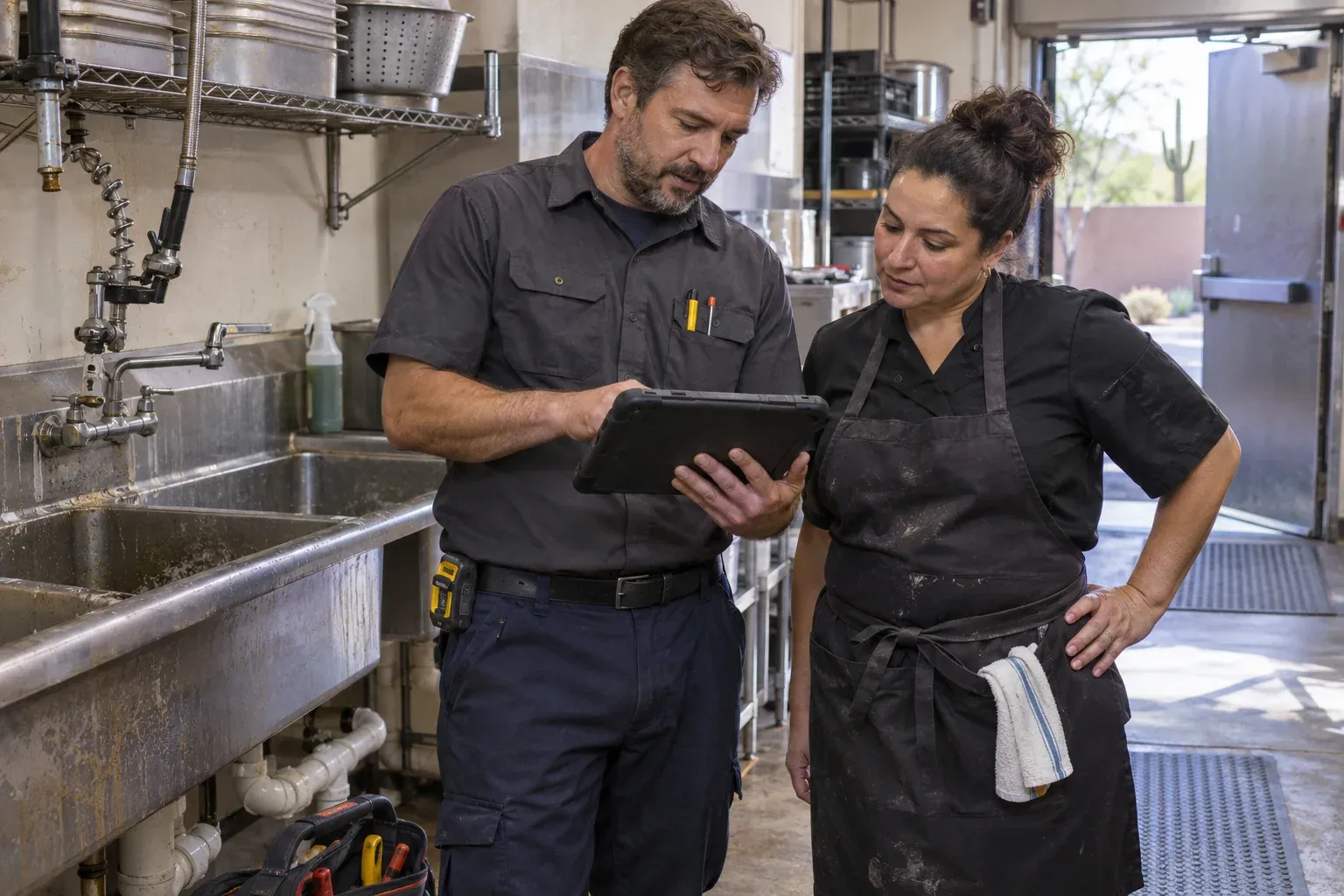
Pump it. Then measure again after the pump-out to confirm the device is empty. Then look at the fill rate and decide whether the interval needs to change, the kitchen practice needs to change, or the device needs to be replaced.
If the device hits 25 percent again within a month, the cause is usually one of 3 things: an undersized device, a missing baffle, or a kitchen sending oil and solids it should not. A camera check and a conversation about scraping habits will find it.
06 / Good to know
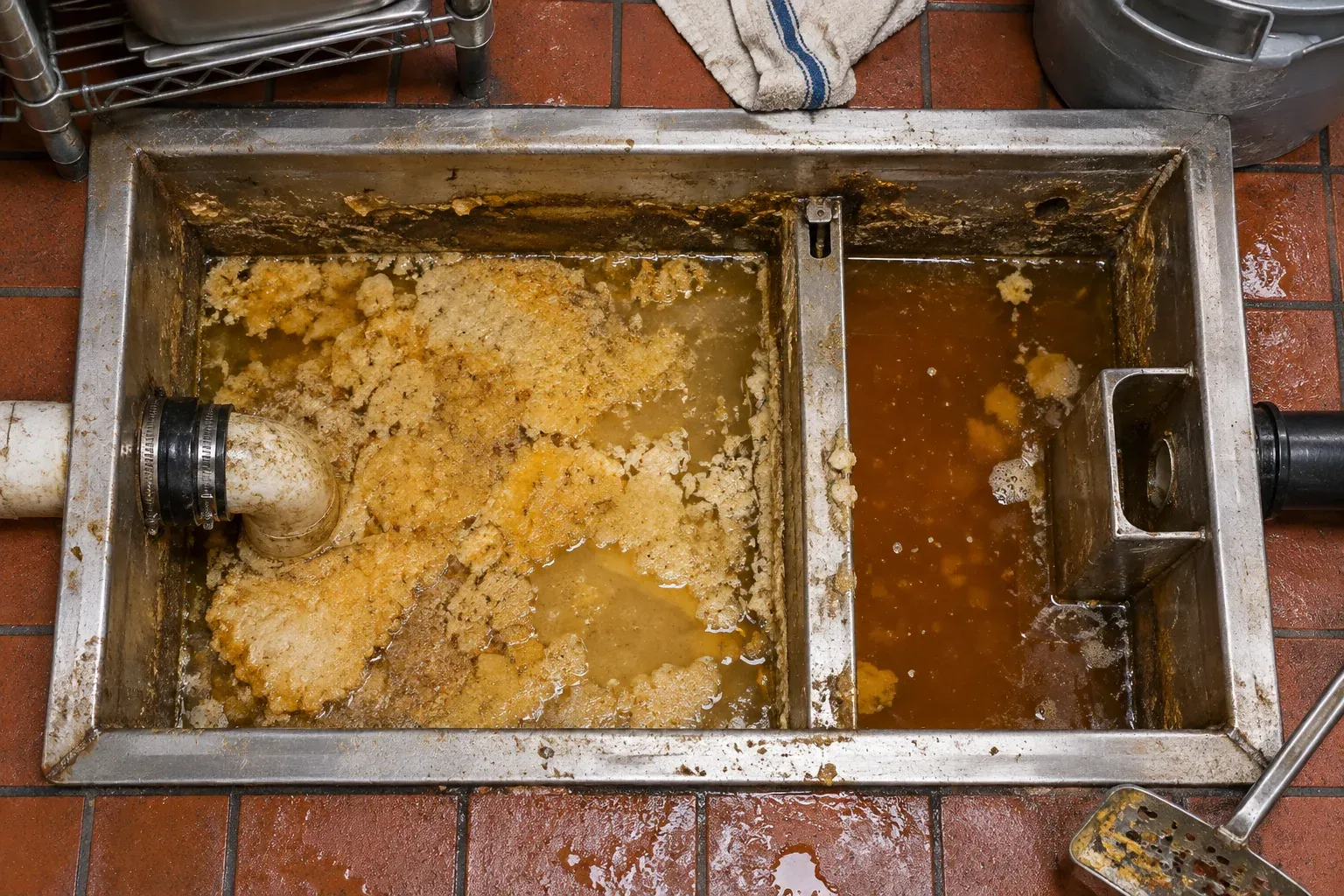
It does not mean a device at 24 percent is fine forever. The limit is a ceiling, and a device that lives near it is a device that will cross it between visits. The practical target is under 15 percent at every pump-out, which leaves room for a busy week.
It also does not mean the calendar can be ignored. The city interval is a separate requirement, and a trap at 10 percent at day 30 still has to be pumped on day 30 in Phoenix.
08 / 4 questions
Still have a question?
Send the form with a short note. Someone from our team will call you back soon.
Get a call backQ.01
By volume, calculated from the depths and the tank dimensions. The depth is the field measurement.
Q.02
Yes. A 50 gallon trap at 25 percent holds 12.5 gallons of grease and solids, which is only a few inches.
Q.03
The pumper, with a sludge judge or a weighted tape, before pumping. The numbers go on the manifest or the service log.
Q.04
The depths can be measured at the next visit. A pump-out without a measurement cannot show whether the interval is working, and the record is weaker without it.
Form open 24/7
Ask for a call back about your grease trap
Tell us which device and which kitchen. We will call you back shortly.
Thank you. You will be called back soon.