Q.01
Does a food truck need its own grease trap?
Some trucks have a small trap, but the wash water still has to go to a permitted commissary. The commissary's device is the one that matters.
Phoenix guide · 3 min read
You have a question about a grease trap in your Phoenix kitchen. The answer is below. When you want a pump-out, ask for a call back.
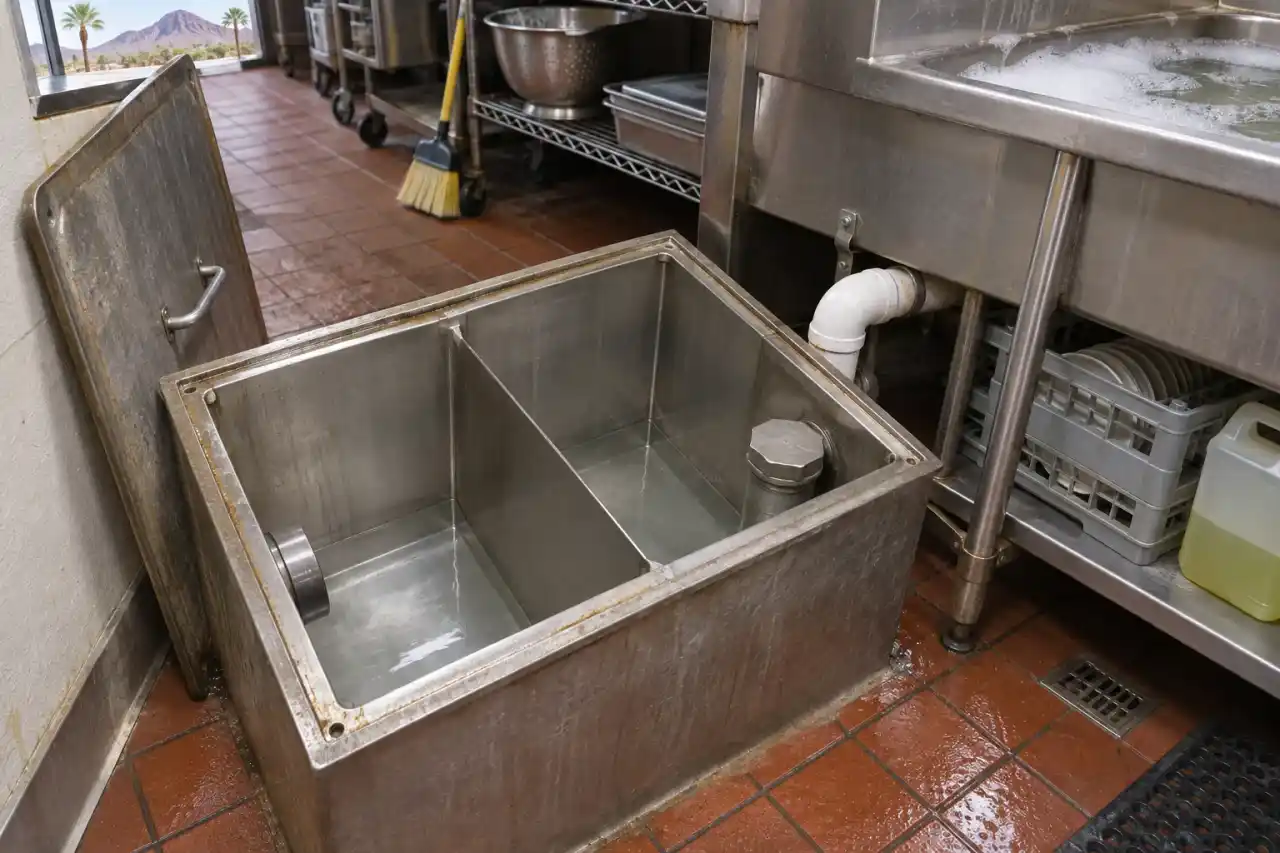
A food truck has 2 grease problems, and only one of them is on the truck. The first is the fryer oil, which goes into a container and out with a rendering company through used cooking oil pickup. The second is the wash water, which carries grease and food solids and has to go somewhere lawful. That somewhere is a commissary with a grease device, and the commissary's device is the one that has to be maintained.
01 / Food trucks
Mesa's commissary requirements state that a commissary must have a grease interceptor or trap. The logic is the same across the Valley programs: a mobile food unit cannot discharge wash water to the ground, a storm drain or a dumpster, so it needs a base of operations with a permitted drain.
A commissary serving 6 trucks can carry the grease load of a small restaurant, because each truck brings its pans, its utensils and its wash water. The device has to be sized for the fleet, not for one truck.
02 / Who does the work
The log is the part inspectors ask for, because it shows the truck used a permitted commissary rather than a hose at the back of a parking lot.
03 / Good to know
Do not dump the fryer oil into a storm drain. It is an environmental violation, it is traceable to the truck, and it stains the pavement in a way that neighbors report.
Do not wash utensils at a hand sink in a retail parking lot. The water goes to a storm drain in most lots, which is the same violation.
Do not put fryer oil in the commissary's grease trap. The trap handles wash water, and a slug of oil overloads it.
04 / Schedule
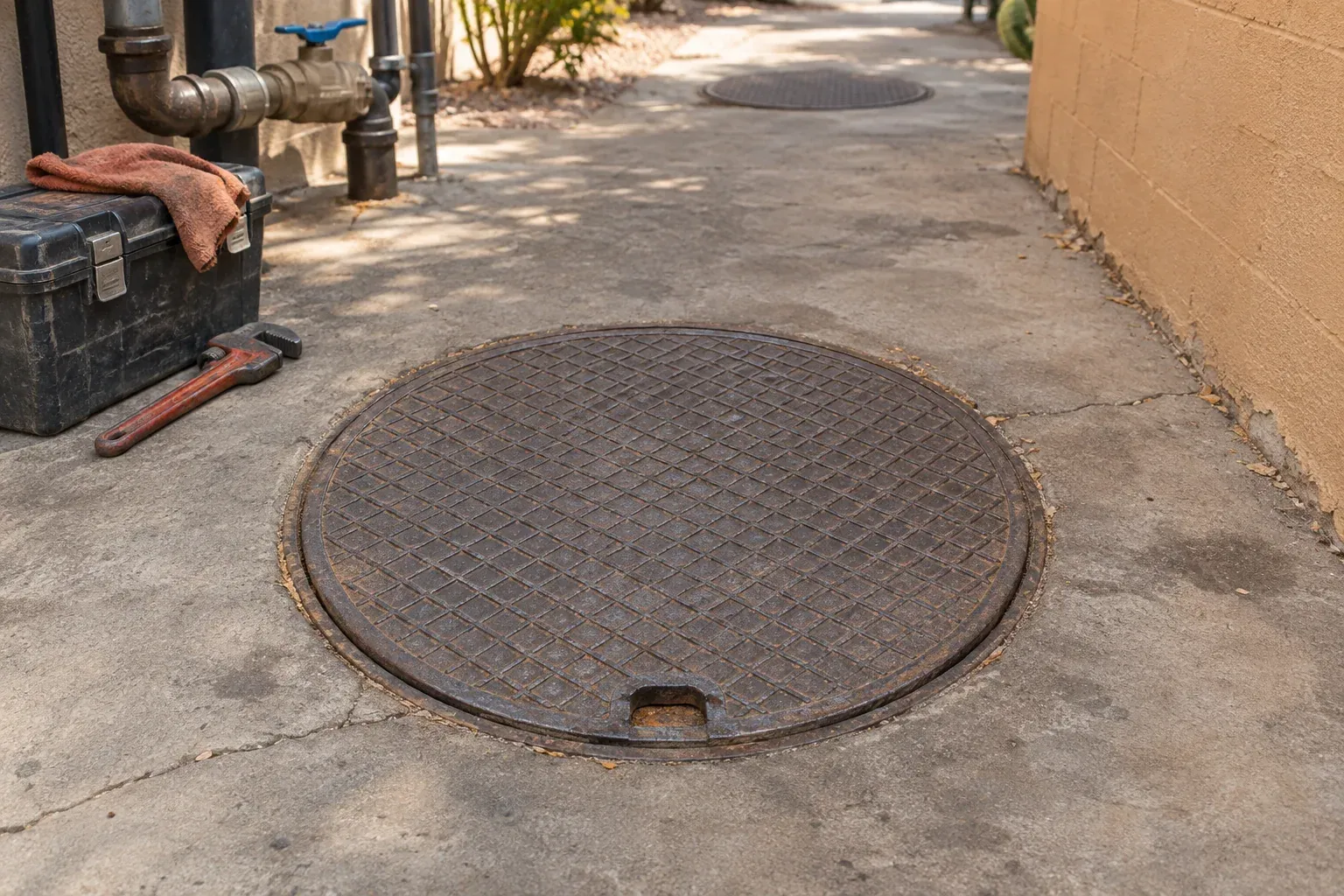
The commissary is a food facility, and its grease device follows the city rules for its address. In Phoenix, a trap is every 30 days and an interceptor every 90, as set out in the grease trap pumping schedule.
A commissary operator should treat the device like a restaurant's: measure, pump, log and keep the manifest. A commissary that backs up on a Saturday morning strands every truck that depends on it. The service is the same as commercial grease trap cleaning for a restaurant.
05 / Costs
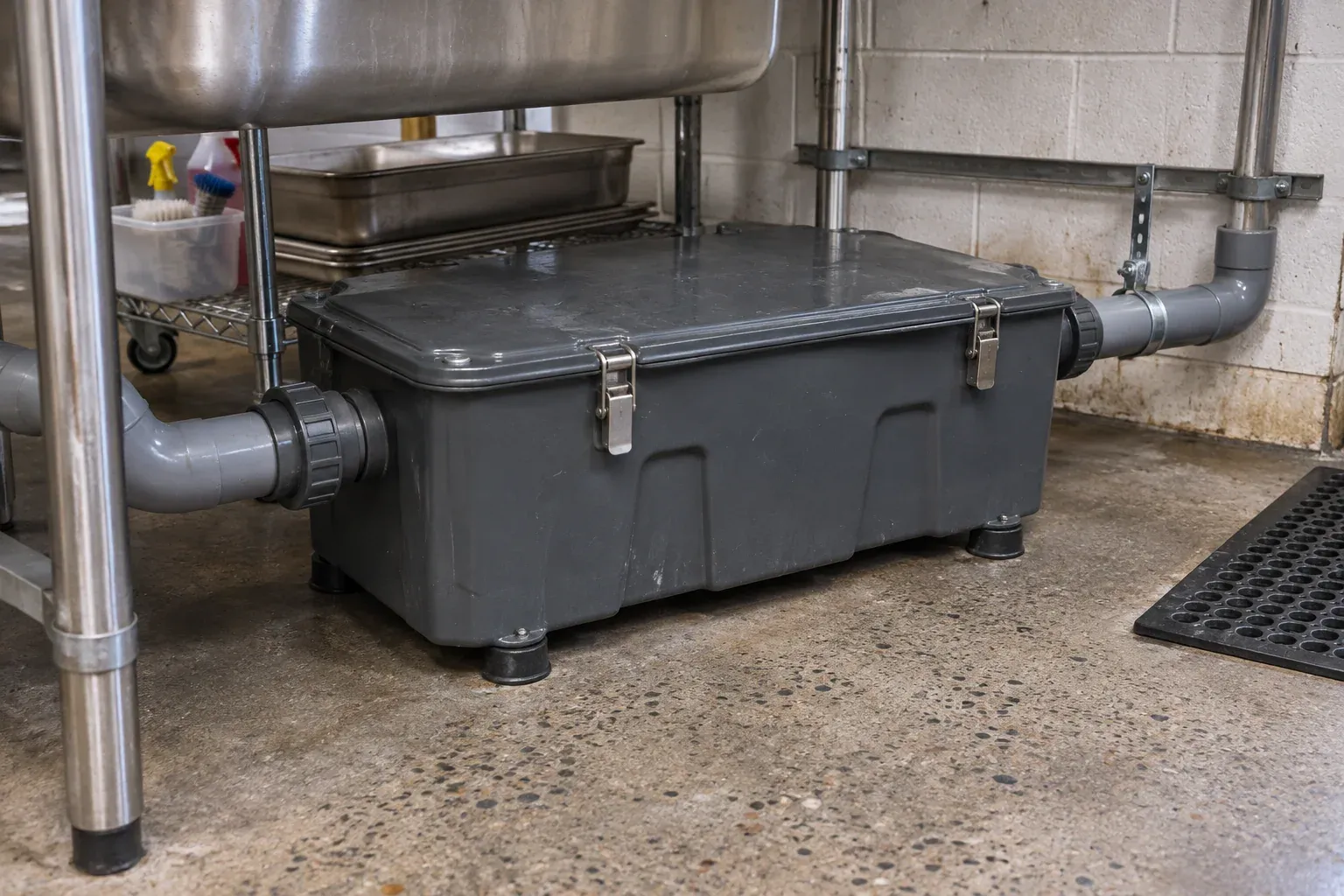
A commissary with a 1,000 gallon interceptor on a quarterly schedule is $900 to $1,600 a year. A small trap on a monthly schedule is $1,500 to $2,400. A fleet of 6 trucks does not change the device price, but it does change the fill rate, which is the reason to measure.
The truck's own cost is the oil container, the rendering pickup and the disposal of the solids, which is small compared with a violation.
06 / Food trucks
The agreement between a truck and a commissary usually names the address, the hours, the sink the truck may use, the grease device that serves it, and who keeps the discharge log. Without those 5 lines, a health inspector has to guess whether the truck had a lawful place to wash, and a guess is not a record.
08 / 4 questions
Still have a question?
Send the form with a short note. Someone from our team will call you back soon.
Get a call backQ.01
Some trucks have a small trap, but the wash water still has to go to a permitted commissary. The commissary's device is the one that matters.
Q.02
Only if the station is permitted for that waste. A dump station for RV waste is not a grease facility.
Q.03
The city or county food and pretreatment programs, depending on the address. The commissary's permit names the agencies.
Q.04
It is an environmental violation, and it can be traced. The cleanup and the penalty are far more expensive than the rendering pickup.
Form open 24/7
Ask for a call back about your grease trap
Tell us which device and which kitchen. We will call you back shortly.
Thank you. You will be called back soon.